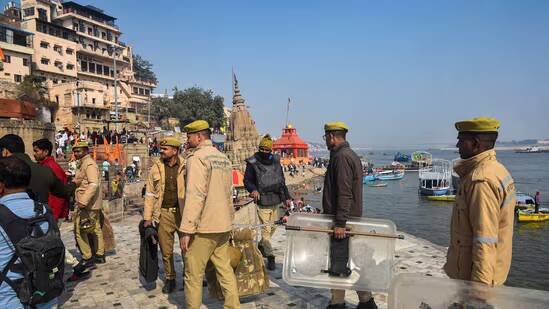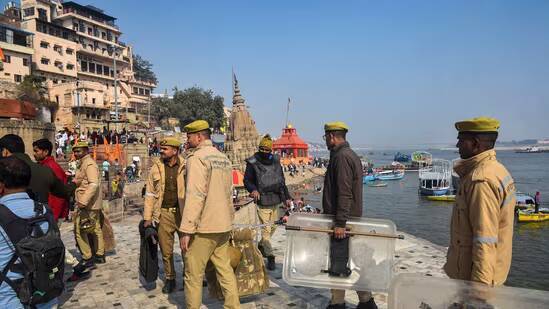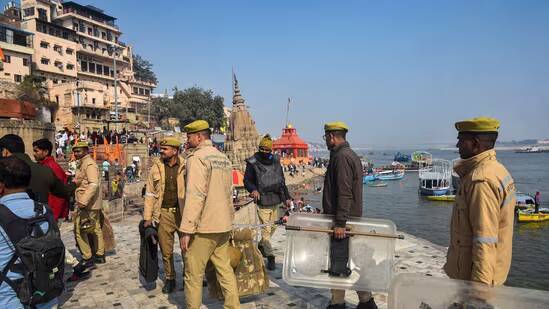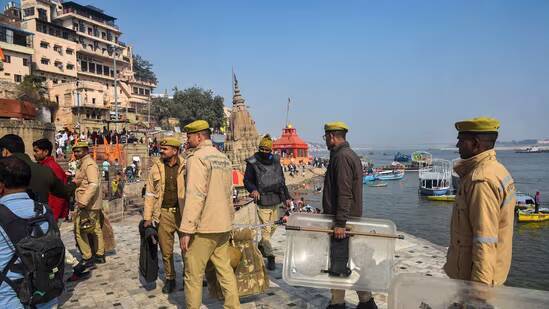
Broken idols brought from outside: UP CM Yogi amid row over Manikarnika Ghat renovation
The redevelopment of Manikarnika Ghat in Varanasi has sparked a controversy, with opposition parties alleging that the government is destroying historical idols and statues in the process. However, Uttar Pradesh Chief Minister Yogi Adityanath has come out strongly against these claims, stating that broken idols were brought from outside to malign India’s heritage. In a recent statement, the Chief Minister said, “It is being claimed that idols are being demolished. There cannot be a bigger lie than this.”
The controversy began when reports emerged that several idols and statues, including the Rani Ahilyabai Holkar statue, were being demolished as part of the renovation work at Manikarnika Ghat. The opposition parties were quick to attack the government, accusing them of being insensitive to India’s cultural heritage. The Rani Ahilyabai Holkar statue, in particular, holds great significance, as she was a prominent queen of the Malwa kingdom who played a crucial role in the development of the region.
However, the UP CM has denied these allegations, stating that the government is committed to preserving India’s cultural heritage. He claimed that the broken idols were brought from outside to create confusion and malign the government’s efforts to redevelop the ghat. “We are committed to preserving our cultural heritage, and we will not allow anyone to destroy it,” he said.
The renovation work at Manikarnika Ghat is part of a larger effort to redevelop the ghats in Varanasi, which is considered one of the oldest and most sacred cities in India. The project aims to improve the infrastructure and amenities at the ghats, making it easier for devotees and tourists to visit the area. However, the controversy over the demolition of idols and statues has put a question mark over the project, with many questioning the government’s intentions.
The opposition parties have been vocal in their criticism of the government, with many leaders taking to social media to express their outrage. “The destruction of the Rani Ahilyabai Holkar statue is a blatant attack on India’s cultural heritage,” said one opposition leader. “The government must take immediate action to restore the statue and ensure that such incidents do not happen in the future.”
However, the UP CM has remained firm in his stance, stating that the government will not be swayed by false allegations. “We are committed to our mission of preserving India’s cultural heritage, and we will not be deterred by baseless allegations,” he said.
The controversy over the Manikarnika Ghat renovation has sparked a larger debate over the preservation of India’s cultural heritage. Many have raised questions about the government’s approach to preserving historical sites and monuments, with some arguing that more needs to be done to protect these sites from destruction.
In recent years, there have been several instances of historical sites and monuments being destroyed or damaged, either due to natural disasters or human activity. The destruction of the Buddha statues in Bamiyan, Afghanistan, is a case in point, where the Taliban regime destroyed the statues, considering them to be un-Islamic. Similarly, the destruction of the Temple of Bel in Palmyra, Syria, is another example of the wanton destruction of historical sites.
In India, too, there have been instances of historical sites and monuments being destroyed or damaged. The demolition of the Babri Masjid in Ayodhya is a case in point, where a mob of Hindu extremists destroyed the mosque, leading to widespread violence and communal tensions.
In this context, the controversy over the Manikarnika Ghat renovation takes on a larger significance. The government’s approach to preserving historical sites and monuments is under scrutiny, with many questioning whether enough is being done to protect these sites from destruction.
As the debate over the Manikarnika Ghat renovation continues, it is clear that the issue is not just about the preservation of historical sites and monuments, but also about the government’s approach to cultural heritage. The UP CM’s statement that broken idols were brought from outside to malign India’s heritage has added a new twist to the controversy, with many questioning the government’s intentions.
Ultimately, the preservation of India’s cultural heritage requires a nuanced approach, one that balances the need for development with the need to preserve historical sites and monuments. The government must take a proactive approach to preserving these sites, working with stakeholders to ensure that they are protected from destruction.
As the controversy over the Manikarnika Ghat renovation continues, one thing is clear: the preservation of India’s cultural heritage is a matter of great importance, and one that requires careful consideration and attention.
News source: https://x.com/PTI_News/status/2012458022187192360
About the Author