Safer method boosts gas capture for clean energy
The world is grappling with the challenges of climate change, and one of the most pressing issues is the increasing levels of greenhouse gases in the atmosphere. Carbon dioxide, in particular, is a major contributor to global warming, and finding effective ways to capture and store it is crucial for mitigating its effects. Researchers have been working tirelessly to develop new materials and technologies that can efficiently capture and store greenhouse gases, and a recent breakthrough in the synthesis of metal-organic frameworks (MOFs) is a significant step forward in this direction.
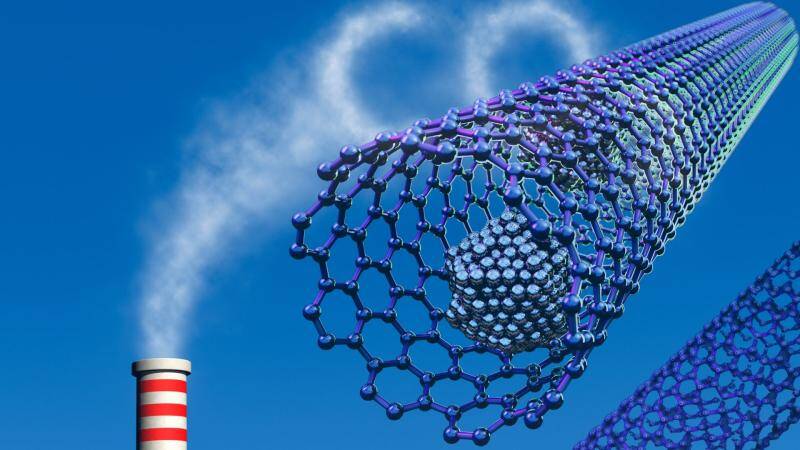
Metal-organic frameworks are a class of porous materials that have shown great promise in gas capture and storage applications. They are composed of metal nodes connected by organic linkers, which create a three-dimensional framework with a high surface area. This unique structure allows MOFs to trap and store gases, including carbon dioxide, methane, and hydrogen, with high efficiency. However, the traditional synthesis methods for MOFs often involve the use of toxic hydrofluoric acid, which poses significant environmental and health risks.
To address this issue, researchers have developed a fluoride-free synthesis method for MOFs, replacing hydrofluoric acid with safer modulators. This new approach not only eliminates the risks associated with hydrofluoric acid but also produces superior crystals that are more efficient at trapping greenhouse gases and storing hydrogen. The simplified method allows for the synthesis of MOFs at room temperature, which is a significant advantage over traditional methods that require high temperatures and pressures.
The new synthesis method uses a combination of metal salts and organic linkers, which are mixed together in a solvent to form a crystalline framework. The use of safer modulators, such as amino acids or peptides, allows for the controlled growth of MOF crystals, resulting in materials with high surface areas and tailored pore sizes. This is critical for gas capture and storage applications, as the pore size and shape of the MOF can be optimized for specific gases.
The researchers have demonstrated the effectiveness of their new synthesis method by producing MOFs that can capture and store carbon dioxide and hydrogen with high efficiency. The MOFs synthesized using this method have shown superior performance compared to traditional MOFs, with higher gas uptake capacities and faster adsorption kinetics. This is a significant breakthrough, as it paves the way for the development of affordable carbon scrubbers and advanced atmospheric water harvesting systems.
Carbon scrubbers are devices that can capture carbon dioxide from the air, and they have the potential to play a critical role in mitigating climate change. Traditional carbon scrubbers are often expensive and energy-intensive, but the new MOFs synthesized using the fluoride-free method could enable the development of more efficient and cost-effective carbon capture technologies. Similarly, atmospheric water harvesting systems, which can extract water from the air, could benefit from the advanced MOFs, allowing for more efficient and sustainable water production.
The implications of this research are far-reaching, and it has the potential to make a significant impact on the global efforts to combat climate change. The development of more efficient and cost-effective gas capture and storage technologies could enable the widespread adoption of carbon capture and storage (CCS) systems, which are critical for reducing greenhouse gas emissions from industrial sources. Additionally, the advanced MOFs could find applications in a range of fields, including energy storage, catalysis, and biomedicine.
In conclusion, the development of a fluoride-free synthesis method for metal-organic frameworks is a significant breakthrough in the field of gas capture and storage. The new method produces superior crystals that are more efficient at trapping greenhouse gases and storing hydrogen, and it paves the way for the development of affordable carbon scrubbers and advanced atmospheric water harvesting systems. As the world continues to grapple with the challenges of climate change, this research offers a glimmer of hope for a more sustainable and environmentally friendly future.
News Source: https://researchmatters.in/news/greener-path-synthesising-metal-organic-frameworks-carbon-capture-and-storage
About the Author