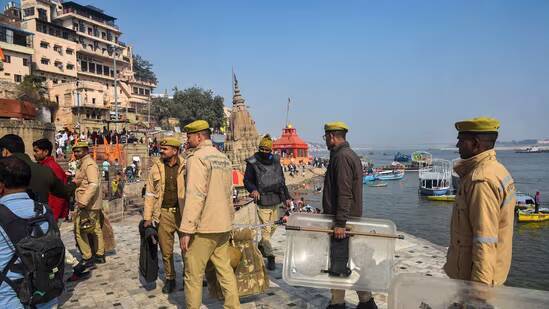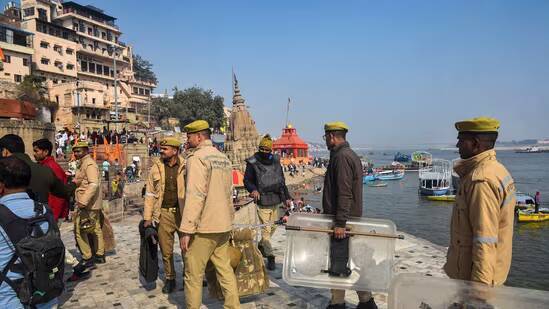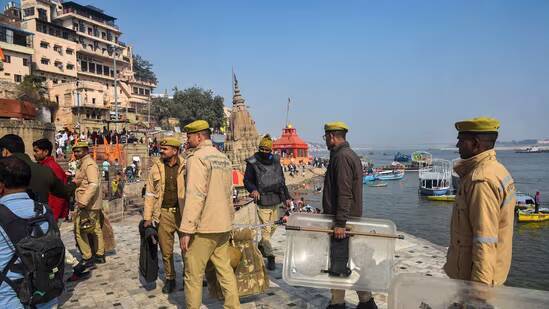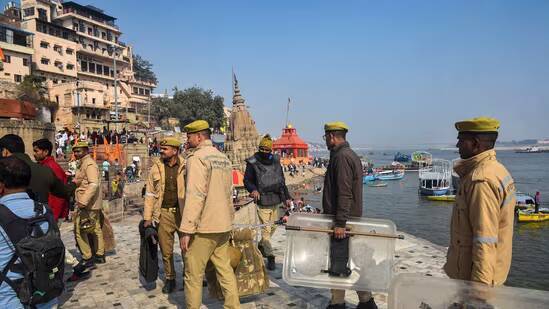
Broken idols brought from outside: UP CM Yogi amid row over Manikarnika Ghat renovation
The redevelopment of Manikarnika Ghat in Varanasi has been at the center of a controversy, with opposition parties accusing the government of destroying historical idols and statues. However, Uttar Pradesh Chief Minister Yogi Adityanath has come out in defense of the government, claiming that broken idols were brought from outside to malign India’s heritage.
The controversy began when reports emerged that several idols and statues, including the Rani Ahilyabai Holkar statue, were being demolished as part of the redevelopment project. Opposition parties were quick to attack the government, accusing them of being insensitive to India’s cultural heritage. However, the government has maintained that the redevelopment project is aimed at preserving the ghat and its surroundings, and that no historical idols or statues are being destroyed.
Speaking on the issue, UP CM Yogi Adityanath said, “It is being claimed that idols are being demolished. There cannot be a bigger lie than this.” He further claimed that broken idols were being brought from outside to create a false narrative about the government’s intentions. “Some people are trying to malign India’s heritage by bringing broken idols from outside and claiming that they are being destroyed as part of the redevelopment project,” he said.
The opposition, however, has refused to buy the government’s argument. They have accused the government of being reckless and insensitive to the cultural significance of the ghat and its surroundings. The Rani Ahilyabai Holkar statue, which is at the center of the controversy, is said to be of great historical significance, and its alleged destruction has sparked widespread outrage.
The redevelopment project at Manikarnika Ghat is part of a larger effort to preserve and promote India’s cultural heritage. The project aims to improve the infrastructure and amenities at the ghat, while also ensuring that the historical significance of the area is preserved. However, the controversy over the alleged destruction of idols and statues has put a question mark over the project’s intentions.
The government has maintained that the redevelopment project is being carried out in consultation with experts and stakeholders, and that all necessary precautions are being taken to ensure that the historical significance of the area is preserved. However, the opposition has demanded a thorough investigation into the matter, and has accused the government of being secretive about the project’s details.
As the controversy continues to simmer, it remains to be seen how the government will respond to the opposition’s demands. The government has so far maintained that the redevelopment project is aimed at preserving India’s cultural heritage, and that all necessary precautions are being taken to ensure that the historical significance of the area is preserved. However, the opposition’s accusations have raised questions about the government’s intentions, and it remains to be seen how the matter will be resolved.
In conclusion, the controversy over the redevelopment of Manikarnika Ghat has raised important questions about the preservation of India’s cultural heritage. While the government has maintained that the project is aimed at preserving the ghat and its surroundings, the opposition has accused them of being insensitive to the cultural significance of the area. As the matter continues to simmer, it remains to be seen how the government will respond to the opposition’s demands, and how the controversy will be resolved.
The allegations of broken idols being brought from outside to malign India’s heritage have added a new twist to the controversy. The government’s claim that broken idols are being brought from outside to create a false narrative about the government’s intentions has raised questions about the motivations of those who are opposing the redevelopment project. As the controversy continues to unfold, it remains to be seen how the matter will be resolved, and what implications it will have for the preservation of India’s cultural heritage.
The issue has sparked a wider debate about the preservation of India’s cultural heritage, and the role of the government in protecting historical sites and monuments. The controversy over the redevelopment of Manikarnika Ghat has highlighted the need for a more nuanced approach to preserving India’s cultural heritage, one that takes into account the historical significance of the area, as well as the needs of the local community.
As the debate continues, it is essential to consider the perspectives of all stakeholders, including the government, the opposition, and the local community. The preservation of India’s cultural heritage is a complex issue, one that requires a careful and nuanced approach. The controversy over the redevelopment of Manikarnika Ghat has highlighted the need for a more thoughtful and considered approach to preserving India’s cultural heritage, one that takes into account the historical significance of the area, as well as the needs of the local community.
In the end, the resolution of the controversy will depend on the ability of the government and the opposition to find a common ground, one that balances the need to preserve India’s cultural heritage with the need to develop and improve the infrastructure and amenities at the ghat. As the matter continues to unfold, it remains to be seen how the controversy will be resolved, and what implications it will have for the preservation of India’s cultural heritage.
Source: https://x.com/PTI_News/status/2012458022187192360
About the Author