BJP assessing ‘what went wrong’ despite sweeping BMC elections: Report
The Bharatiya Janata Party (BJP) has emerged as the clear winner in the recently concluded Brihanmumbai Municipal Corporation (BMC) elections, winning 89 seats, the highest number of seats a party has won alone since 2002. However, despite this impressive performance, the party is assessing what went wrong, as it had hoped to win 110 seats. According to a report by Hindustan Times, BJP leaders believe that the reasons for this shortfall could be a lack of coordination within the Mumbai unit and not effectively countering the “Mumbai pride” pitch of the Thackeray cousins.
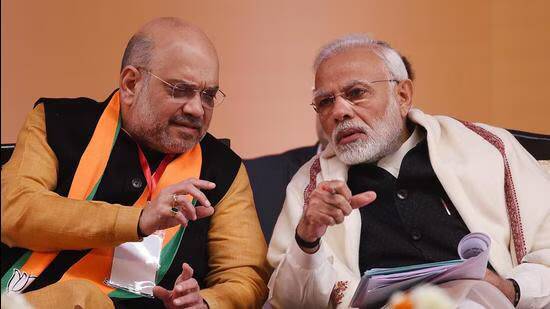
The BMC elections were seen as a crucial test for the BJP, which has been trying to expand its footprint in the state of Maharashtra. The party had launched a high-profile campaign, with top leaders, including Prime Minister Narendra Modi and Home Minister Amit Shah, addressing rallies in the city. The party’s campaign was focused on highlighting the achievements of the BJP-led state government and the benefits of the party’s policies for the people of Mumbai.
However, despite the party’s best efforts, it appears that the BJP fell short of its target of winning 110 seats. The party’s leaders are now introspecting and trying to identify the reasons for this shortfall. According to the report, one of the main reasons for the party’s failure to meet its target is a lack of coordination within the Mumbai unit. The report suggests that there were differences within the party over ticket distribution, which may have affected the party’s performance in some seats.
Another reason for the party’s shortfall is believed to be its failure to effectively counter the “Mumbai pride” pitch of the Thackeray cousins, Uddhav and Raj Thackeray. The Thackeray cousins had launched a high-profile campaign, focusing on the issue of Mumbai’s pride and the need to protect the city’s interests. The BJP, on the other hand, was seen as a party that was trying to impose its will on the city, without adequately addressing the concerns of the local population.
The BJP’s failure to counter the Thackeray cousins’ pitch may have cost the party dearly, as it appears to have resonated with a significant section of the electorate. The report suggests that the party’s leaders are now realizing that they underestimated the impact of the “Mumbai pride” pitch and failed to respond to it effectively.
The BJP’s performance in the BMC elections is also being seen as a reflection of the party’s strengths and weaknesses in the state of Maharashtra. The party has been trying to expand its footprint in the state, but it faces significant challenges from regional parties, including the Shiv Sena and the Nationalist Congress Party (NCP). The party’s failure to meet its target in the BMC elections may be seen as a setback for its plans to expand its presence in the state.
Despite the party’s shortfall, the BJP’s performance in the BMC elections is still being seen as a significant achievement. The party has emerged as the largest party in the corporation, and it is likely to play a crucial role in the formation of the next municipal government. The party’s leaders are now focusing on the task of forming a stable government in the corporation, and they are likely to try to reach out to other parties to support their efforts.
In conclusion, the BJP’s performance in the BMC elections is a mixed bag. While the party has emerged as the clear winner, it has fallen short of its target of winning 110 seats. The party’s leaders are now assessing what went wrong and are trying to identify the reasons for this shortfall. The party’s failure to counter the “Mumbai pride” pitch of the Thackeray cousins and a lack of coordination within the Mumbai unit are believed to be the main reasons for this shortfall.
As the party moves forward, it will be important for it to learn from its mistakes and to develop a more effective strategy for winning elections in the state of Maharashtra. The party will also need to focus on building a stronger organization in the state, and on developing a more nuanced understanding of the local population’s concerns and aspirations.
About the Author