BJP assessing ‘what went wrong’ despite sweeping BMC elections: Report
The Bharatiya Janata Party (BJP) has emerged as the clear winner in the recently concluded Brihanmumbai Municipal Corporation (BMC) elections, winning 89 seats, the highest number of seats a party has won alone since 2002. However, despite this impressive performance, the party is reportedly assessing what went wrong, as it had hoped to win 110 seats. According to a report by the Hindustan Times, BJP leaders believe that the reasons for this shortfall could be a lack of coordination within the Mumbai unit and the party’s failure to effectively counter the “Mumbai pride” pitch of the Thackeray cousins.
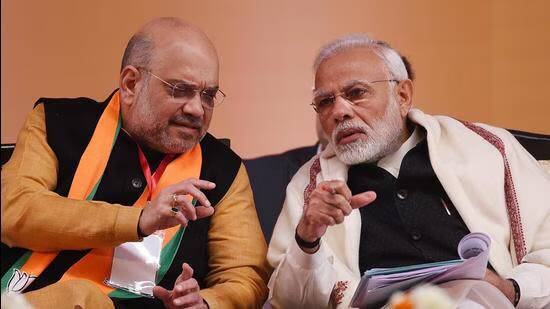
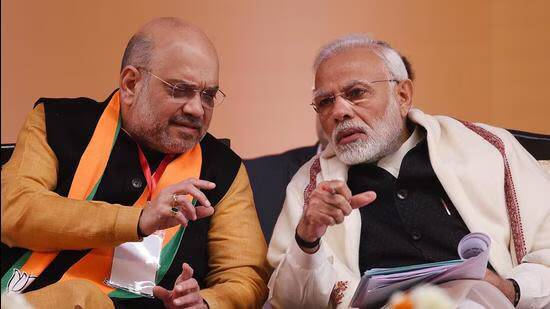
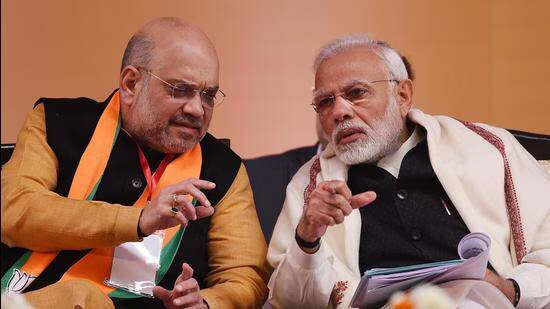
The BMC elections were seen as a crucial test for the BJP, which has been seeking to expand its presence in the state of Maharashtra. The party had invested heavily in the campaign, with top leaders, including Prime Minister Narendra Modi and Home Minister Amit Shah, addressing rallies and meetings in the city. The BJP’s campaign was focused on highlighting the party’s development agenda and its commitment to improving the infrastructure and services in the city.
Despite the party’s best efforts, however, it appears that the BJP’s campaign was not without its flaws. According to BJP leaders, one of the main reasons for the party’s failure to meet its target was a lack of coordination within the Mumbai unit. The party’s Mumbai unit has been plagued by infighting and factionalism, which may have hindered the party’s ability to campaign effectively. Additionally, the party’s failure to project a clear and unified leadership in the city may have also contributed to the shortfall.
Another reason for the BJP’s failure to meet its target was its inability to effectively counter the “Mumbai pride” pitch of the Thackeray cousins, Uddhav and Raj Thackeray. The Thackeray cousins had sought to appeal to the civic pride of Mumbai’s residents, emphasizing the need to protect the city’s interests and identity. The BJP, on the other hand, had focused more on its development agenda, which may not have resonated as strongly with voters.
The BJP’s failure to win 110 seats is also seen as a setback for the party’s state leadership, which had been hoping to use the BMC elections as a springboard to launch a broader campaign to expand the party’s presence in the state. The party’s state leadership had been hoping to use the BMC elections to demonstrate its strength and momentum, and to build a platform for the upcoming state assembly elections.
Despite this setback, however, the BJP’s performance in the BMC elections is still seen as a significant achievement. The party’s victory is a testament to its growing strength and influence in the state, and demonstrates the party’s ability to connect with voters and deliver on its promises. The BJP’s win is also seen as a blow to the ruling Shiv Sena, which had been hoping to retain its dominance in the city.
The BJP’s assessment of what went wrong in the BMC elections is likely to be a thorough and introspective one. The party will need to examine its campaign strategy and tactics, and to identify areas for improvement. The party will also need to work on building a more unified and effective leadership in the city, and to develop a more compelling and resonant message that can appeal to voters.
In conclusion, the BJP’s performance in the BMC elections is a significant achievement, but it is also a reminder that the party still has work to do to achieve its goals. The party’s failure to meet its target is a setback, but it is also an opportunity for the party to learn and grow. As the BJP looks to the future and the upcoming state assembly elections, it will need to build on its strengths and to address its weaknesses. With its strong performance in the BMC elections, the BJP has demonstrated its potential and momentum, and it will be interesting to see how the party builds on this momentum in the days and weeks to come.
About the Author