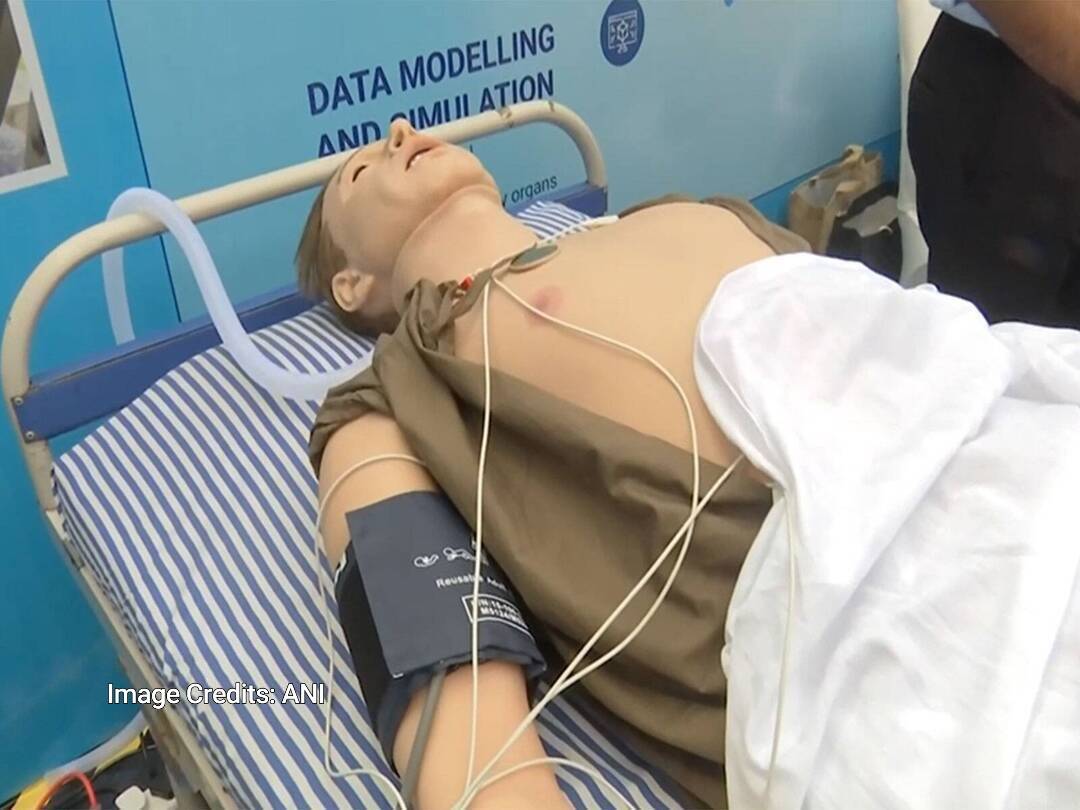
IIT Indore creates AI human replica to help detect diseases
In a groundbreaking development, the Indian Institute of Technology (IIT) Indore has created an AI-powered human-like replica that can aid in the detection of diseases in the human body. According to a report by ANI, this innovative technology has the potential to revolutionize the field of medicine by enabling early and preventive diagnosis of various diseases. The AI-powered replica is designed to mimic basic human functions, such as blinking and breathing, making it an extremely useful tool for medical professionals.
The human-like replica, developed by the researchers at IIT Indore, is equipped with advanced artificial intelligence (AI) capabilities that allow it to simulate various human functions. This includes blinking, breathing, and other essential bodily functions, which are crucial in understanding the patterns of diseases in different organs. By replicating these functions, the AI-powered replica can help doctors identify the symptoms and patterns of various diseases, enabling them to make accurate diagnoses.
One of the primary advantages of this technology is its ability to aid in early diagnosis. By using the AI-powered replica, medical professionals can detect diseases at an early stage, which is critical in preventing their progression and improving treatment outcomes. The replica can be used to simulate various diseases, allowing doctors to study their patterns and develop effective treatment plans. This can be particularly useful in the diagnosis and treatment of complex diseases, such as cancer, where early detection is crucial.
The AI-powered replica can also be used to train medical students and professionals, providing them with a realistic and interactive platform to practice and hone their skills. By using the replica, medical students can gain hands-on experience in diagnosing and treating various diseases, which can help them develop their clinical skills and decision-making abilities. This can be particularly useful in rural or underserved areas, where access to medical facilities and training opportunities may be limited.
Another significant benefit of this technology is its potential to reduce the need for human subjects in medical research. The AI-powered replica can be used to test new treatments and medications, reducing the risk of harm to human subjects. This can be particularly useful in the development of new drugs and therapies, where human trials are often required to test their safety and efficacy.
The development of the AI-powered human-like replica is a testament to the innovative spirit of the researchers at IIT Indore. The institute has been at the forefront of technological innovation, and this development is a significant milestone in the field of medical research. The use of AI and machine learning in medicine has the potential to revolutionize the way we diagnose and treat diseases, and this technology is a significant step forward in that direction.
In addition to its potential applications in medicine, the AI-powered replica also has implications for other fields, such as education and training. The replica can be used to create interactive and immersive learning experiences, allowing students to engage with complex concepts and ideas in a more meaningful way. This can be particularly useful in fields such as anatomy and physiology, where students need to develop a deep understanding of the human body and its functions.
In conclusion, the development of the AI-powered human-like replica by IIT Indore is a significant breakthrough in the field of medical research. The technology has the potential to aid in early diagnosis, reduce the need for human subjects in medical research, and provide a realistic and interactive platform for medical training. As the technology continues to evolve, it is likely to have a profound impact on the way we diagnose and treat diseases, and its implications will be felt across a range of fields, from medicine to education and beyond.
About the Author