Why will BMC not declare winners in 3 Mumbai wards?
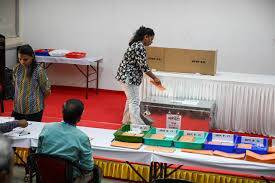
The recent Brihanmumbai Municipal Corporation (BMC) polls have been marred by controversy, with the counting of votes being halted in three Mumbai wards. As a result, the winners in these wards will not be declared, leaving the residents and candidates in a state of uncertainty. In this blog post, we will delve into the reasons behind this unexpected turn of events and explore the implications of this decision.
The BMC polls, which were held to elect the representatives for the 227 wards in Mumbai, were seen as a crucial test for the major political parties in the state. The polls were fiercely contested, with the Shiv Sena, Bharatiya Janata Party (BJP), and the Congress being the main contenders. However, the counting of votes in three wards, namely 72, 189, and 190, was halted due to various reasons, leading to the BMC’s decision not to declare the winners in these wards.
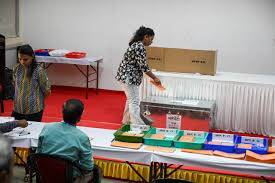
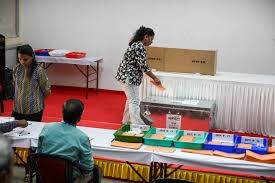
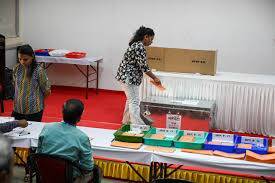
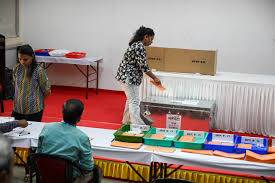
In Ward no 72, the result was put on hold due to alleged irregularities in the counting of votes. According to reports, there were discrepancies in the number of votes counted and the number of votes recorded in the Electronic Voting Machines (EVMs). This led to allegations of tampering with the EVMs, which are used to record the votes electronically. The BMC officials have decided to investigate the matter further and have not declared the winner in this ward.
Similarly, in Ward number 189, the result was reserved after the EVM machine reportedly failed to display the data. The EVMs are designed to display the number of votes recorded for each candidate, but in this case, the machine malfunctioned, leading to confusion and uncertainty. The BMC officials have decided to re-count the votes in this ward, but the winner will not be declared until the issue is resolved.
The counting of votes was also stopped in ward number 190, although the reasons for this are not entirely clear. According to reports, there were some technical issues with the EVMs, which led to the halt in counting. The BMC officials have not provided any further information on this matter, leaving the candidates and residents in the dark.
The decision not to declare the winners in these three wards has significant implications for the residents of Mumbai. The BMC is responsible for providing various civic amenities, such as water supply, sanitation, and roads, to the residents of Mumbai. The elected representatives in each ward are responsible for ensuring that these amenities are provided efficiently and effectively. However, with the winners not being declared in three wards, the residents will have to wait longer for their representatives to take office and start working on the issues that affect their daily lives.
The controversy surrounding the BMC polls has also raised questions about the integrity of the electoral process in India. The use of EVMs has been a subject of debate, with some arguing that they are prone to tampering and can be manipulated to influence the outcome of the elections. While the Election Commission of India has consistently maintained that the EVMs are secure and reliable, the incidents in the BMC polls have raised doubts about the efficacy of these machines.
In conclusion, the BMC’s decision not to declare the winners in three Mumbai wards has significant implications for the residents of Mumbai and the electoral process in India. The alleged irregularities in the counting of votes and the malfunctioning of EVMs have raised questions about the integrity of the electoral process and the use of technology in elections. As the investigation into these incidents continues, it is essential to ensure that the electoral process is transparent, fair, and free from any manipulation or tampering.
The residents of Mumbai deserve to have their representatives elected in a fair and transparent manner, and it is the responsibility of the BMC and the Election Commission of India to ensure that this happens. The controversy surrounding the BMC polls is a reminder that the electoral process in India is not without its challenges and that there is a need for constant vigilance and improvement to ensure that the democratic process is upheld.
About the Author