Tej Pratap asks singer to not sing ‘vulgar’ songs at Patna event
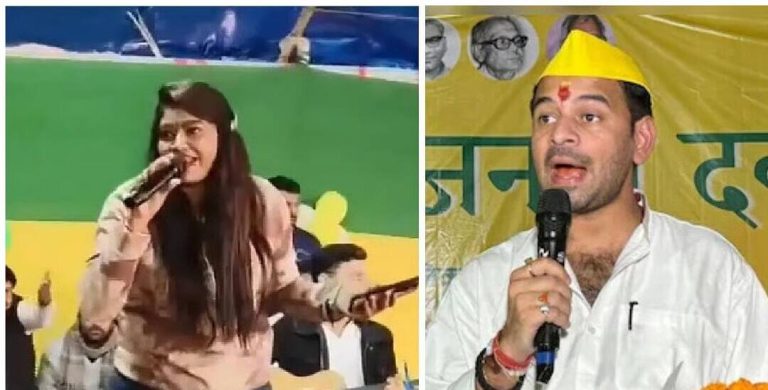
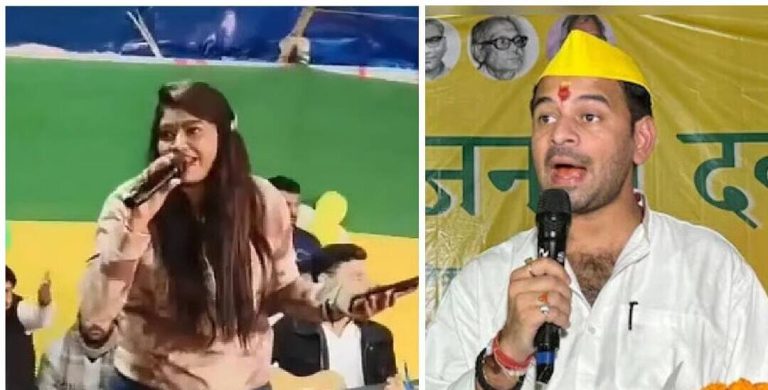
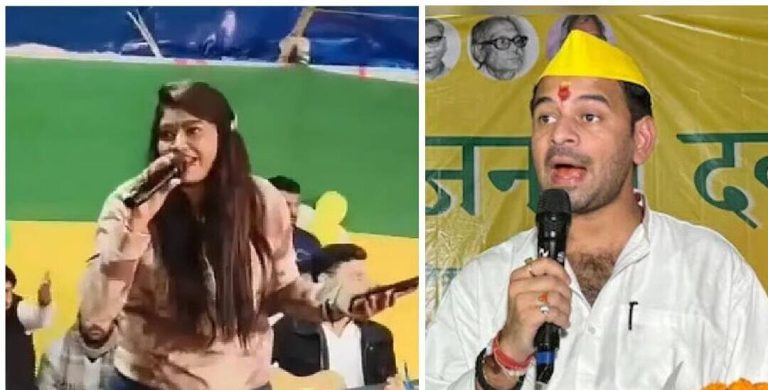
In a shocking turn of events, a video of Janata Dal (United) leader and former Bihar Health Minister, Tej Pratap Yadav, has gone viral on social media. The video shows Yadav interrupting a Bhojpuri singer in the middle of her performance at a Makar Sankranti event in Patna. The reason for the interruption was Yadav’s objection to the singer’s “vulgar” songs, which he deemed inappropriate for the occasion.
As seen in the video, Yadav can be heard telling the singer to stop singing “vulgar” songs and instead sing devotional songs. He specifically asked her to sing hymns of Lord Krishna, saying “Krishna ji wala bhajan gaao (sing hymns of Lord Krishna).” The singer, taken aback by Yadav’s sudden intervention, can be seen trying to reason with him, but ultimately relents and agrees to change her song selection.
The incident has sparked a heated debate on social media, with many users praising Yadav for taking a stand against “vulgar” content, while others have criticized him for being overly moralistic and attempting to impose his own values on others. Some have even questioned the definition of “vulgar” and who gets to decide what is acceptable and what is not.
The event, which was organized to celebrate the festival of Makar Sankranti, was meant to be a joyous and festive occasion. However, Yadav’s intervention has turned the spotlight away from the celebrations and onto the issue of censorship and moral policing. While some may argue that Yadav’s actions were necessary to maintain a level of decency and respect for the occasion, others may see it as an overreach of authority and an attempt to stifle artistic expression.
The role of politicians in shaping cultural narratives is a complex and sensitive issue. On the one hand, they have a responsibility to represent the values and morals of their constituents. On the other hand, they must also respect the rights of artists and performers to express themselves freely. In this case, Yadav’s actions have raised questions about the limits of artistic freedom and the boundaries of what is considered acceptable in public performances.
It is worth noting that this is not the first time that Yadav has made headlines for his unconventional behavior. As a member of the Janata Dal (United) party, he has been known for his outspoken and often unpredictable comments. However, this latest incident has brought him under the spotlight for a different reason, highlighting his stance on issues of morality and censorship.
The video of the incident has been widely shared on social media, with many users weighing in on the debate. While some have praised Yadav for taking a stand against “vulgar” content, others have criticized him for being overly moralistic and attempting to impose his own values on others. The incident has also sparked a larger conversation about the role of politicians in shaping cultural narratives and the importance of respecting artistic freedom.
In conclusion, the incident at the Makar Sankranti event in Patna has highlighted the complex and often contentious issue of censorship and moral policing. While Tej Pratap Yadav’s actions may have been motivated by a desire to maintain a level of decency and respect for the occasion, they have also raised important questions about the limits of artistic freedom and the boundaries of what is considered acceptable in public performances. As the debate continues to unfold, it is essential to consider the nuances of this issue and the potential implications for artists, performers, and the broader cultural landscape.
About the Author