Tej Pratap asks singer to not sing ‘vulgar’ songs at Patna event
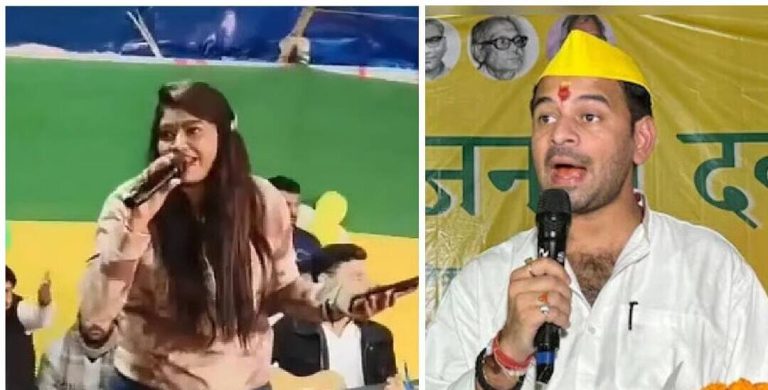
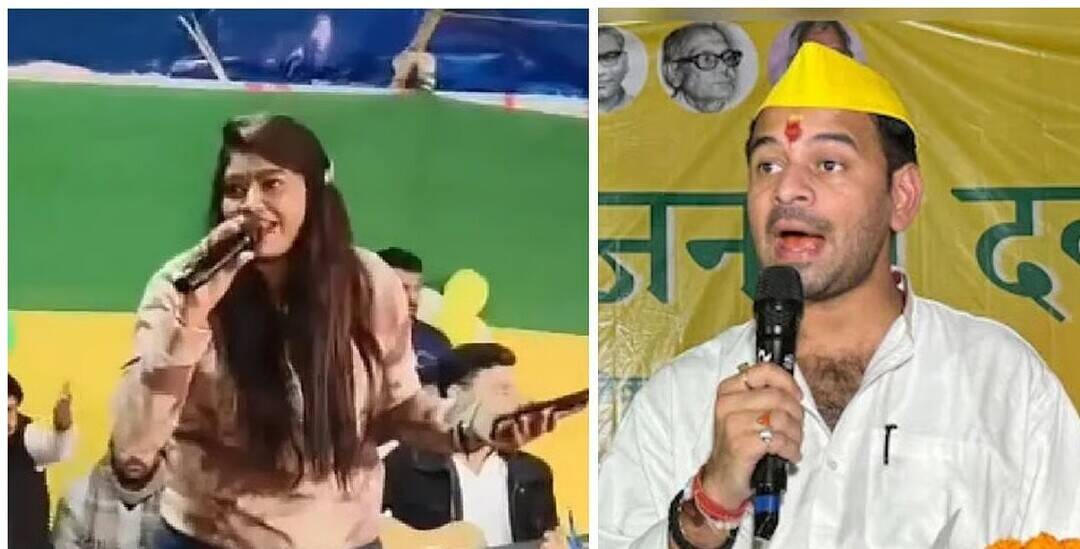
A recent incident at a Makar Sankranti event in Patna has sparked controversy and debate on social media. A video of Jan Adhikar Party (JAP) chief Tej Pratap Yadav interrupting a Bhojpuri singer in the middle of her performance has gone viral, with many people weighing in on the issue. The video shows Yadav, who is also the son of former Bihar Chief Minister Lalu Prasad Yadav, asking the singer to stop singing “vulgar” songs and instead sing devotional songs.
The incident occurred during a cultural event organized to celebrate Makar Sankranti, a significant festival in the Hindu calendar. The Bhojpuri singer, whose name has not been disclosed, was in the middle of her performance when Yadav suddenly walked onto the stage and asked her to stop singing. He was heard telling the singer, “Vulgar gaana mat gaao, bhajan gaao” (Don’t sing vulgar songs, sing hymns). He further added, “Krishna ji wala bhajan gaao” (Sing hymns of Lord Krishna).
The video of the incident has been widely shared on social media platforms, with many people expressing their opinions on the matter. While some have praised Yadav for taking a stand against “vulgar” content, others have criticized him for interfering with the singer’s performance and imposing his personal views on her.
The issue of “vulgar” content in music and entertainment has been a topic of debate in India for many years. Many people feel that the increasing popularity of explicit and suggestive content in music and films is a reflection of the declining moral values in society. On the other hand, others argue that artists have the freedom to express themselves and that censorship can stifle creativity and freedom of expression.
In this context, Yadav’s actions can be seen as an attempt to promote a more conservative and traditional approach to entertainment. By asking the singer to sing devotional songs instead of “vulgar” ones, he is essentially advocating for a more wholesome and family-friendly form of entertainment.
However, the question remains as to whether it is right for a politician or any individual to dictate what kind of music or content is acceptable. The singer in question was presumably hired to perform at the event, and it is not clear whether she was aware of Yadav’s preferences or boundaries beforehand.
Moreover, the incident raises questions about the role of politicians in shaping cultural and artistic norms. Should politicians be involved in deciding what kind of music or art is acceptable, or should they focus on more pressing issues such as governance and public policy?
The controversy surrounding Yadav’s actions has also sparked a debate about the definition of “vulgar” content. What constitutes “vulgar” or explicit content, and who gets to decide? Is it the prerogative of individual politicians or community leaders to dictate what kind of content is acceptable, or should it be left to the discretion of artists and creators?
Ultimately, the incident highlights the complex and often contentious relationship between politics, culture, and entertainment in India. As the country continues to evolve and grow, it is essential to have a nuanced and informed discussion about the role of politics in shaping cultural and artistic norms.
In conclusion, the incident involving Tej Pratap Yadav and the Bhojpuri singer has sparked an important debate about the intersection of politics, culture, and entertainment in India. While Yadav’s actions may have been motivated by a desire to promote more wholesome and family-friendly entertainment, they also raise important questions about censorship, artistic freedom, and the role of politicians in shaping cultural norms.
About the Author