Tej Pratap asks singer to not sing ‘vulgar’ songs at Patna event
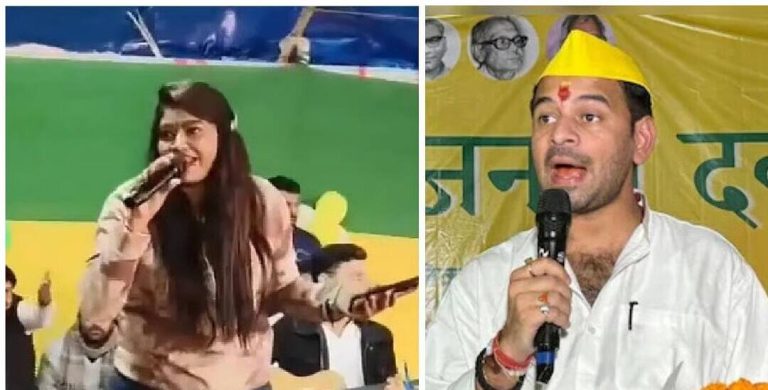
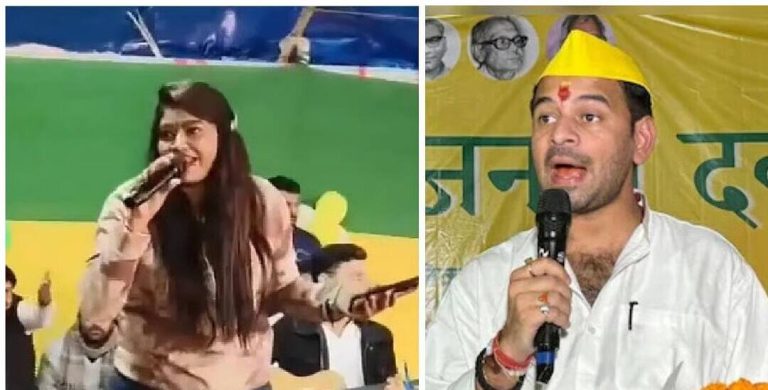
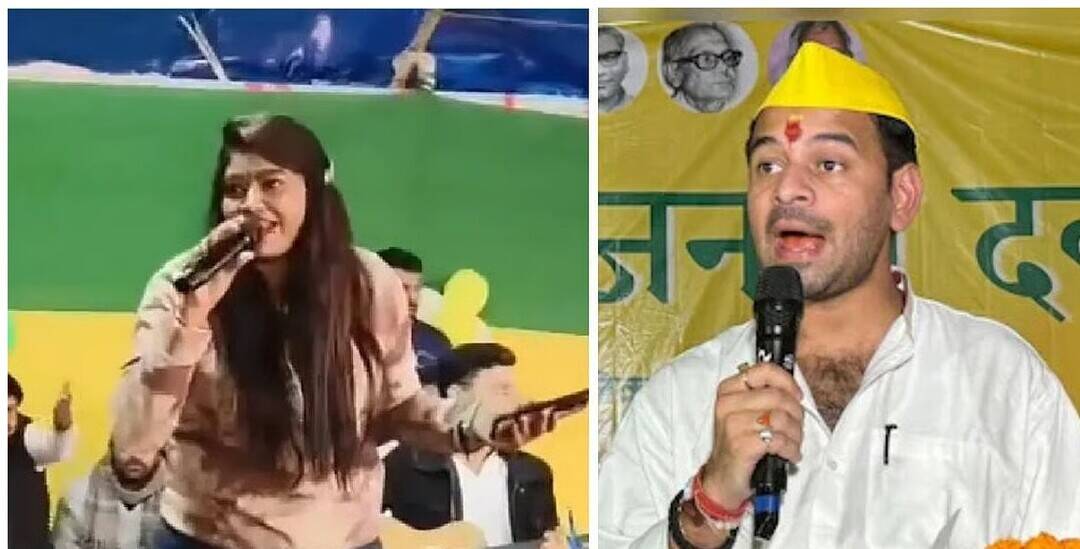
In a bizarre incident, Jan Adhikar Party (JAP) chief Tej Pratap Yadav was seen interrupting a Bhojpuri singer in the middle of her performance at a Makar Sankranti event in Patna. The video of the incident has gone viral on social media, sparking a debate about the role of politicians in deciding what constitutes “vulgar” content.
The video shows Tej Pratap Yadav, who is also the elder son of former Bihar Chief Minister Lalu Prasad Yadav, walking up to the stage where the singer is performing. He is seen whispering something in her ear, following which the singer stops singing and appears to be taken aback. Yadav then takes the microphone and addresses the crowd, saying, “Vulgar gaana mat gaao, bhajan gaao (don’t sing vulgar songs, sing hymns)”. He specifically asks the singer to sing “Krishna ji wala bhajan (hymns of Lord Krishna)”.
The incident has raised questions about the definition of “vulgar” content and who gets to decide what is acceptable and what is not. While some have praised Tej Pratap Yadav for taking a stand against “vulgar” content, others have criticized him for trying to impose his own moral standards on others.
The singer, who has not been named, was reportedly performing a popular Bhojpuri song when Tej Pratap Yadav interrupted her. Bhojpuri music is known for its earthy and folk-inspired lyrics, which often focus on themes of love, relationships, and everyday life. While some Bhojpuri songs may be considered risqué or explicit by some standards, others are more innocuous and focus on themes of devotion and spirituality.
Tej Pratap Yadav’s actions have been seen as an attempt to impose his own brand of moral policing on the event. By interrupting the singer and telling her to sing devotional songs instead, he is essentially dictating what kind of content is acceptable and what is not. This has raised concerns about the role of politicians in deciding what constitutes “vulgar” content and what does not.
Moreover, the incident highlights the ongoing debate about censorship and moral policing in India. In recent years, there have been numerous instances of politicians and self-appointed moral guardians trying to dictate what kind of content is acceptable and what is not. This has led to a stifling of creative freedom and a lack of diversity in artistic expression.
It is also worth noting that Tej Pratap Yadav’s actions may have been motivated by a desire to project himself as a champion of moral values. As a politician, he may be trying to appeal to a certain segment of the population that is concerned about the perceived decline of moral standards in society. By taking a stand against “vulgar” content, he may be trying to position himself as a leader who is committed to upholding traditional values.
However, this approach is problematic, as it ignores the complexities of artistic expression and the diversity of human experience. Art and music are meant to be expressive and provocative, and they often challenge societal norms and conventions. By trying to impose his own moral standards on others, Tej Pratap Yadav is essentially undermining the very purpose of art and music.
In conclusion, the incident involving Tej Pratap Yadav and the Bhojpuri singer highlights the ongoing debate about censorship and moral policing in India. While some may praise Yadav for taking a stand against “vulgar” content, others will see his actions as an attempt to impose his own moral standards on others. Ultimately, the decision of what constitutes “vulgar” content should be left to individual interpretation, rather than being dictated by politicians or self-appointed moral guardians.
About the Author