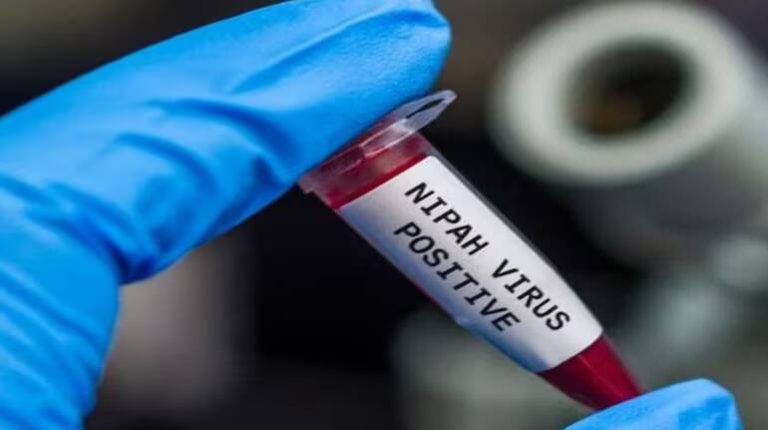
2 Suspected Nipah Virus Cases Detected in Bengal, Both Critical
The Nipah virus, a highly contagious and deadly disease, has once again raised its head in India. Two suspected cases of Nipah virus were detected in West Bengal’s Barasat, officials said on Monday. The infection was detected in two nurses, one male and one female, who are currently admitted to Barasat Hospital in critical condition. The news has sent shockwaves across the country, with the Union Health Minister JP Nadda taking immediate action to contain the outbreak.
According to reports, the two nurses, who were working at a private hospital in Barasat, started showing symptoms of the disease, including fever, headache, and respiratory problems. Upon being admitted to the hospital, they were tested for Nipah virus, and the results have come out positive. The hospital authorities have immediately isolated the patients, and a team of doctors is working tirelessly to provide them with the necessary treatment.
The Nipah virus is a zoonotic disease, meaning it can be transmitted from animals to humans. It is primarily spread through direct contact with infected bats, pigs, or other animals. The virus can also be transmitted from person to person through close contact with an infected individual. The symptoms of Nipah virus include fever, headache, dizziness, and respiratory problems, which can rapidly progress to more severe conditions such as encephalitis (inflammation of the brain) and pneumonia.
The Union Health Minister JP Nadda has taken swift action to contain the outbreak. A National Joint Outbreak Response Team has been sent to West Bengal to check the outbreak and provide assistance. The team, comprising experts from the National Centre for Disease Control (NCDC) and the All India Institute of Medical Sciences (AIIMS), will work closely with the state health authorities to identify the source of the infection and prevent further spread of the disease.
The West Bengal government has also taken measures to prevent the spread of the disease. The state health department has issued guidelines for hospitals and healthcare workers, emphasizing the need for proper personal protective equipment (PPE) and infection control practices. The government has also set up a control room to monitor the situation and provide updates to the public.
The detection of Nipah virus cases in West Bengal has raised concerns about the preparedness of the healthcare system to handle such outbreaks. The Nipah virus has a high mortality rate, and prompt treatment is essential to prevent complications and reduce the risk of death. The healthcare system in West Bengal, particularly in rural areas, faces several challenges, including a shortage of doctors, lack of infrastructure, and inadequate equipment.
The Indian government has been working to strengthen the healthcare system, particularly in the wake of the COVID-19 pandemic. The government has launched several initiatives, including the Ayushman Bharat scheme, which aims to provide health insurance to millions of poor and vulnerable families. The government has also been working to improve the infrastructure of hospitals and healthcare facilities, particularly in rural areas.
In conclusion, the detection of two suspected Nipah virus cases in West Bengal’s Barasat has raised concerns about the spread of the disease. The Union Health Minister JP Nadda has taken swift action to contain the outbreak, and a National Joint Outbreak Response Team has been sent to West Bengal to provide assistance. The West Bengal government has also taken measures to prevent the spread of the disease, including issuing guidelines for hospitals and healthcare workers. The healthcare system in India, particularly in rural areas, faces several challenges, and it is essential to strengthen it to handle such outbreaks effectively.
As the situation continues to unfold, it is essential for the public to remain vigilant and take necessary precautions to prevent the spread of the disease. The Nipah virus is a deadly disease, and prompt treatment is essential to prevent complications and reduce the risk of death. The government and healthcare authorities must work together to contain the outbreak and prevent further spread of the disease.
About the Author