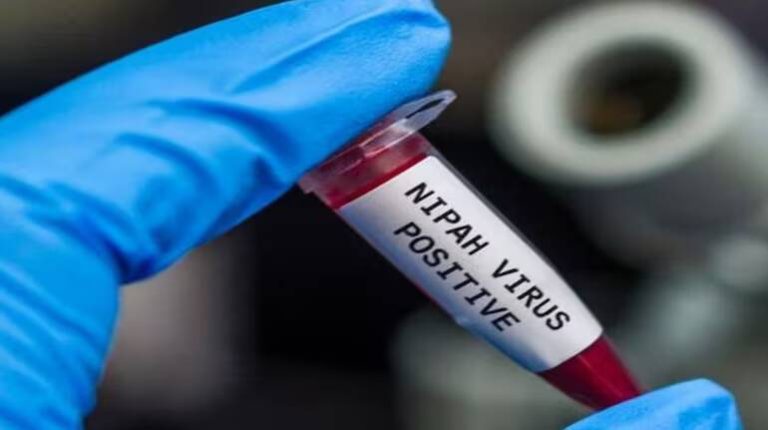
2 Suspected Nipah Virus Cases Detected in Bengal, Both Critical
The Nipah virus, a highly contagious and deadly disease, has once again raised concerns in India. Two suspected cases of Nipah virus were detected in West Bengal’s Barasat, officials said on Monday. The infection was detected in two nurses, one male and one female, who are currently admitted to Barasat Hospital in critical condition. This news has sent shockwaves across the country, and the central government has swiftly responded by sending a team to contain the outbreak.
According to reports, the two nurses, who were working at a private hospital in Barasat, started showing symptoms of the disease, including fever, headache, and respiratory problems. After initial tests, they were suspected to be infected with the Nipah virus, and their samples were sent to the National Institute of Virology (NIV) in Pune for confirmation. The results are still awaited, but the symptoms and initial tests have raised concerns among health officials.
The Nipah virus is a zoonotic disease, meaning it can be transmitted between animals and humans. It is primarily spread through direct contact with infected bats, pigs, or other animals, as well as through contaminated food and water. The virus can also be transmitted from person to person through close contact with an infected individual. The symptoms of Nipah virus infection can range from mild to severe and include fever, headache, drowsiness, and respiratory problems. In severe cases, the virus can cause encephalitis, or inflammation of the brain, which can be fatal.
The detection of suspected Nipah virus cases in Bengal has raised concerns about the preparedness of the healthcare system to handle such outbreaks. The state government has assured that all necessary measures are being taken to contain the outbreak and provide treatment to the infected individuals. The Barasat Hospital, where the two nurses are admitted, has been equipped with necessary facilities and personnel to handle the cases.
Union Health Minister JP Nadda has said that a National Joint Outbreak Response Team has been sent to West Bengal to check the outbreak and provide assistance. The team, comprising experts from the National Centre for Disease Control (NCDC) and the All India Institute of Medical Sciences (AIIMS), will work closely with the state health authorities to contain the outbreak and provide necessary support. The team will also conduct contact tracing, which involves identifying individuals who may have come into contact with the infected nurses, to prevent further spread of the disease.
The central government’s swift response to the outbreak is a reassuring sign, and it is hoped that the situation will be brought under control soon. The Nipah virus outbreak in Kerala last year had highlighted the need for preparedness and coordination between different government agencies to handle such public health emergencies. The current outbreak in Bengal is a reminder that the threat of Nipah virus is still present, and it requires constant vigilance and preparedness to prevent and control outbreaks.
In the meantime, the people of Bengal, particularly those living in and around Barasat, have been advised to take necessary precautions to prevent the spread of the disease. This includes avoiding close contact with individuals who are suspected to be infected, wearing masks, and maintaining good hygiene practices. The state government has also issued guidelines for healthcare workers, including the use of personal protective equipment (PPE) and following proper infection control protocols.
As the situation unfolds, it is essential to remain calm and follow the instructions of health authorities. The Nipah virus outbreak in Bengal is a reminder of the importance of public health infrastructure and the need for continued investment in healthcare systems. It is also a reminder of the importance of coordination and cooperation between different government agencies, healthcare providers, and the community to prevent and control outbreaks.
In conclusion, the detection of suspected Nipah virus cases in Bengal is a concerning development, and it requires immediate attention and action. The central government’s swift response to the outbreak is a reassuring sign, and it is hoped that the situation will be brought under control soon. As we wait for further updates, it is essential to remain vigilant and take necessary precautions to prevent the spread of the disease.
About the Author