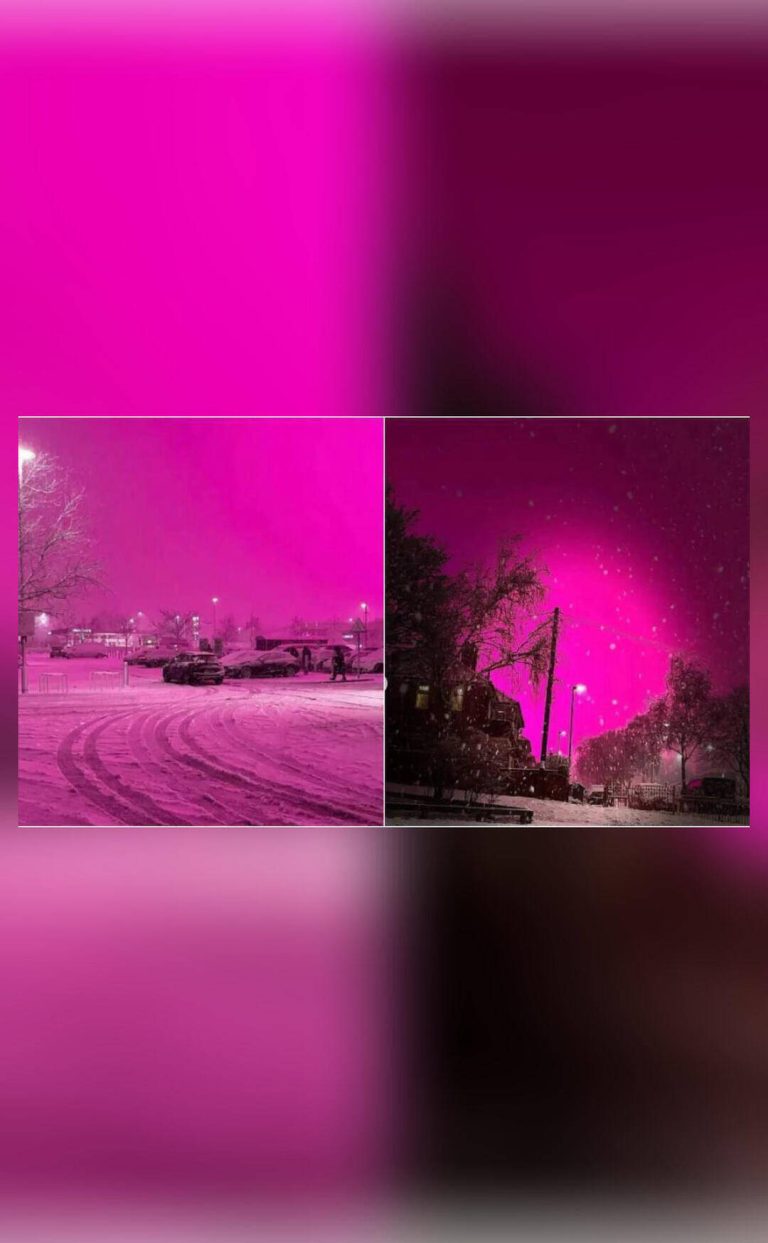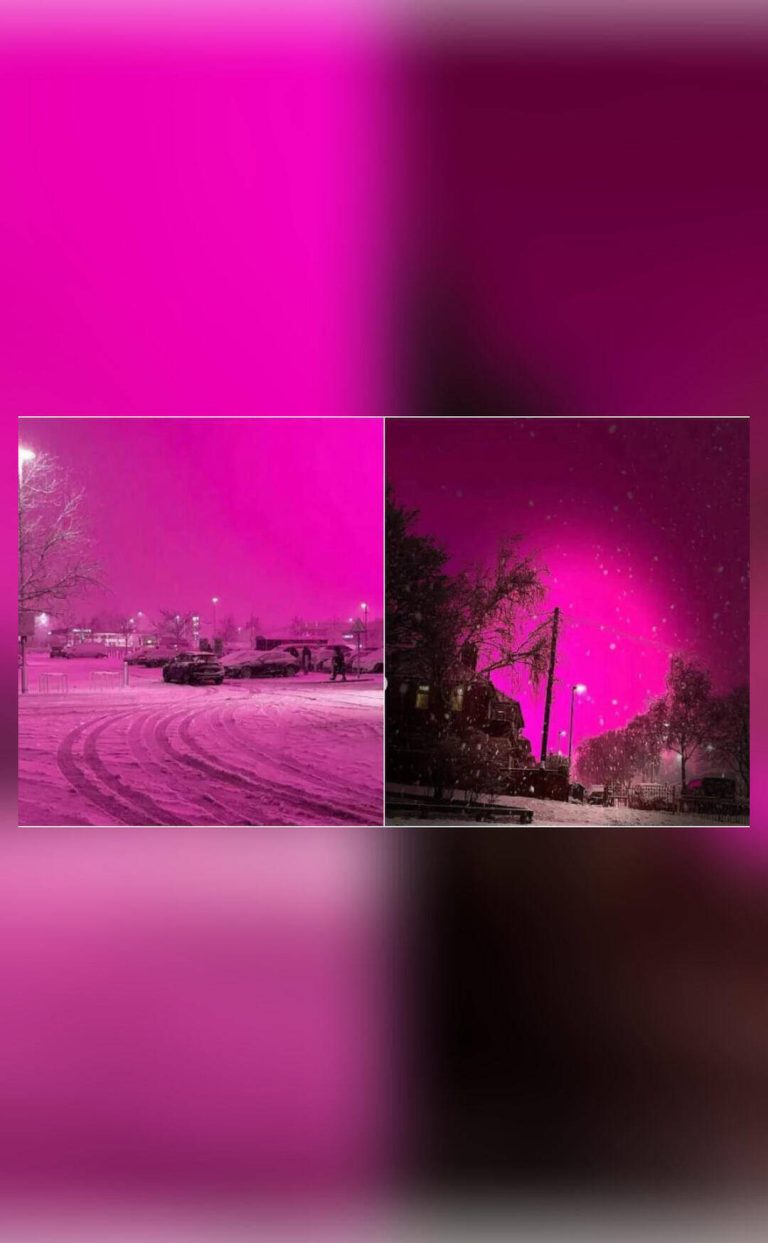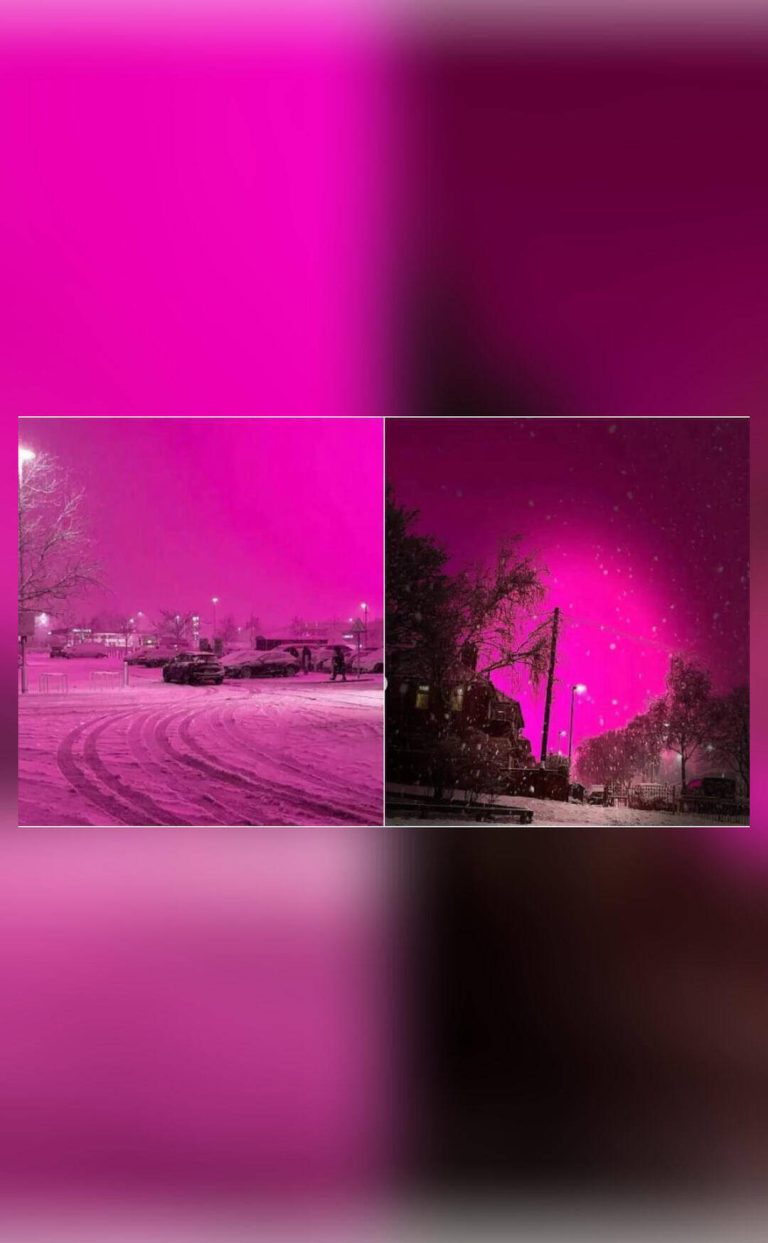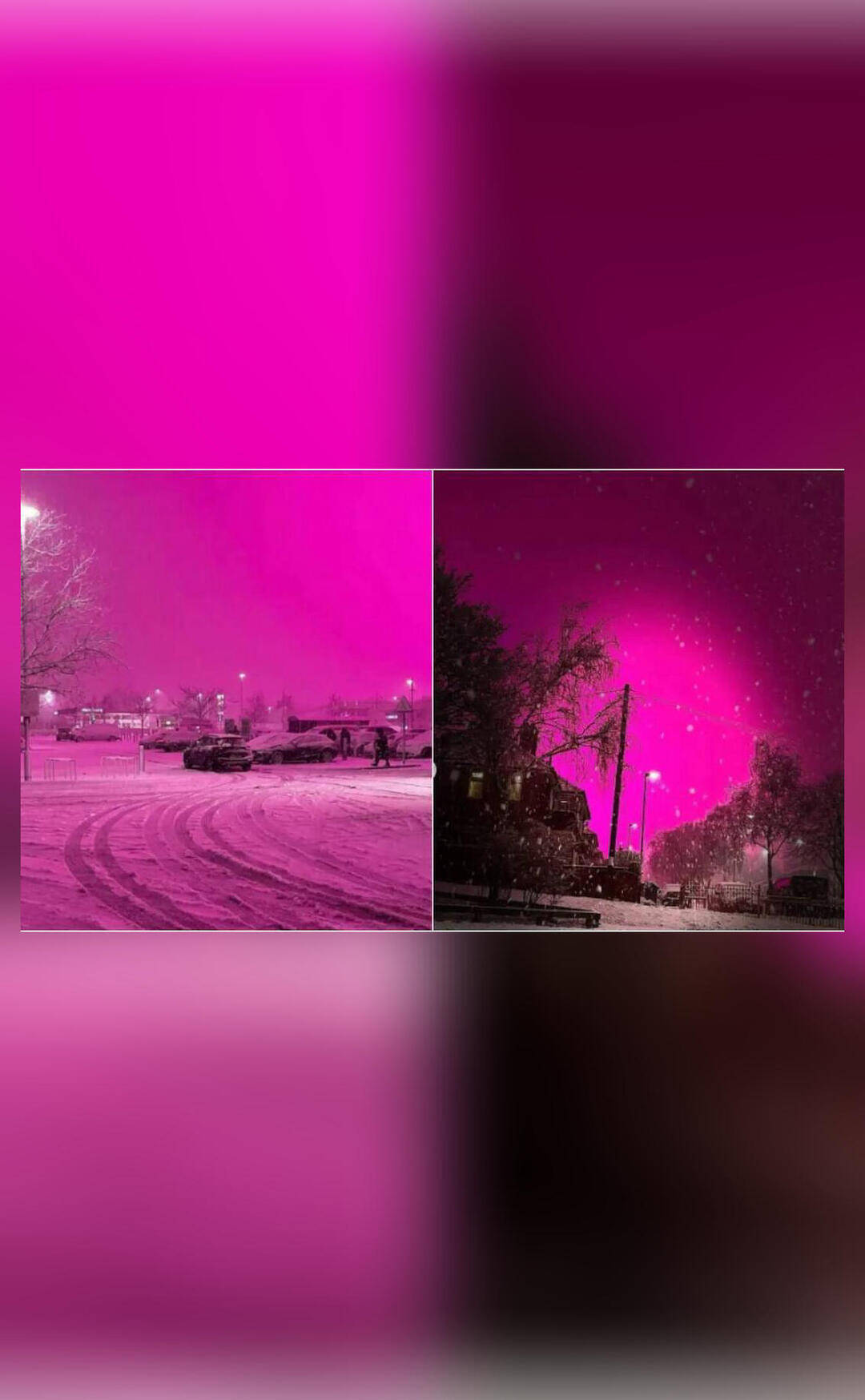
Sky turns pink in UK’s Birmingham as snow reflects stadium lights
In a breathtaking spectacle, the sky over Birmingham in the UK turned a mesmerizing shade of pink on Thursday evening, leaving residents and visitors alike in awe. However, the pink colour of the sky was not due to a natural phenomenon, such as a sunset or a rare atmospheric condition, but rather caused by the floodlights at St Andrew’s Stadium.
St Andrew’s Stadium, home to Birmingham City Football Club, is a prominent landmark in the city, and its state-of-the-art LED floodlights are designed to illuminate the playing field for evening matches. On this particular evening, the combination of the LED lights, low cloud cover, and snow on the ground created a unique condition that made the sky appear pink.
The science behind this phenomenon is quite fascinating. When the LED lights at the stadium were turned on, they emitted a broad spectrum of light, including blue, green, and red wavelengths. The low cloud cover, which was present over the city, acted as a reflector, scattering the shorter blue wavelengths of light more than the longer red wavelengths. This is known as Rayleigh scattering, named after the British physicist Lord Rayleigh, who first described the phenomenon in the late 19th century.
As the light was scattered by the cloud cover, it took on a pinkish hue, which was then reflected back to the ground by the snow. The snow, acting as a perfect reflector, bounced the pink light back up into the air, creating the illusion that the sky itself had turned pink. The result was a stunning visual effect that was visible from various parts of the city, with many residents taking to social media to share photos and videos of the phenomenon.
The pink colour of the sky was not limited to the immediate vicinity of the stadium, but could be seen from several miles away, with some reports suggesting that it was visible from as far as 10 miles away. The spectacle was short-lived, however, as the lights at the stadium were eventually turned off, and the cloud cover began to clear, causing the pink hue to disappear.
While the phenomenon may have been caused by artificial lighting, it is a reminder of the beauty and complexity of the natural world. The combination of human-made light sources, atmospheric conditions, and natural reflectors can create breathtaking visual effects that are both surprising and delightful.
In recent years, there have been several instances of unusual lighting effects being reported in various parts of the world, often caused by a combination of natural and artificial factors. For example, in 2019, a “light pillar” was observed in the sky over parts of Canada, caused by the reflection of streetlights off ice crystals in the atmosphere.
Similarly, in 2020, a “moonbow” was spotted in the sky over parts of the UK, caused by the reflection of moonlight off water droplets in the atmosphere. These phenomena serve as a reminder of the complex interplay between human-made and natural factors that can create unexpected and beautiful visual effects.
In conclusion, the pink sky over Birmingham was a unique and breathtaking spectacle that was caused by the combination of artificial lighting, atmospheric conditions, and natural reflectors. While it may not have been a natural phenomenon in the classical sense, it is a reminder of the beauty and complexity of the world around us, and the surprising visual effects that can be created by the interaction of human-made and natural factors.
News Source: https://www.republicworld.com/amp/viral/sky-turns-pink-in-birmingham-know-real-reason-behind-the-stunning-glow
About the Author