Tiny ancient animal had sharpest teeth ever, study finds
For centuries, humans have been fascinated by the sharp teeth of predators like sharks and dinosaurs. These animals have been revered for their powerful jaws and razor-sharp teeth, which have been perfected over millions of years of evolution. However, new research has revealed that the sharpest teeth ever belonged not to these iconic creatures, but to a tiny, jawless marine animal called conodonts. These ancient animals, which lived over 500 million years ago, had microscopic tooth elements that were sharper than any modern animal teeth and even steel blades.
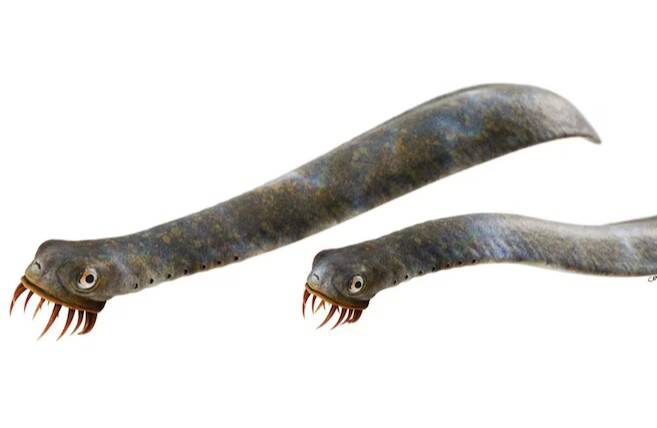
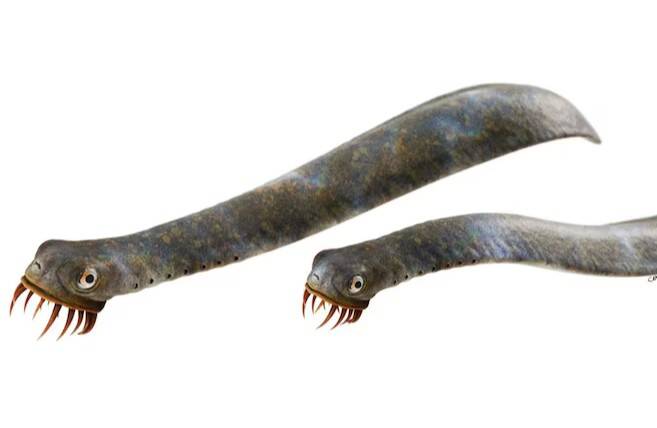
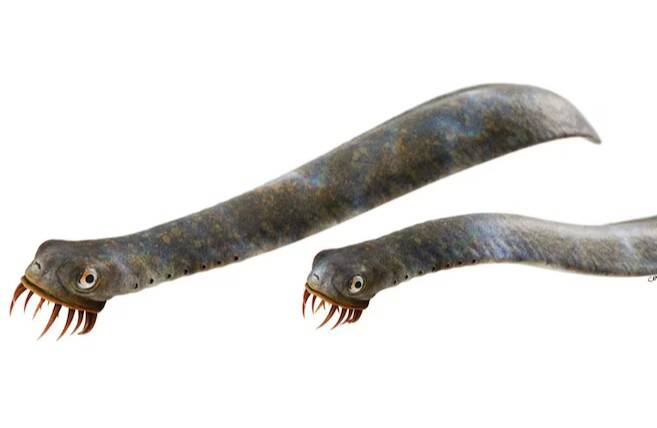
Conodonts were small, eel-like creatures that lived during the Cambrian Period, a time of great evolutionary diversity and innovation. They were among the first animals to evolve on Earth and were characterized by their simple, soft bodies and lack of jaws. Despite their modest appearance, conodonts were surprisingly well-equipped with tiny, tooth-like structures that they used to capture and eat prey.
The discovery of conodonts’ sharp teeth was made possible by advances in fossil analysis and microscopy. Scientists used high-powered microscopes to examine the microscopic tooth elements of conodonts, which were found to be incredibly sharp and precise. In fact, the teeth were so sharp that they were able to cut through even the toughest materials, including steel.
The study, which was published in a recent scientific journal, found that conodonts’ teeth had a unique structure that allowed them to achieve such sharpness. The teeth were made up of a hard, mineralized material that was arranged in a specific pattern to maximize their cutting ability. This pattern, which is known as a “saw-tooth” arrangement, allowed the teeth to slice through materials with ease and precision.
But what’s even more remarkable about conodonts’ teeth is that they were able to achieve such sharpness without the benefit of modern materials or technology. The teeth were made up of a combination of minerals, including apatite and quartz, which were arranged in a specific way to maximize their hardness and durability. This is a testament to the incredible diversity and adaptability of life on Earth, which has been able to evolve and thrive in even the most challenging environments.
The discovery of conodonts’ sharp teeth has significant implications for our understanding of evolution and the history of life on Earth. It shows that even the simplest and most ancient creatures were capable of evolving complex and sophisticated structures, and that the principles of evolution and adaptation are universal and timeless.
In addition, the study of conodonts’ teeth has also inspired new developments in materials science and engineering. Scientists are now using the principles of conodonts’ tooth structure to develop new materials and technologies that are stronger, lighter, and more efficient. For example, researchers are using the saw-tooth arrangement of conodonts’ teeth as a model for developing new cutting tools and machinery.
The study of conodonts’ teeth is also a reminder of the importance of preserving and protecting our natural heritage. Fossils like conodonts are a window into the past, providing us with a unique glimpse of the evolution and diversity of life on Earth. By studying these fossils, we can gain a deeper understanding of the natural world and our place within it.
In conclusion, the discovery of conodonts’ sharp teeth is a remarkable find that has shed new light on the evolution and diversity of life on Earth. These tiny, jawless marine animals were able to evolve some of the sharpest teeth ever, using a combination of minerals and a unique saw-tooth arrangement to maximize their cutting ability. The study of conodonts’ teeth has significant implications for our understanding of evolution, materials science, and the natural world, and is a reminder of the importance of preserving and protecting our natural heritage.
About the Author