Tiny ancient animal had sharpest teeth ever, study finds
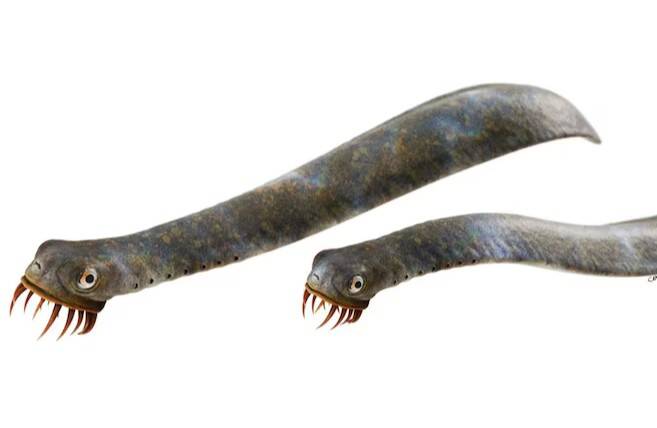
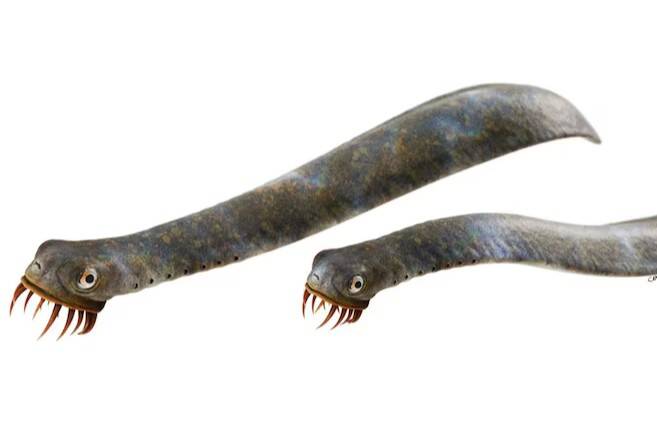
For a long time, it was believed that the sharpest teeth in the animal kingdom belonged to fearsome predators like sharks and dinosaurs. However, new research has revealed that the title of “sharpest teeth” actually belongs to a tiny, jawless marine animal called conodonts. These ancient creatures, which lived over 500 million years ago, had microscopic tooth elements that were sharper than any modern animal teeth and even steel blades.
Conodonts were small, eel-like animals that lived during the Paleozoic and Triassic periods. They were one of the first vertebrates to appear on Earth and were characterized by their lack of jaws and teeth. Or so it was thought. Recent fossil analysis has shown that conodonts had complex, tooth-like structures called conodont elements, which were made of hard, calcium phosphate materials.
The study, which was conducted by a team of scientists, used advanced imaging techniques to examine the conodont elements in detail. They found that the teeth were remarkably sharp, with some specimens having a sharpness that rivaled that of steel blades. In fact, the conodont elements were found to be sharper than any other known biological material, including the teeth of modern sharks and reptiles.
So, how did these tiny animals manage to produce such incredibly sharp teeth? The answer lies in their unique anatomy. Conodonts had a pair of tooth-like structures called “rami” that were used for capturing and eating prey. These rami were made up of hundreds of individual conodont elements, each of which was shaped like a tiny, pointed triangle.
The conodont elements were arranged in a specific pattern, with the pointed ends facing outward. This arrangement allowed the conodonts to use their teeth to grasp and tear at their prey, much like a pair of scissors. The sharpness of the conodont elements was also enhanced by their tiny size, which allowed them to be extremely precise and effective at cutting and tearing.
But what’s even more remarkable about the conodonts’ teeth is that they were able to achieve such sharpness using only biological materials. The conodont elements were made of a hard, calcium phosphate material that is similar to the material found in human teeth. However, the conodonts were able to shape and sharpen their teeth to a degree that is not seen in any other biological material.
The study’s findings have significant implications for our understanding of the evolution of teeth and the development of sharp, cutting tools. The conodonts’ ability to produce such sharp teeth using only biological materials pushes the limits of what we thought was possible in terms of biological design. It also highlights the incredible diversity and adaptability of life on Earth, where even the smallest and most ancient creatures can possess remarkable and unexpected features.
The discovery of the conodonts’ sharp teeth also has potential applications in fields such as materials science and engineering. By studying the structure and composition of the conodont elements, scientists may be able to develop new materials and technologies that mimic the properties of these ancient teeth.
In conclusion, the discovery of the conodonts’ sharp teeth is a remarkable finding that challenges our assumptions about the evolution of teeth and the development of sharp, cutting tools. These tiny, ancient animals have shown us that even the smallest creatures can possess remarkable and unexpected features, and that the natural world is full of surprises and wonders waiting to be discovered.
The study’s findings are a testament to the power of scientific inquiry and the importance of continued exploration and discovery. By studying the natural world and uncovering its secrets, we can gain a deeper understanding of the world around us and develop new technologies and innovations that can improve our lives.
About the Author