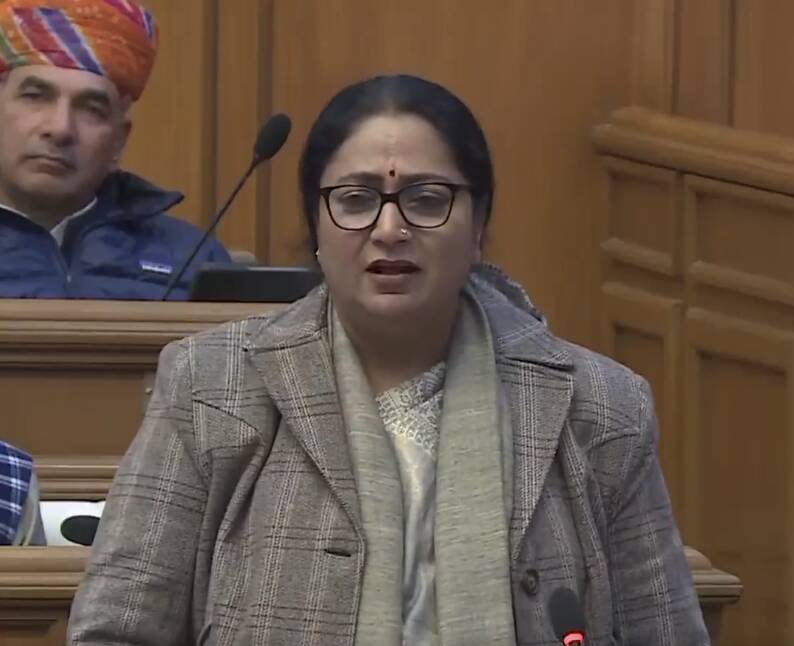
It hurts me: Rekha on AAP’s memes targeting her over verbal slips
In a recent statement, Delhi Chief Minister Rekha Gupta expressed her disappointment and hurt over the constant mocking and memes created by the Aam Aadmi Party (AAP) targeting her verbal slips. The Chief Minister stated that she feels deeply hurt when a word slips from her mouth by mistake, and AAP makes memes on it and mocks her. This statement comes after she was mocked for mispronouncing AQI as “AIQ” and for accidentally saying “Congress” instead of “British” during a speech.
Rekha Gupta, who has been in the spotlight for her leadership and policies, has been a subject of ridicule and mockery by the AAP for her verbal slips. The party has been creating memes and jokes on social media, highlighting her mistakes and using them to criticize her. While some may see this as a lighthearted and humorous way to engage with politics, Rekha Gupta feels that it is a personal attack and an attempt to belittle her.
The Chief Minister’s statement highlights the challenges faced by women in politics, particularly when it comes to public speaking and communication. A single slip of the tongue can be magnified and used to question their intelligence, competence, and credibility. This can be damaging not only to the individual but also to the overall perception of women in leadership roles.
Rekha Gupta’s comments also raise questions about the culture of politics and the way politicians interact with each other. In an ideal world, politicians would engage in respectful and constructive dialogue, focusing on policies and ideas rather than personal attacks. However, the reality is that politics can be a cutthroat and competitive field, where opponents often use any means necessary to gain an advantage.
The use of memes and social media to mock and ridicule politicians is a relatively new phenomenon, and it has become a popular way for parties and individuals to engage with each other. While it can be an effective way to communicate and connect with voters, it can also be used to spread misinformation and personal attacks. In the case of Rekha Gupta, the AAP’s memes and jokes have been used to mock her verbal slips, which can be seen as a form of bullying and harassment.
It is essential to recognize that verbal slips and mistakes are a natural part of human communication. Even the most experienced and skilled public speakers can make mistakes, and it is how they respond and learn from those mistakes that matters. Rather than mocking and ridiculing Rekha Gupta for her verbal slips, the AAP and other parties should focus on engaging in constructive dialogue and debating policies and ideas.
The impact of the AAP’s memes and jokes on Rekha Gupta’s personal and professional life should not be underestimated. As a public figure, she is already under intense scrutiny and pressure, and the constant mocking and ridicule can take a toll on her mental health and well-being. It is essential to recognize that politicians are human beings, with feelings and emotions, and that they deserve to be treated with respect and dignity.
In conclusion, Rekha Gupta’s statement highlights the need for a more respectful and constructive dialogue in politics. Rather than using memes and jokes to mock and ridicule each other, parties and individuals should focus on engaging in respectful and meaningful discussions about policies and ideas. By doing so, we can create a more positive and inclusive political culture, where women and men can participate and lead without fear of ridicule and harassment.
The incident also raises questions about the role of social media in politics and the need for responsible and respectful communication. As social media continues to play a larger role in politics, it is essential to recognize the potential impact of our words and actions on others. By promoting a culture of respect and empathy, we can create a more positive and constructive online environment, where politicians and citizens can engage in meaningful discussions and debates.
As we move forward, it is essential to remember that politicians are human beings, with strengths and weaknesses, and that they deserve to be treated with respect and dignity. Rather than mocking and ridiculing each other, we should focus on promoting a culture of empathy and understanding, where everyone can participate and contribute without fear of ridicule and harassment.
About the Author