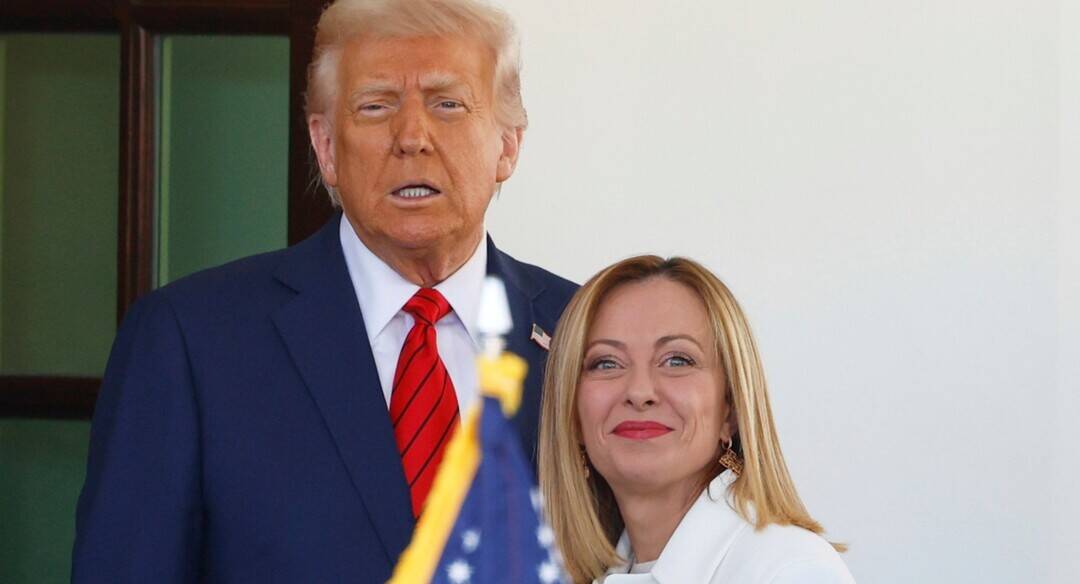
I Believe Trump Won’t Use Force to Seize Greenland: Meloni
In a recent statement, Italian Prime Minister Giorgia Meloni expressed her doubts regarding the possibility of the United States using military force to seize Greenland. This statement comes amid speculations and concerns about the intentions of former US President Donald Trump, who has previously expressed interest in purchasing the autonomous Danish territory. Meloni’s comments not only reflect her own stance on the matter but also underscore the potential implications of such an action for the North Atlantic Treaty Organization (NATO) and global geopolitics.
To understand the context of Meloni’s statement, it is essential to revisit the history of Trump’s remarks on Greenland. In 2019, Trump sparked controversy when he suggested that the United States should consider buying Greenland from Denmark. This proposal was met with skepticism and outright rejection by the Danish government, as well as the people of Greenland, who view their autonomy and connection to Denmark as crucial to their identity and self-governance. Despite the initial backlash, the idea has not entirely disappeared from the realm of political discourse, leading to ongoing speculation about potential US interests in the region.
Meloni’s assertion that she does not believe Trump would use force to seize Greenland is significant for several reasons. Firstly, it reflects a cautious approach to international relations, recognizing the sensitive nature of territorial sovereignty and the potential for military action to escalate into broader conflicts. Secondly, by stating her disbelief in the likelihood of such an action, Meloni may be attempting to diffuse tension and reassure allies and partners that the international community is committed to resolving disputes through diplomatic means rather than force.
However, Meloni also made it clear that she would not support any move by the US to use military force to acquire Greenland. This stance is crucial as it aligns with the principles of international law and the respect for sovereignty that underpin modern global relations. The use of force to annex territory is a violation of these principles and would likely face widespread condemnation from the international community. By preemptively stating her opposition, Meloni is signaling Italy’s commitment to these principles and its role as a responsible actor in global affairs.
The potential consequences of the US using force to seize Greenland would indeed be grave, not just for the region but for the broader structure of international relations. For NATO, an alliance that has been a cornerstone of European and North American security since the Cold War, such an action would pose significant challenges. The alliance is built on principles of mutual defense and cooperation, and any unilateral action by a member state that violates international law and sovereignty would undermine trust and cohesion within the alliance. Meloni’s warning, therefore, is not just about the immediate consequences of such an action but also about the long-term implications for global security and stability.
It is also noteworthy that Meloni mentioned her agreement with Trump on Venezuela, contrasting it with her disagreement on Greenland. This highlights the complex nature of international relations, where countries may find common ground on certain issues while diverging sharply on others. The situation in Venezuela, marked by political crisis and economic hardship, has been a point of concern for many nations, with various approaches being considered to address the humanitarian and political challenges. By distinguishing between these issues, Meloni demonstrates an nuanced understanding of global politics, recognizing where cooperation is possible and where principles must be upheld.
In conclusion, Italian Prime Minister Giorgia Meloni’s statement on the possibility of the US using force to seize Greenland reflects a careful and principled approach to international relations. By expressing her disbelief in the likelihood of such an action and stating her opposition to it, Meloni reinforces the importance of respecting sovereignty and adhering to international law. The potential consequences of using force for territorial gain would be far-reaching and damaging, not just for the regions directly involved but for the global community as a whole. As nations navigate the complex landscape of international relations, statements like Meloni’s serve as important reminders of the need for diplomacy, cooperation, and a commitment to the principles that underpin peace and stability.
About the Author