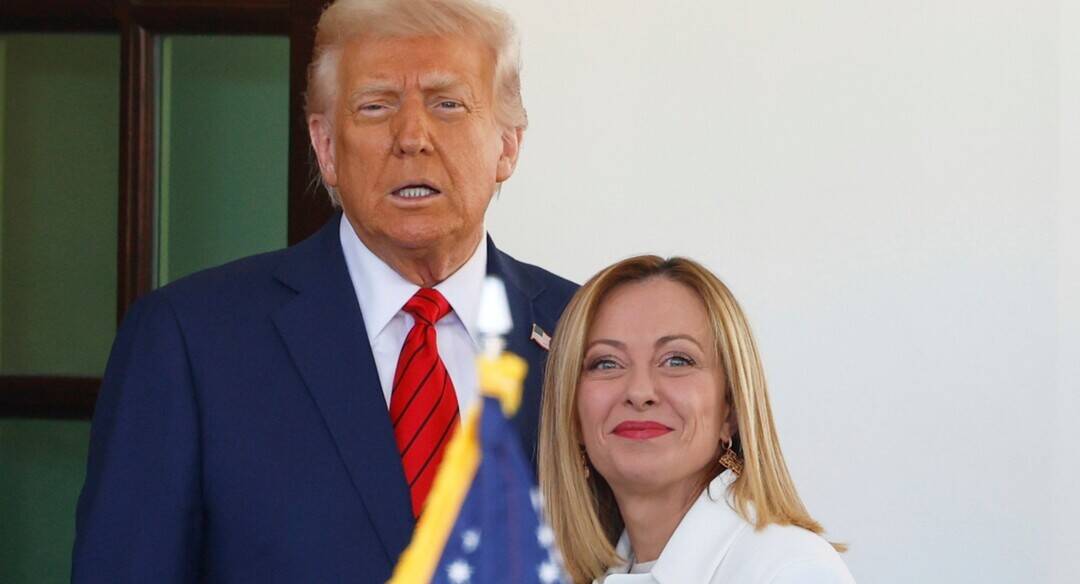
I Believe Trump Won’t Use Force to Seize Greenland: Meloni
In a recent statement, Italian Prime Minister Giorgia Meloni expressed her skepticism regarding the possibility of the United States using military force to seize Greenland. This comment comes after former US President Donald Trump’s infamous suggestion to purchase the autonomous Danish territory in 2019. Meloni’s remarks are significant, as they underscore the concerns of European leaders about the potential consequences of such an action on global politics and international relations.
During an interview, Meloni stated that she does not believe the United States would resort to using military force to take control of Greenland. Furthermore, she emphasized that she would not support any such action, highlighting the potential risks and consequences that it could entail. The Italian Prime Minister’s stance on this issue is crucial, as it reflects the perspective of a key European leader and a member of the North Atlantic Treaty Organization (NATO).
Meloni’s comments also reveal her nuanced approach to international politics, as she seeks to balance her relationships with other world leaders while upholding the principles of sovereignty and territorial integrity. Her statement, “I agreed with Trump on Venezuela. I do not agree with him on Greenland,” suggests that she is willing to collaborate with the US on certain issues, but she will not hesitate to express her disagreement when it comes to matters that she believes are crucial to European and global stability.
The idea of the United States purchasing or seizing Greenland is not new, but it gained significant attention in 2019 when Trump floated the idea of buying the island from Denmark. The suggestion was met with widespread criticism and ridicule, with many experts and leaders dismissing it as unrealistic and impractical. The Danish government, in particular, was quick to reject the idea, emphasizing that Greenland is not for sale.
Despite the controversy surrounding Trump’s suggestion, the issue of Greenland’s sovereignty and territorial integrity remains a sensitive topic. The island has been a Danish territory since 1814, but it has been gradually moving towards greater autonomy, with the Danish government transferring more powers to the local authorities in recent years. The idea of the US or any other country seeking to acquire Greenland through military force or other means is, therefore, deeply problematic and would likely be met with strong opposition from the international community.
Meloni’s warning that a US attempt to seize Greenland would have grave consequences for NATO is particularly significant. As a key member of the alliance, Italy plays an important role in shaping European security policy and maintaining the stability of the region. The Italian Prime Minister’s statement suggests that she is aware of the potential risks and consequences of such an action, including the potential damage to NATO’s credibility and the erosion of trust among its member states.
The implications of a US attempt to seize Greenland would be far-reaching, with potential consequences for global politics, international relations, and the environment. The island is home to a unique and fragile ecosystem, with significant natural resources, including rare earth minerals and fisheries. Any attempt to acquire the island through military force would not only be a violation of international law but also a threat to the region’s environmental sustainability.
In conclusion, Italian Prime Minister Giorgia Meloni’s statement on the possibility of the US using military force to seize Greenland is a significant development in the ongoing debate about the island’s sovereignty and territorial integrity. Her skepticism about the likelihood of such an action and her explicit opposition to it reflect the concerns of European leaders about the potential consequences of such a move. As the international community continues to navigate the complexities of global politics and international relations, Meloni’s comments serve as a reminder of the importance of upholding the principles of sovereignty, territorial integrity, and environmental sustainability.
About the Author