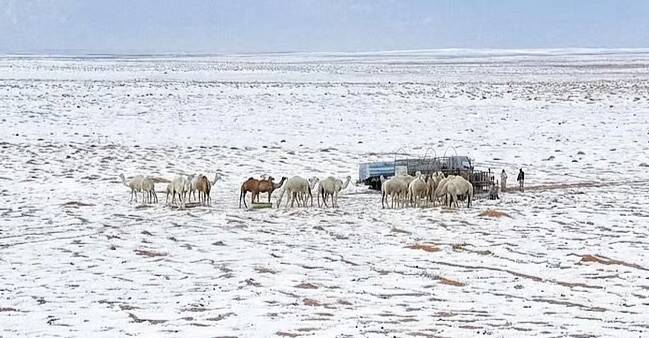
Saudi Deserts Once Had Rivers, Lakes, and Grasslands: Study
The deserts of Saudi Arabia are known for their vast expanses of sand, harsh climate, and limited vegetation. However, new studies have revealed that this was not always the case. In a surprising discovery, scientists have found that Saudi Arabia’s deserts were once rich landscapes with rivers, lakes, and vast grasslands that supported plants, animals, and early humans. The findings have significant implications for our understanding of the region’s history, climate, and ecosystem.
The study, which was conducted by a team of researchers from various institutions, used a combination of geological, archaeological, and paleontological data to reconstruct the environmental history of Saudi Arabia. The team analyzed sediment cores, fossil records, and other evidence to piece together a picture of the region’s past. What they found was astonishing: the deserts of Saudi Arabia were once teeming with life, with rivers, lakes, and grasslands supporting a wide range of flora and fauna.
One of the most striking discoveries was that the Rub’ al-Khali, also known as the Empty Quarter, was once a huge lake. The Rub’ al-Khali is now an ocean of sand, covering over 650,000 square kilometers of southern Saudi Arabia. However, during wetter climatic phases, the region was filled with water, supporting a diverse range of aquatic life. The lake was likely fed by rivers and streams that flowed from the surrounding mountains, creating a lush and verdant landscape.
The presence of water-dependent species such as hippos, crocodiles, and fish also suggests that the region was once much wetter than it is today. Fossil records show that these species thrived in the region during periods of high rainfall, which allowed rivers and lakes to form and support a wide range of aquatic life. The discovery of these fossils has significant implications for our understanding of the region’s ecological history and the impact of climate change on the environment.
The study also found that the grasslands of Saudi Arabia were once much more extensive than they are today. The region’s grasslands were likely supported by a combination of rainfall and groundwater, which allowed plants to grow and thrive. The presence of grasslands would have also supported a wide range of herbivores, such as gazelles, antelopes, and other ungulates, which would have in turn supported predators such as lions, leopards, and hyenas.
The discovery of these ancient landscapes has significant implications for our understanding of human history in the region. The presence of rivers, lakes, and grasslands would have made the region much more habitable for early humans, who would have been able to hunt, gather, and farm in the area. The study suggests that early humans may have been attracted to the region due to its abundant resources, which would have allowed them to settle and thrive.
However, when the climate shifted, the waters vanished, and the sands reclaimed the land. The region’s ecosystem was dramatically altered, and the landscape was transformed into the desert we see today. The study suggests that this process occurred over thousands of years, as the climate changed and the region became drier and more arid.
The findings of this study have significant implications for our understanding of the impact of climate change on the environment. The discovery of these ancient landscapes shows that even the most inhospitable regions can be dramatically altered by changes in the climate. The study highlights the importance of understanding the environmental history of a region, in order to better appreciate the impact of human activities on the ecosystem.
In conclusion, the discovery of Saudi Arabia’s lush past is a significant finding that challenges our assumptions about the region’s environmental history. The study shows that the deserts of Saudi Arabia were once rich landscapes with rivers, lakes, and vast grasslands that supported plants, animals, and early humans. The findings have significant implications for our understanding of the region’s history, climate, and ecosystem, and highlight the importance of understanding the environmental history of a region in order to better appreciate the impact of human activities on the ecosystem.
About the Author