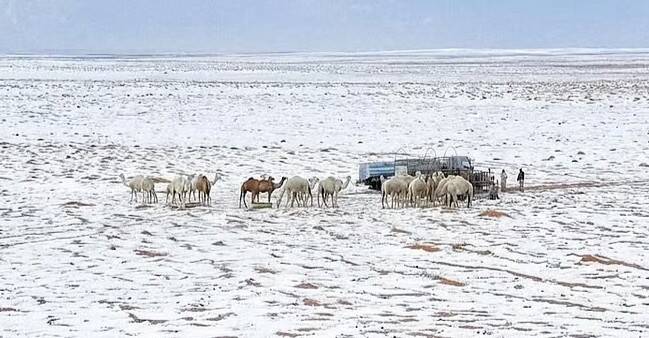
Saudi Deserts Once Had Rivers, Lakes, and Grasslands: Study
The deserts of Saudi Arabia are known for their harsh and arid conditions, with endless dunes of sand stretching as far as the eye can see. However, new studies have revealed a surprising truth about the region’s past. Contrary to its current landscape, Saudi Arabia’s deserts were once rich and diverse ecosystems, complete with rivers, lakes, and vast grasslands that supported a wide range of plants, animals, and even early human populations.
One of the most significant discoveries was made in the Rub’ al-Khali, also known as the Empty Quarter, which is now the largest sand desert in the world. Researchers have found evidence that this vast expanse of sand was once a huge lake, teeming with aquatic life. The lake, which would have been one of the largest in the world at the time, was home to hippos, crocodiles, and other water-dependent species that are now found in more temperate regions.
The study, which was conducted by a team of scientists from around the world, used a combination of geological and paleontological data to reconstruct the region’s past environment. By analyzing sediment cores, fossil records, and other evidence, the researchers were able to build a detailed picture of the region’s climatic and ecological history.
According to the study, the Saudi deserts underwent a series of dramatic transformations over the past few million years, driven by changes in the global climate. During wetter phases, the region was characterized by lush grasslands, rivers, and lakes, which supported a diverse range of flora and fauna. These ecosystems were likely similar to those found in modern-day Africa, with abundant wildlife and vegetation.
However, when the climate shifted and the region became drier, the waters vanished and the sands reclaimed the land. The once-lush grasslands and forests gave way to the arid desert landscapes we see today, and the animals that had thrived in the region were forced to adapt or migrate to more hospitable environments.
The discovery of Saudi Arabia’s hidden past has significant implications for our understanding of the region’s ecology and conservation. By recognizing the historical diversity of the region’s ecosystems, scientists and policymakers can work to restore and protect the natural habitats that remain, and to promote sustainable land use practices that take into account the region’s unique environmental challenges.
The study also highlights the importance of considering the long-term perspective when it comes to environmental conservation. By understanding how ecosystems have changed over time, we can better appreciate the complex relationships between climate, geology, and biology that shape our planet’s natural systems.
Furthermore, the findings of the study have important implications for the field of archaeology, as they suggest that early human populations may have been more widespread and diverse in the region than previously thought. The presence of rivers, lakes, and grasslands would have provided a welcoming environment for early humans, who would have been able to hunt, gather, and farm in the region.
In addition, the study’s findings also have significant implications for the field of paleontology, as they suggest that the region may have been home to a wide range of fossil species that are now extinct. The discovery of fossils from species such as hippos and crocodiles in the Rub’ al-Khali desert is a testament to the region’s rich paleontological heritage, and highlights the importance of continued exploration and research in the region.
In conclusion, the discovery of Saudi Arabia’s hidden past is a fascinating reminder of the complex and dynamic nature of our planet’s ecosystems. By studying the region’s history and ecology, we can gain a deeper appreciation for the natural world and our place within it. As we continue to explore and learn more about the region’s past, we may uncover even more surprises and insights that challenge our assumptions and broaden our understanding of the world around us.
About the Author