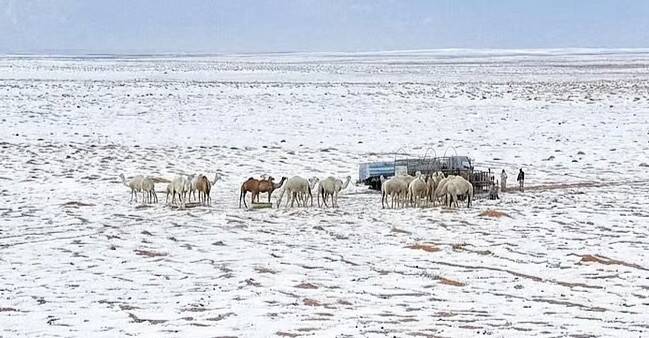
Saudi Deserts Once Had Rivers, Lakes, and Grasslands: Study
The Arabian Desert, which covers most of Saudi Arabia, is one of the harshest and most inhospitable environments on Earth. The scorching sun, endless dunes, and lack of vegetation make it seem like an eternal and unchanging landscape. However, new studies have revealed that this was not always the case. In fact, Saudi Arabia’s deserts were once rich and diverse landscapes, teeming with rivers, lakes, and vast grasslands that supported a wide range of plants, animals, and even early human populations.
The Rub’ al-Khali, also known as the Empty Quarter, is the largest sand desert in the world, covering an area of approximately 650,000 square kilometers. Today, it is an ocean of sand, with dunes stretching as far as the eye can see. But, according to recent research, this vast expanse of sand was once a huge lake, surrounded by lush vegetation and teeming with aquatic life. The study suggests that during wetter climatic phases, the region experienced a dramatic transformation, with rivers, lakes, and wetlands supporting a wide range of water-dependent species, including hippos, crocodiles, and fish.
The discovery of fossils and archaeological evidence has provided a window into the region’s past, revealing a complex and dynamic landscape that was shaped by changes in the climate. During the Pleistocene era, which spanned from approximately 2.6 million years ago to 11,700 years ago, the Arabian Peninsula experienced a series of wet and dry phases, with the wet phases resulting in the formation of rivers, lakes, and wetlands. These water bodies supported a wide range of aquatic life, including fish, shellfish, and other species that are now found only in more temperate regions.
The presence of hippos and crocodiles in the region is particularly significant, as these species are typically found in areas with abundant water and vegetation. The discovery of hippo and crocodile fossils in the Saudi desert suggests that the region was once much wetter and more hospitable than it is today. The fossils of these species have been found in areas that are now desert, providing evidence of the dramatic changes that have occurred in the region over time.
In addition to the presence of rivers, lakes, and wetlands, the Saudi desert was also home to vast grasslands that supported a wide range of herbivores, including gazelles, antelopes, and other species. The grasslands were likely maintained by the presence of these herbivores, which helped to disperse seeds and promote the growth of new vegetation. The presence of these grasslands also suggests that the region experienced a more temperate climate, with adequate rainfall and cooler temperatures.
The study of the Saudi desert’s past has significant implications for our understanding of the region’s history and the impact of climate change on the environment. The discovery of rivers, lakes, and grasslands in the desert suggests that the region is more resilient than previously thought, and that it has the potential to support a wide range of plant and animal species. However, the study also highlights the dramatic impact of climate change on the environment, and the need for conservation efforts to protect the region’s natural resources.
The shift from a wet and hospitable environment to a dry and inhospitable one was likely the result of changes in the global climate, which affected the region’s precipitation patterns and temperature. The end of the last Ice Age, which occurred around 11,700 years ago, marked the beginning of a period of significant climate change, with the region experiencing a gradual decline in rainfall and an increase in temperature. This decline in rainfall and increase in temperature had a devastating impact on the region’s ecosystem, with the rivers, lakes, and wetlands drying up and the grasslands disappearing.
The loss of these water bodies and the decline of the region’s vegetation had a significant impact on the early human populations that lived in the area. The presence of archaeological evidence, including stone tools and other artifacts, suggests that early humans lived in the region, likely taking advantage of the abundant resources provided by the rivers, lakes, and grasslands. However, as the climate changed and the environment became more inhospitable, these early human populations were forced to adapt or migrate to more favorable areas.
In conclusion, the study of the Saudi desert’s past has revealed a complex and dynamic landscape that was shaped by changes in the climate. The presence of rivers, lakes, and grasslands in the desert suggests that the region was once much wetter and more hospitable than it is today, and that it has the potential to support a wide range of plant and animal species. The study highlights the importance of conservation efforts to protect the region’s natural resources and the need for further research into the impact of climate change on the environment.
About the Author