Khawaja Asif’s ‘Pak won’t need IMF in 6 months’ claim runs into a $10.6-bn wall: Report
Recently, Pakistan’s Defence Minister Khawaja Asif made a bold claim that the country would not need the International Monetary Fund (IMF) in six months to save it from economic collapse. However, this claim has hit a roadblock worth $10.6 billion, according to a report by Moneycontrol. The report highlights the stark reality of Pakistan’s economic situation, which is far from stable.
Pakistan has been struggling with economic instability for quite some time now, and the country’s reliance on the IMF has been a major point of concern. The IMF has been providing financial assistance to Pakistan to help it manage its economic crisis, but the country’s inability to reform its economy and reduce its dependence on foreign aid has raised concerns about its long-term sustainability.
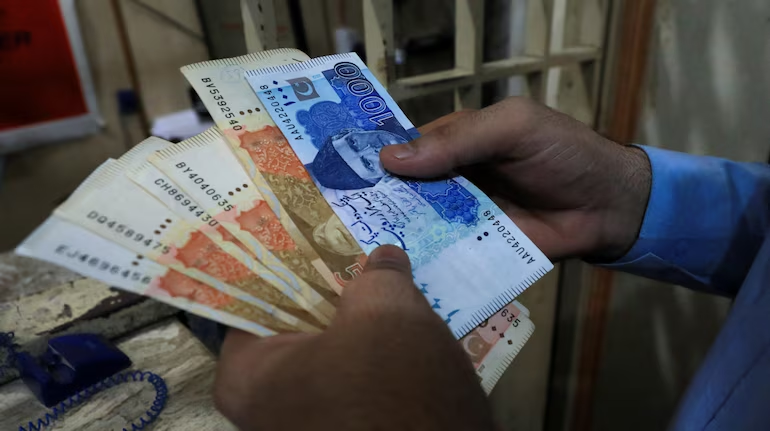
Khawaja Asif’s claim that Pakistan would not need the IMF in six months was seen as a positive development, but it has been met with skepticism by many experts. The report by Moneycontrol suggests that Pakistan’s economic situation is far more complex than Asif’s claim would suggest. The country owes a staggering $10.6 billion to the IMF alone, which is a significant burden on its economy.
Moreover, Pakistan’s economy is facing multiple challenges, including a large trade deficit, low foreign exchange reserves, and a struggling industrial sector. The country’s textile industry, which is one of its largest export earners, has been struggling due to a shortage of raw materials and high energy costs. The report suggests that Pakistan’s economic growth is expected to slow down in the coming months, which would further exacerbate its economic problems.
Despite these challenges, Pakistan has managed to secure some significant defence deals in recent months. The country has signed deals worth billions of dollars with various countries, including China and Turkey, which are expected to provide a much-needed boost to its economy. However, these deals are not enough to single-handedly save Pakistan from economic ruin.
The report by Moneycontrol suggests that Pakistan’s defence deals, while significant, are not a substitute for meaningful economic reforms. The country needs to take concrete steps to reduce its dependence on foreign aid, increase its exports, and promote economic growth. The report quotes experts as saying that Pakistan’s economic problems are deeply entrenched and would require a comprehensive approach to resolve.
One of the main challenges facing Pakistan is its low tax-to-GDP ratio, which is one of the lowest in the world. The country’s tax base is narrow, and its tax collection system is inefficient, which results in a significant loss of revenue. The report suggests that Pakistan needs to reform its tax system to increase revenue and reduce its dependence on foreign aid.
Another challenge facing Pakistan is its struggling energy sector. The country is facing a severe energy crisis, which is affecting its industrial sector and overall economy. The report suggests that Pakistan needs to invest in renewable energy sources, such as solar and wind power, to reduce its dependence on imported fossil fuels.
In conclusion, Khawaja Asif’s claim that Pakistan would not need the IMF in six months is overly optimistic. The country’s economic situation is far more complex than his claim would suggest, and it faces significant challenges, including a large trade deficit, low foreign exchange reserves, and a struggling industrial sector. While Pakistan has managed to secure some significant defence deals, these deals are not enough to single-handedly save the country from economic ruin. The country needs to take concrete steps to reduce its dependence on foreign aid, increase its exports, and promote economic growth.
Pakistan’s economic situation is a cause for concern, and the country needs to take meaningful steps to address its economic challenges. The report by Moneycontrol highlights the need for Pakistan to reforms its economy, increase its tax base, and promote economic growth. The country’s defence deals, while significant, are not a substitute for meaningful economic reforms.
As the report suggests, Pakistan’s economic problems are deeply entrenched and would require a comprehensive approach to resolve. The country needs to take a long-term view and implement policies that would promote economic growth, reduce poverty, and increase its competitiveness. The report by Moneycontrol is a timely reminder of the challenges facing Pakistan’s economy and the need for meaningful reforms to address these challenges.
About the Author