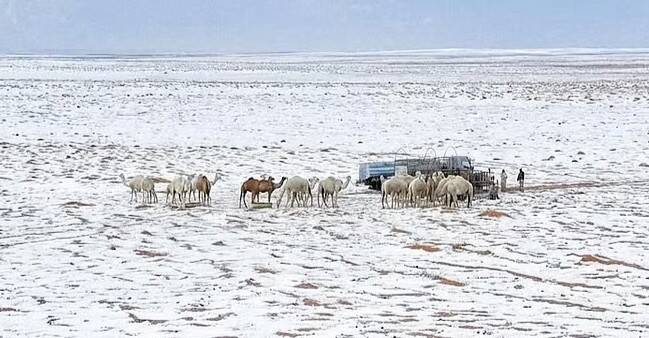
Saudi Deserts Once Had Rivers, Lakes, and Grasslands: Study
The scorching hot deserts of Saudi Arabia, known for their endless dunes of sand and harsh climate, may seem like an inhospitable environment for any form of life. However, new studies have revealed a fascinating secret about the region’s past. Contrary to its current arid landscape, Saudi Arabia’s deserts were once rich and diverse ecosystems, teeming with rivers, lakes, and vast grasslands that supported a wide range of plants, animals, and early humans.
The discovery, made by a team of scientists, has shed new light on the region’s climatic history, highlighting the dramatic changes that have occurred over thousands of years. The researchers found that the Rub’ al-Khali, also known as the Empty Quarter, which is now an ocean of sand, was once a huge lake. This lake, along with other water bodies, supported an array of water-dependent species, including hippos, crocodiles, and numerous other animals that are now extinct in the region.
The study, which combined geological, archaeological, and paleontological evidence, suggests that Saudi Arabia’s deserts have undergone significant transformations in response to changes in the global climate. During wetter climatic phases, the region experienced an influx of water, resulting in the formation of rivers, lakes, and wetlands. These water bodies, in turn, supported a diverse range of flora and fauna, including many species that are now found only in more temperate regions.
One of the most striking findings of the study is the presence of hippos and crocodiles in the region. These animals, which are typically associated with aquatic environments, were found to have thrived in Saudi Arabia’s deserts during the wetter phases. The discovery of hippo and crocodile fossils in the region provides strong evidence of the presence of permanent water bodies, which would have supported these species.
The researchers also found evidence of human habitation in the region, dating back to the Paleolithic era. The presence of stone tools, fossilized remains of animals, and other archaeological artifacts suggests that early humans lived in the region, taking advantage of the abundant resources provided by the rivers, lakes, and grasslands.
However, as the climate shifted, the waters vanished, and the sands reclaimed the land. The region’s deserts, which were once teeming with life, became the arid and barren landscapes we see today. The study suggests that this process occurred in response to changes in the global climate, which led to a reduction in rainfall and an increase in temperatures.
The discovery of Saudi Arabia’s lush past has significant implications for our understanding of the region’s history and the impact of climate change on the environment. The study highlights the importance of considering the long-term perspective when assessing the effects of climate change, as even the most arid regions can undergo significant transformations in response to changes in the global climate.
Furthermore, the study provides valuable insights into the potential for climate change to impact the region in the future. As the global climate continues to warm, the study suggests that Saudi Arabia’s deserts may once again undergo significant changes, potentially leading to the formation of new water bodies and the return of species that are currently extinct in the region.
In conclusion, the discovery of Saudi Arabia’s rich and diverse past is a fascinating reminder of the complex and dynamic nature of the Earth’s climate. The study highlights the importance of continued research into the region’s history and the impact of climate change on the environment. As we look to the future, it is essential that we consider the long-term perspective, taking into account the potential for significant changes to occur in even the most arid regions.
About the Author