Khawaja Asif’s ‘Pak won’t need IMF in 6 months’ claim runs into a $10.6-bn wall: Report
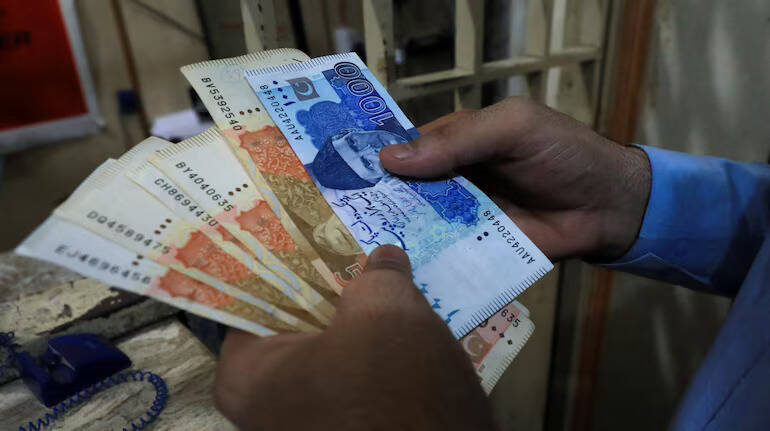
In a recent statement, Khawaja Asif, a prominent Pakistani politician, claimed that Pakistan would not need the International Monetary Fund (IMF) in six months to save it from economic collapse. However, this claim has run into a significant obstacle, with a staggering $10.6 billion wall standing in the way. According to a report by Moneycontrol, Pakistan’s economic woes are far from over, and the country’s ability to pay off its debts is still a major concern.
The report highlights that while Pakistan has been successful in converting its Operation Sindoor-linked propaganda into defence deals worth billions, these deals alone will not be enough to save the country from economic ruin. The primary reason for this is the massive amount of debt that Pakistan owes to the IMF, which stands at a whopping $10.6 billion. This debt is a significant burden on the country’s economy, and it is unlikely that Pakistan will be able to pay it off in the near future.
Pakistan’s economic struggles are well-documented, and the country has been struggling to stay afloat for several years. The IMF has been providing financial assistance to Pakistan, but the country’s inability to implement meaningful economic reforms has hindered its ability to recover. The recent claim by Khawaja Asif that Pakistan will not need the IMF in six months is therefore seen as overly optimistic, and many experts believe that the country will continue to require financial assistance from the IMF for the foreseeable future.
One of the main reasons for Pakistan’s economic struggles is its large trade deficit. The country imports more goods than it exports, which has resulted in a significant shortfall in its foreign exchange reserves. This has made it difficult for Pakistan to pay off its debts, including the $10.6 billion it owes to the IMF. The country’s economic growth has also been slow, which has further exacerbated its economic problems.
In recent years, Pakistan has been successful in securing defence deals with several countries, including China and the United States. These deals have been worth billions of dollars and have helped to boost Pakistan’s economy. However, these deals are not enough to solve the country’s economic problems, and Pakistan will need to implement meaningful economic reforms if it is to recover.
The report by Moneycontrol highlights the need for Pakistan to take a more sustainable approach to its economic development. The country needs to reduce its trade deficit, increase its foreign exchange reserves, and implement economic reforms that will promote growth and stability. Until these reforms are implemented, Pakistan will continue to rely on financial assistance from the IMF and other international lenders.
In conclusion, Khawaja Asif’s claim that Pakistan will not need the IMF in six months is unlikely to become a reality. The country’s economic problems are deep-seated, and it will require a sustained effort to implement meaningful economic reforms. The $10.6 billion wall that stands in the way of Pakistan’s economic recovery is a significant obstacle, and it will take more than just defence deals to overcome it.
About the Author