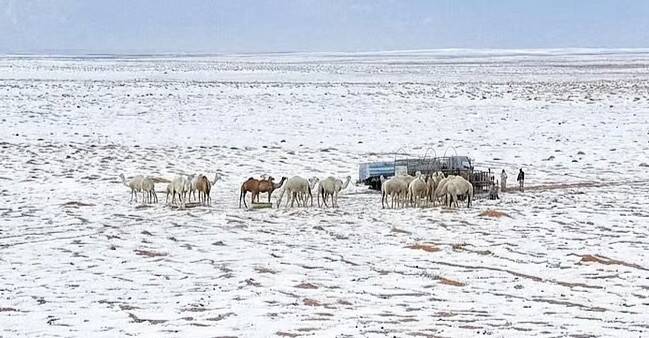
Saudi Deserts Once Had Rivers, Lakes, and Grasslands: Study
The deserts of Saudi Arabia are known for their harsh and arid conditions, with endless dunes of sand stretching as far as the eye can see. However, new studies have revealed that this was not always the case. In fact, Saudi Arabia’s deserts were once rich landscapes with rivers, lakes, and vast grasslands that supported a wide range of plants, animals, and even early humans. The discovery has shed new light on the region’s history and has significant implications for our understanding of the Earth’s climate.
The Rub’ al-Khali, also known as the Empty Quarter, is one of the largest sand deserts in the world, covering an area of approximately 650,000 square kilometers. Today, it is an ocean of sand, with dunes reaching as high as 250 meters. However, research has shown that this vast expanse of sand was once a huge lake, teeming with life. The lake, which existed during the Pleistocene era, was fed by rivers and supported a wide range of aquatic species, including hippos, crocodiles, and fish.
The presence of these water-dependent species is a clear indication that the climate in the region was much wetter than it is today. In fact, studies have shown that the region experienced a number of wetter climatic phases, during which the lakes and rivers were filled with water. These phases were likely triggered by changes in the Earth’s orbit, which affected the amount of solar radiation the region received. During these periods, the region’s vegetation was much more lush, with grasslands and forests covering large areas.
The discovery of these ancient landscapes has significant implications for our understanding of the Earth’s climate. It suggests that the region’s climate has undergone significant changes over the past few thousand years, with periods of wetness and dryness alternating in a cycle. This cycle is likely to have been driven by changes in the Earth’s orbit, as well as other factors such as volcanic eruptions and changes in ocean currents.
The presence of early humans in the region is also a significant finding. Archaeological evidence has shown that humans lived in the region during the wetter climatic phases, taking advantage of the abundant resources available. The discovery of stone tools and other artifacts has provided valuable insights into the lives of these early humans, who were able to thrive in the region’s lush landscapes.
However, when the climate shifted and the waters vanished, the sands reclaimed the land, and the region became the arid desert we know today. The hippos, crocodiles, and other water-dependent species that once thrived in the region were forced to migrate to other areas, or became extinct. The early humans who lived in the region were also forced to adapt to the changing climate, with many likely migrating to other areas in search of more favorable living conditions.
The study of Saudi Arabia’s deserts has also provided valuable insights into the region’s geological history. The discovery of ancient riverbeds and lakebeds has shown that the region’s landscape has undergone significant changes over the past few thousand years. The presence of fossils and other geological features has also provided valuable information about the region’s past climate and environment.
In conclusion, the discovery that Saudi Arabia’s deserts were once rich landscapes with rivers, lakes, and vast grasslands is a significant finding that has shed new light on the region’s history. The study of the region’s climate and geological history has provided valuable insights into the Earth’s climate and the factors that drive change. As we continue to face the challenges of climate change, the study of the past is more important than ever, providing valuable lessons for the present and future.
The study’s findings are a reminder that the Earth’s climate is constantly changing, and that the consequences of these changes can be significant. As we look to the future, it is essential that we take into account the lessons of the past, and work to mitigate the effects of climate change. By doing so, we can help to ensure a more sustainable and equitable future for all.
About the Author