3 new species of ‘musical’ katydids discovered in Kashmir
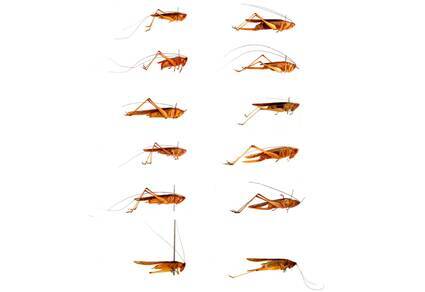
In a groundbreaking discovery, researchers surveying the lush meadows of Kashmir have identified three new species of “musical” meadow katydids, previously unrecorded in the region. The findings, which shed new light on the biodiversity of the area, have been published in a recent study. The newly discovered species, belonging to the genus Conocephalus, have been named C usmanii, C nagariensis, and C ganderbali, after detailed studies and analysis.
The team of researchers, who conducted an extensive survey of the meadows in Kashmir, were thrilled to discover the new species of katydids, which are known for their unique “musical” characteristics. Katydids, also known as bush crickets, are insects that produce sound using their wings, with each species having its distinct song. The discovery of these new species has not only expanded our knowledge of the region’s biodiversity but also highlights the importance of conservation efforts to protect these unique creatures and their habitats.
The research team, which consisted of experts in entomology and ecology, spent several months surveying the meadows in Kashmir, collecting and studying specimens of katydids. The team used a combination of traditional methods, such as netting and hand-collecting, as well as modern techniques, such as DNA analysis, to identify and classify the specimens. The results of the study revealed the presence of three new species of katydids, which were previously unknown to science.
The newly discovered species, C usmanii, C nagariensis, and C ganderbali, are characterized by their distinctive physical features and unique songs. C usmanii, for example, has a distinctive green coloration with yellow stripes, while C nagariensis has a more subdued brown coloration with darker stripes. C ganderbali, on the other hand, has a striking black and white coloration, with a distinctive pattern of spots on its wings.
In addition to the three new species, the research team also recorded several other known species of katydids in the region, which were not previously documented there. One such species is C longipennis, a katydid with a distinctive long wing-tip, which was found to be abundant in the meadows of Kashmir. The discovery of these additional species highlights the rich biodiversity of the region and underscores the importance of continued research and conservation efforts.
The discovery of these new species of katydids has significant implications for our understanding of the ecology and evolution of these insects. Katydids play a crucial role in the ecosystem, serving as both predators and prey for other animals. They are also important indicators of environmental health, as changes in their populations can signal broader ecosystem changes.
The study also highlights the importance of preserving and protecting the natural habitats of these unique creatures. The meadows of Kashmir, where the new species were discovered, are facing threats from human activities such as agriculture, urbanization, and climate change. The loss of these habitats could have devastating consequences for the katydid populations and the ecosystem as a whole.
In conclusion, the discovery of three new species of “musical” meadow katydids in Kashmir is a significant finding that highlights the rich biodiversity of the region. The study underscores the importance of continued research and conservation efforts to protect these unique creatures and their habitats. As we continue to learn more about the natural world, it is essential that we take steps to preserve and protect it for future generations.
The full study can be found at: https://mapress.com/zt/article/view/zootaxa.5737.4.4
News Source: https://mapress.com/zt/article/view/zootaxa.5737.4.4
About the Author