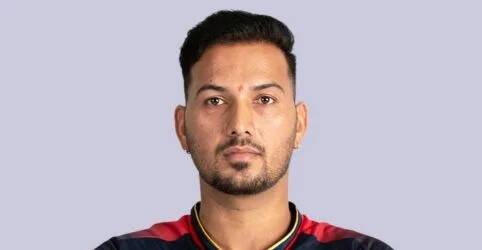
Cricketer Rajan Kumar, who was part of RCB in IPL 2024, fails dope test
The cricketing world has been shaken by the news of Uttarakhand left-arm fast bowler Rajan Kumar failing a dope test. The National Anti-Doping Agency (NADA) has imposed a provisional suspension on the young cricketer, who was part of the Royal Challengers Bangalore (RCB) squad in the Indian Premier League (IPL) 2024. This news has sent shockwaves through the cricketing community, with fans and experts alike expressing their disappointment and concern over the issue of doping in sports.
According to reports, Rajan Kumar tested positive for Drostanolone, Metenolone, and Clomiphene anabolic steroids. These substances are banned by the World Anti-Doping Agency (WADA) and are considered performance-enhancing drugs. The use of such substances is strictly prohibited in sports, and athletes found guilty of doping face severe penalties, including suspension and even bans from competition.
Rajan Kumar’s rise to prominence in the cricketing world was rapid, with the young left-arm fast bowler making a name for himself in domestic cricket. He was particularly impressive in the Syed Mushtaq Ali Trophy 2025, where he took 13 wickets and helped his team make a strong showing in the tournament. His performances caught the attention of IPL scouts, and he was subsequently picked up by RCB for the 2024 season.
However, it now appears that Rajan Kumar’s success may have come at a cost. The use of performance-enhancing drugs is a serious offense, and the consequences of such actions can be severe. The NADA’s provisional suspension is just the beginning, and Rajan Kumar may face further penalties, including a lengthy ban from competition.
The issue of doping in sports is a complex one, with many factors contributing to the problem. Pressure to perform, the desire for success, and the lure of financial rewards can all tempt athletes to take shortcuts and use banned substances. However, the consequences of such actions can be devastating, not just for the athlete themselves, but also for the sport as a whole.
In recent years, there have been several high-profile cases of doping in cricket, with many top players facing bans and penalties for their involvement in the use of performance-enhancing drugs. The sport’s governing bodies, including the International Cricket Council (ICC) and the Board of Control for Cricket in India (BCCI), have taken steps to crack down on doping, including the introduction of stricter testing protocols and harsher penalties for those found guilty.
Despite these efforts, the problem of doping persists, and the case of Rajan Kumar is a stark reminder of the challenges that still need to be overcome. The young cricketer’s career is now in jeopardy, and it remains to be seen how he will respond to the allegations against him.
As the cricketing world waits with bated breath to see how this story unfolds, one thing is clear: the use of performance-enhancing drugs has no place in sports. Athletes must be held to the highest standards of integrity and fair play, and those who cheat must face the consequences of their actions.
In conclusion, the news of Rajan Kumar’s failed dope test is a sobering reminder of the challenges that cricket faces in its efforts to eradicate doping. The sport’s governing bodies must continue to work tirelessly to prevent the use of performance-enhancing drugs, and athletes must be held accountable for their actions. Only through a collective effort can we ensure that cricket remains a clean and fair sport, where talent and hard work are the only factors that determine success.
News Source: https://x.com/kushansarkar/status/2008197106234991093
About the Author