I’m still the President of Venezuela: Maduro as he pleads not guilty in US court
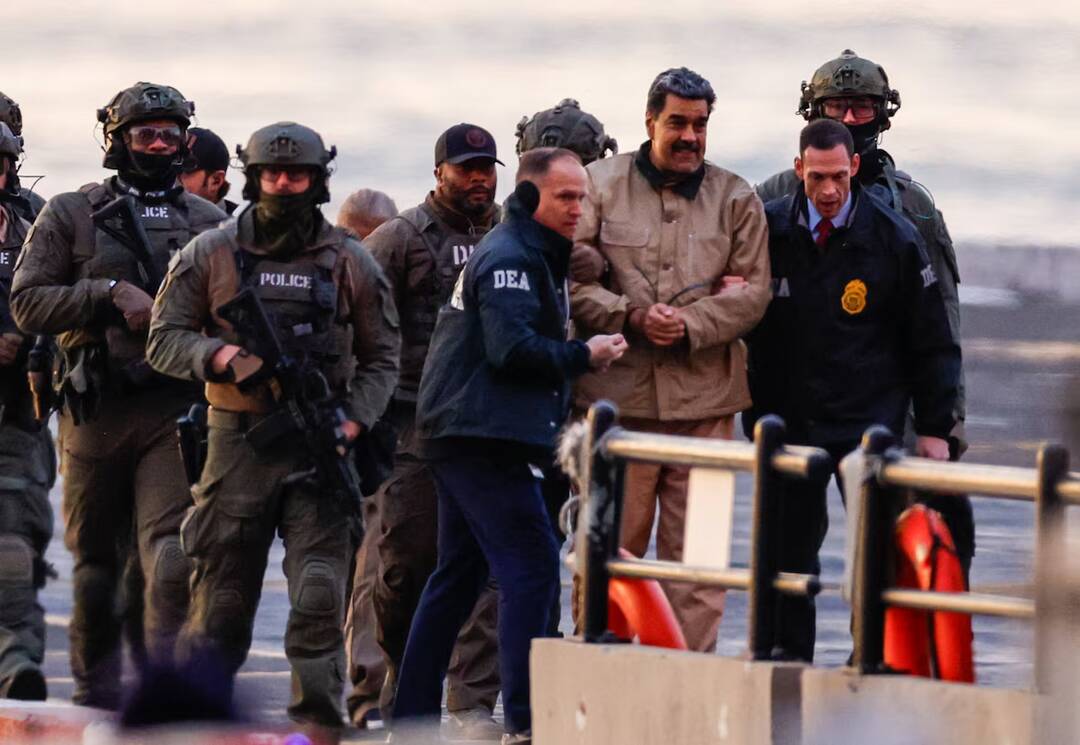
In a dramatic turn of events, Venezuelan President Nicolas Maduro appeared before a court in New York, where he was asked to identify himself. Maduro, who is facing narco-terrorism charges, replied in Spanish, “I am the President of Venezuela.” He also stated that he was captured at his home, emphasizing his innocence and decency. The Venezuelan leader pleaded not guilty to the charges, reiterating, “I am innocent, I am a decent man, I am still the President.”
The court appearance of Maduro marks a significant escalation in the tensions between the United States and Venezuela. The US government has been a vocal critic of Maduro’s regime, accusing him of human rights abuses, corruption, and narcotics trafficking. The charges against Maduro are related to his alleged involvement in a scheme to traffic cocaine and other narcotics, which the US government claims was designed to undermine the stability of the region.
Maduro’s appearance in the US court is a result of a long-standing extradition request by the US government. The Venezuelan leader has been the subject of intense scrutiny and criticism, both domestically and internationally, for his handling of the country’s economy, human rights, and politics. The US government has imposed severe sanctions on Venezuela, targeting key sectors of the economy, including oil and finance.
The court hearing was a closely watched event, with many observers eager to see how Maduro would respond to the charges. The Venezuelan leader’s statement, in which he asserted his innocence and reiterated his claim to the presidency, was seen as a defiant move. Maduro’s supporters in Venezuela and elsewhere have rallied around him, arguing that the charges are part of a broader campaign to destabilize the country and undermine its sovereignty.
The US government, on the other hand, has hailed the court appearance as a significant victory in its efforts to hold Maduro accountable for his alleged crimes. The prosecution has presented evidence that it claims links Maduro to a network of narcotics traffickers and corrupt officials. The US government has also accused Maduro of using his position to enrich himself and his allies, while the majority of Venezuelans struggle to access basic necessities like food and medicine.
The case against Maduro is complex and multifaceted, involving allegations of corruption, narcotics trafficking, and human rights abuses. The US government has presented a range of evidence, including testimony from former Venezuelan officials and documents detailing alleged transactions and communications between Maduro and his associates. The prosecution has also highlighted the humanitarian crisis in Venezuela, which it claims is a direct result of Maduro’s policies and actions.
As the case against Maduro progresses, it is likely to have significant implications for the future of Venezuela and the region. The US government has made it clear that it will continue to pursue Maduro and his allies, using all available tools and mechanisms to hold them accountable. The Venezuelan opposition, which has been a key player in the country’s politics, has welcomed the court appearance, seeing it as an opportunity to bring about change and stability to the country.
In contrast, Maduro’s supporters have condemned the court appearance, arguing that it is a violation of Venezuela’s sovereignty and a attempt to interfere in the country’s internal affairs. The Venezuelan government has accused the US of waging a campaign of aggression and intimidation, aimed at undermining the country’s independence and self-determination.
As the world watches the unfolding drama, one thing is clear: the case against Maduro has significant implications for the future of Venezuela and the region. The US government’s efforts to hold Maduro accountable for his alleged crimes have sparked a heated debate about the role of international justice and the limits of national sovereignty. The outcome of the case will have far-reaching consequences, not only for Maduro and his allies but also for the people of Venezuela, who have suffered greatly under his rule.
In conclusion, the court appearance of Nicolas Maduro is a significant development in the ongoing saga of US-Venezuela relations. The Venezuelan leader’s plea of not guilty and his assertion of innocence and decency have sparked a heated debate about the charges against him and the role of international justice. As the case progresses, it is likely to have significant implications for the future of Venezuela and the region, and the world will be watching closely to see how events unfold.
About the Author