I’m still the President of Venezuela: Maduro as he pleads not guilty in US court
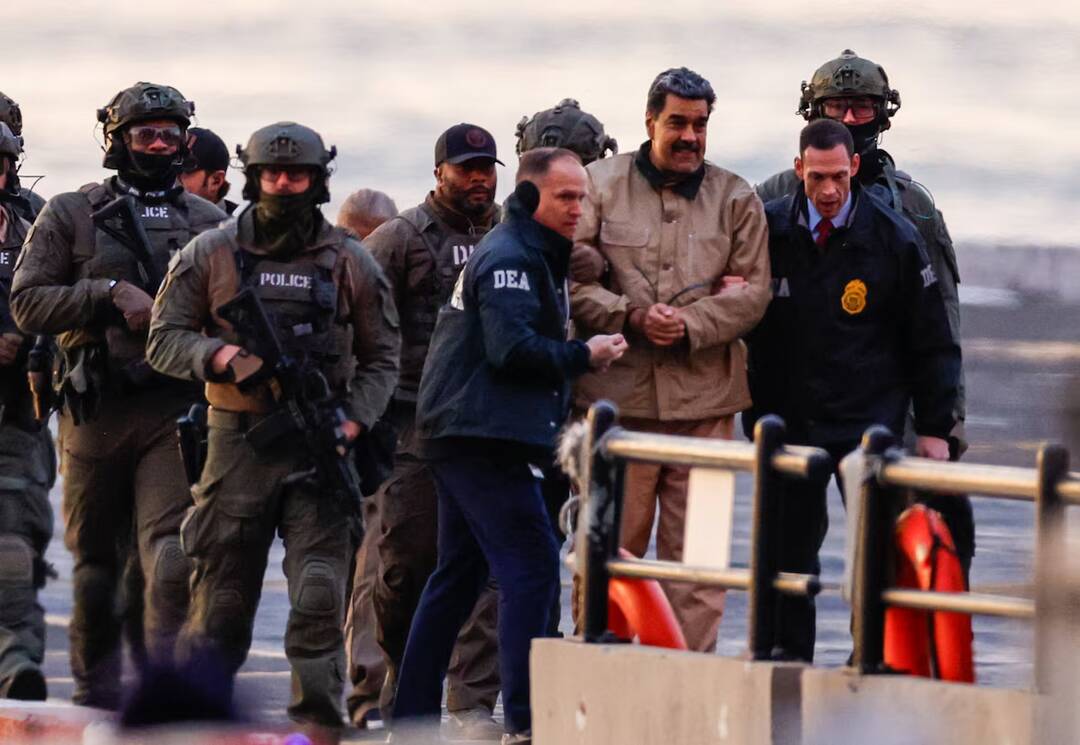
In a dramatic turn of events, Venezuelan President Nicolas Maduro appeared before a court in New York, where he was asked to identify himself. In a bold statement, Maduro replied in Spanish, “I am the President of Venezuela and was captured at my home.” He further emphasized his innocence, stating, “I am innocent, I am a decent man, I am still the President.” These words marked the beginning of a high-stakes trial, as Maduro pleaded not guilty to narco-terrorism charges.
The court appearance of the Venezuelan President has sent shockwaves across the globe, with many questioning the legitimacy of the trial and the circumstances surrounding Maduro’s capture. The US government has been a long-time critic of Maduro’s regime, with President Donald Trump imposing stringent sanctions on the country. The tensions between the two nations have been escalating, with the US accusing Venezuela of promoting terrorism and drug trafficking.
Maduro’s statement in court was a clear indication of his defiance and determination to assert his authority as the President of Venezuela. Despite being captured and facing trial in a foreign country, Maduro remains resolute in his claim to the presidency. This stance has sparked debate among international observers, with some arguing that the trial is a clear example of US interference in Venezuelan affairs.
The charges against Maduro are severe, with the US government accusing him of being involved in a narco-terrorism conspiracy. The allegations suggest that Maduro and other high-ranking officials in his government have been working to promote and facilitate the production and distribution of narcotics. The US government has also accused Maduro of providing support to terrorist organizations, further exacerbating the tensions between the two countries.
The trial of Maduro has significant implications for the future of Venezuela and its relations with the US. The outcome of the trial will likely have far-reaching consequences, with the potential to either escalate or de-escalate the tensions between the two nations. If Maduro is found guilty, it could lead to further sanctions and isolation of Venezuela, exacerbating the country’s already dire economic situation.
On the other hand, if Maduro is acquitted, it could be seen as a major victory for the Venezuelan government and a significant blow to the US’s efforts to undermine Maduro’s regime. The trial has already sparked widespread protests and demonstrations in Venezuela, with many citizens expressing their support for their President.
The international community is closely watching the developments in the trial, with many countries calling for a peaceful resolution to the crisis. The United Nations has urged both the US and Venezuela to engage in diplomatic efforts to resolve their differences, rather than resorting to confrontation and aggression.
As the trial of Nicolas Maduro continues, the world waits with bated breath to see the outcome. The stakes are high, with the future of Venezuela and its relations with the US hanging in the balance. One thing is certain, however – the statement made by Maduro in court will be remembered for a long time, as a testament to his defiance and determination to assert his authority as the President of Venezuela.
In conclusion, the trial of Nicolas Maduro is a complex and multifaceted issue, with significant implications for the future of Venezuela and its relations with the US. As the world watches the developments in the trial, it is essential to consider the broader context and the potential consequences of the outcome. The statement made by Maduro in court, “I am still the President of Venezuela,” is a clear indication of his resolve and determination to assert his authority, despite the challenges and obstacles he faces.
About the Author