I’m still the President of Venezuela: Maduro as he pleads not guilty in US court
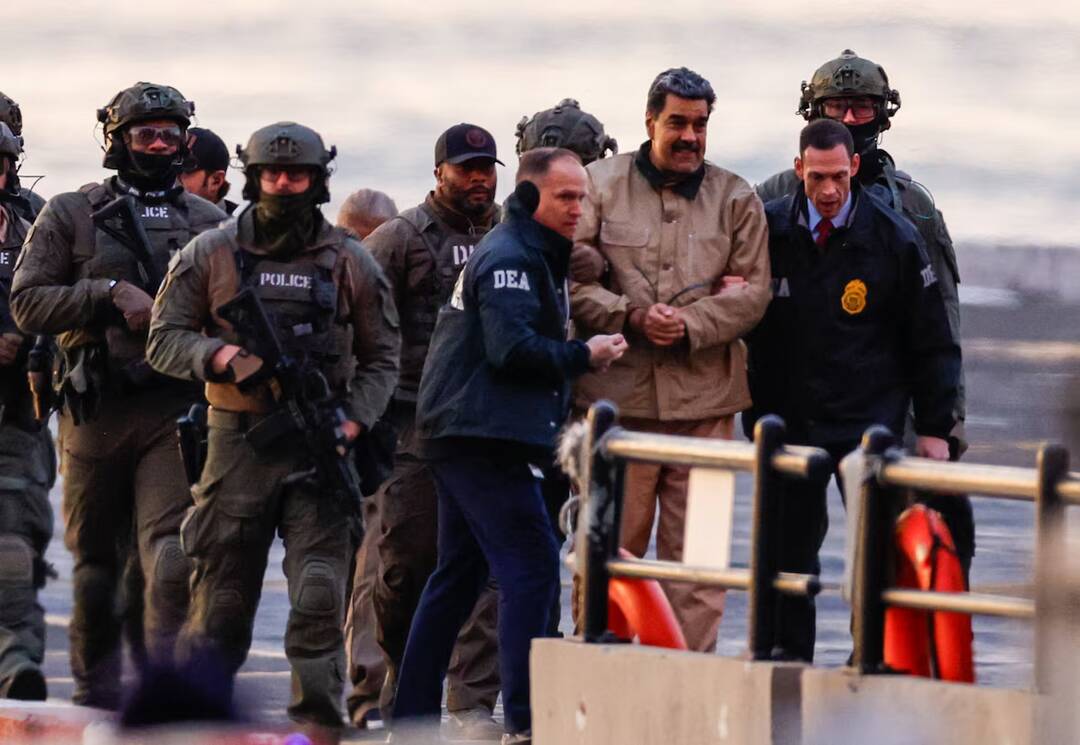
In a dramatic turn of events, Venezuelan President Nicolas Maduro appeared before a court in New York, where he was asked to identify himself. In a bold statement, Maduro replied in Spanish, asserting his position as the President of Venezuela. He claimed to have been captured at his home and emphasized his innocence, stating, “I am innocent, I am a decent man, I am still the President.” Maduro’s plea of not guilty to narco-terrorism charges has sparked a new wave of tension between the United States and Venezuela.
The court appearance of Maduro has significant implications for both countries, with the US having imposed severe sanctions on Venezuela in recent years. The charges against Maduro are related to alleged involvement in narco-terrorism, which has been a major concern for the US government. The US has been critical of Maduro’s regime, accusing him of human rights abuses, corruption, and undermining democracy in Venezuela.
Maduro’s assertion of his presidency is notable, given that the US has recognized Juan Guaido as the interim president of Venezuela. The US, along with many other countries, has refused to recognize Maduro’s presidency, citing allegations of election rigging and authoritarianism. However, Maduro remains in control of the Venezuelan government and military, making his claim to the presidency a significant factor in the ongoing crisis.
The court proceedings against Maduro are likely to be complex and highly politicized. The US government has been seeking to extradite Maduro to face charges, but Venezuela has refused to cooperate. The appearance of Maduro in a US court is a significant development, as it suggests that the US has succeeded in bringing him to justice. However, the outcome of the trial is far from certain, and Maduro’s plea of not guilty indicates that he will contest the charges vigorously.
The implications of Maduro’s court appearance extend beyond the legal sphere, with significant geopolitical consequences. The US-Venezuela relationship has been strained for many years, with the US imposing sanctions and supporting opposition groups in Venezuela. The appearance of Maduro in a US court is likely to further exacerbate tensions between the two countries, with Venezuela accusing the US of meddling in its internal affairs.
The US government has been critical of Maduro’s regime, accusing him of corruption, human rights abuses, and undermining democracy. The US has imposed severe sanctions on Venezuela, including restrictions on oil exports, which have had a devastating impact on the Venezuelan economy. The sanctions have been widely condemned by human rights groups and other countries, who argue that they have exacerbated the humanitarian crisis in Venezuela.
In contrast, Maduro’s government has accused the US of seeking to overthrow him and impose its own puppet regime in Venezuela. Maduro has maintained that his government is democratic and that the opposition is seeking to destabilize the country. The appearance of Maduro in a US court is likely to be seen as a victory for the US, but it also risks further polarizing the situation in Venezuela.
The role of other countries in the region is also significant, with many countries in Latin America and the Caribbean maintaining diplomatic relations with Venezuela. The appearance of Maduro in a US court is likely to be seen as a challenge to these countries, which may be forced to choose between supporting the US or Venezuela. The Organization of American States (OAS) has been involved in efforts to resolve the crisis in Venezuela, but its efforts have been hindered by divisions within the organization.
In conclusion, the appearance of Nicolas Maduro in a US court is a significant development in the ongoing crisis in Venezuela. Maduro’s plea of not guilty to narco-terrorism charges and his assertion of his presidency are likely to further exacerbate tensions between the US and Venezuela. The implications of the court proceedings are far-reaching, with significant geopolitical consequences for the region. As the situation continues to unfold, it remains to be seen how the US, Venezuela, and other countries in the region will respond to the latest developments.
The US-Venezuela crisis is a complex and multifaceted issue, with no easy solutions. The appearance of Maduro in a US court is a significant step towards accountability, but it also risks further polarizing the situation. The international community must continue to support efforts to resolve the crisis, including diplomatic initiatives and humanitarian aid. Ultimately, the people of Venezuela deserve a peaceful and democratic resolution to the crisis, and it is the responsibility of the international community to support them in this endeavor.
About the Author