I’m still the President of Venezuela: Maduro as he pleads not guilty in US court
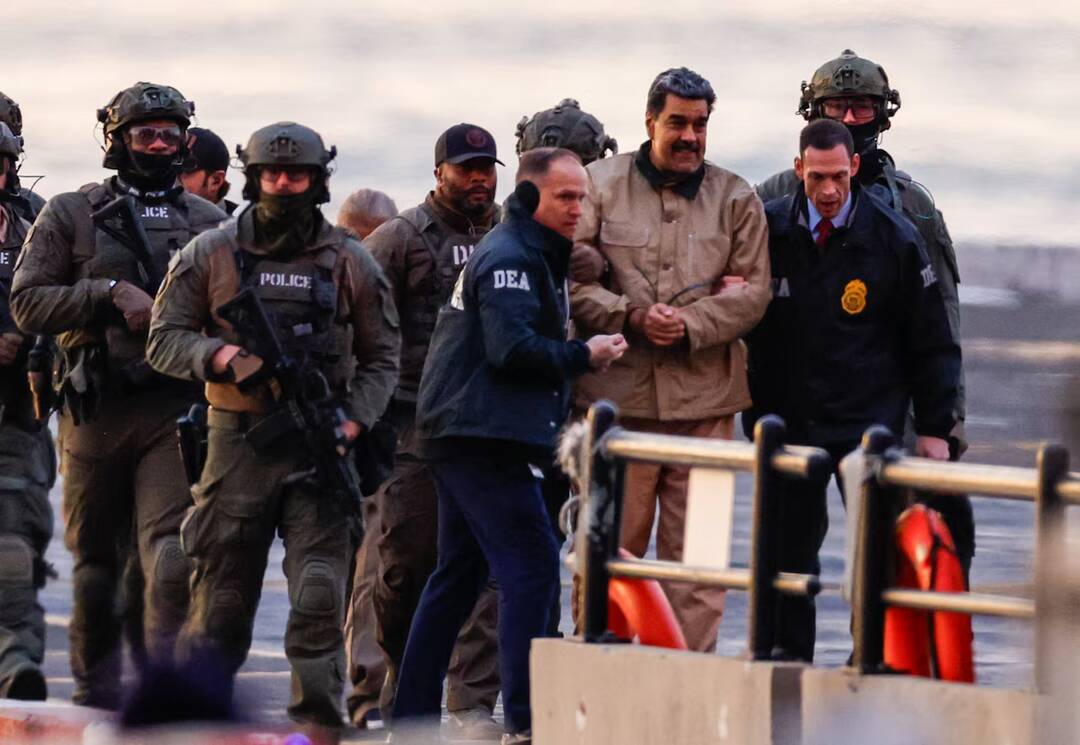
In a dramatic turn of events, Venezuelan President Nicolas Maduro appeared before a court in New York, where he was asked to identify himself. Maduro, who is facing narco-terrorism charges, replied in Spanish, stating that he was the President of Venezuela and was captured at his home. The Venezuelan leader, known for his defiant stance, maintained his innocence and claimed that he was still the President of the South American nation.
As he stood before the judge, Maduro’s words were laced with a sense of conviction and determination. “I am innocent, I am a decent man, I am still the President,” he said, as he pleaded not guilty to the charges brought against him. The courtroom was filled with a sense of tension, as the Venezuelan leader’s appearance marked a significant milestone in the ongoing saga between the United States and Venezuela.
The relationship between the two nations has been strained for years, with the US imposing sanctions on Venezuela and recognizing opposition leader Juan Guaido as the country’s interim president. Maduro, however, has refused to relinquish power, and his appearance in a US court is seen as a major blow to his regime.
The charges against Maduro are related to his alleged involvement in narco-terrorism, which involves the use of narcotics to finance terrorist activities. The US government has accused Maduro of working with Colombian guerrilla groups to traffic cocaine and other narcotics, which has contributed to the instability and violence in the region.
Maduro’s appearance in court was a surprise to many, as it was not clear how he would be brought to justice. The Venezuelan leader has been sanctioned by the US and has had his assets frozen, making it difficult for him to travel or conduct business internationally. However, it appears that the US authorities were able to apprehend him and bring him to court, where he will face the charges against him.
The implications of Maduro’s appearance in court are significant, as it marks a major escalation in the tensions between the US and Venezuela. The Venezuelan government has accused the US of attempting to overthrow Maduro and install a puppet regime, and this latest development is likely to further inflame tensions between the two nations.
As the trial against Maduro proceeds, it is likely to be a highly politicized and contentious process. The Venezuelan leader has a significant following in his country, and his supporters are likely to see his prosecution as a US-backed coup attempt. On the other hand, the US government and its allies will likely view Maduro’s prosecution as a necessary step in bringing him to justice and holding him accountable for his alleged crimes.
The international community will be watching the developments in Maduro’s trial closely, as it has significant implications for the region and the world. The US has been seeking to isolate Maduro and his regime, and his prosecution is seen as a major victory in this effort. However, it is also likely to have significant consequences for the people of Venezuela, who have already suffered greatly under Maduro’s rule.
As the trial against Maduro continues, it is likely to be a long and complex process. The Venezuelan leader will have the opportunity to defend himself against the charges, and his lawyers will likely argue that the charges are politically motivated and lack evidence. However, the US government will likely present a significant amount of evidence against Maduro, including testimony from witnesses and documents detailing his alleged involvement in narco-terrorism.
In conclusion, the appearance of Venezuelan President Nicolas Maduro in a US court is a significant development in the ongoing saga between the US and Venezuela. Maduro’s defiance and claims of innocence are likely to be seen as a last-ditch effort to maintain his grip on power, but it is clear that his regime is facing significant challenges. As the trial against him proceeds, it will be important to watch the developments closely, as they have significant implications for the region and the world.
About the Author