Paijaan’s jalwa in Pak: BJP on AI video showing Gogoi as Akshaye in ‘Fa9la’ song
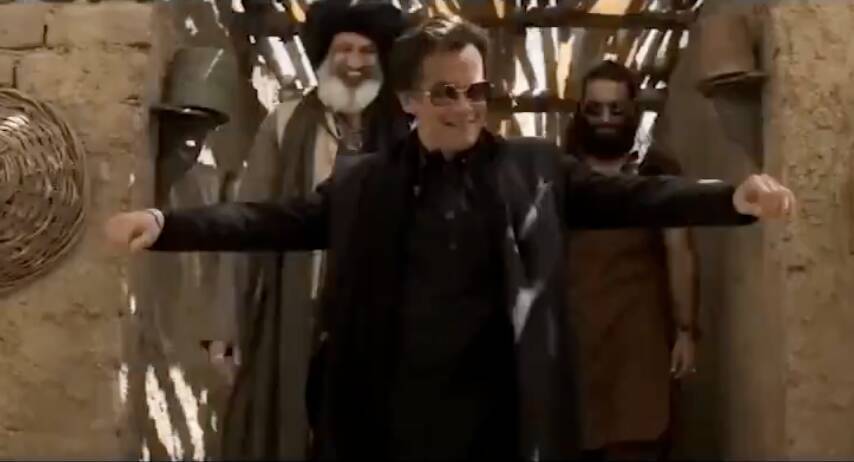
In a bizarre incident, the Bharatiya Janata Party’s (BJP) Assam unit has sparked controversy by sharing a manipulated video on social media platform X, featuring Congress leader Gaurav Gogoi dancing to the popular song ‘Fa9la’ in Pakistan. The video, which has gone viral, shows Rehman Dakait, a character played by Akshaye Khanna in the movie ‘Dhurandhar’, with the actor’s face edited to resemble Gogoi. The caption accompanying the video reads, “Jalwa hain Paaijaan ka Pakistan mein,” which roughly translates to “Paijaan’s grandeur in Pakistan.”
The video, which appears to be created using artificial intelligence (AI), has raised questions about the BJP’s motives behind sharing such content. The party has previously alleged links between Gaurav Gogoi and Pakistan, which has been vehemently denied by the Congress leader. The latest video has been seen as an attempt by the BJP to revive these allegations and tarnish Gogoi’s image.
The song ‘Fa9la’ is a popular Pakistani number, and the video shows Gogoi’s face superimposed on the character of Rehman Dakait, dancing to the tune in various locations in Pakistan. The video has been edited to make it appear as though Gogoi is enjoying himself in the neighboring country, which has sparked outrage among Congress supporters.
The BJP’s Assam unit has been actively using social media to target their political opponents, and this latest video is seen as a part of their strategy to discredit Gogoi. However, the move has backfired, with many critics accusing the party of resorting to cheap tactics to gain political mileage.
Gaurav Gogoi, the son of former Assam Chief Minister Tarun Gogoi, has been a vocal critic of the BJP’s policies in the state. He has been at the forefront of the opposition’s campaigns against the BJP, which has made him a target of the party’s attacks.
The controversy surrounding the video has sparked a heated debate on social media, with many users condemning the BJP’s actions. “This is a new low for the BJP,” tweeted a user. “They are resorting to cheap tactics to discredit their opponents. This is not the kind of politics we want to see in our country.”
Others have questioned the authenticity of the video, pointing out that it is a clear example of AI-generated content. “This video is a fake, and the BJP knows it,” said another user. “They are trying to deceive the public by spreading false information. This is not acceptable.”
The BJP’s Assam unit has not responded to the criticism, but the party’s national leadership has distanced itself from the controversy. “We do not support such tactics,” said a BJP spokesperson. “We believe in fair and democratic politics, and we will not resort to such measures to discredit our opponents.”
The incident has raised questions about the use of AI-generated content in politics. While AI can be a powerful tool for creating engaging content, it can also be misused to spread false information. The incident has highlighted the need for social media platforms to be more vigilant in regulating AI-generated content and to take steps to prevent its misuse.
In conclusion, the controversy surrounding the video has sparked a heated debate about the use of AI-generated content in politics. While the BJP’s Assam unit may have thought that the video would be a clever way to target their opponent, it has ultimately backfired and damaged the party’s reputation. As the use of AI-generated content becomes more prevalent, it is essential to ensure that it is used responsibly and ethically.
News source: https://x.com/BJP4Assam/status/2007750036869005660
About the Author