Those bursting crackers should be called ‘anti-national’: Maneka
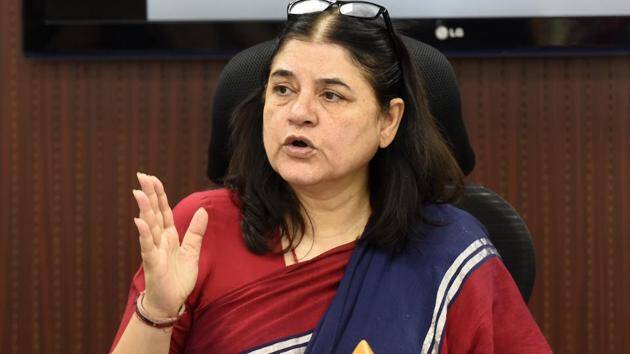
As the festive season approaches, the debate around firecrackers and their impact on the environment has once again gained momentum. BJP leader Maneka Gandhi has sparked a controversy by calling for a nationwide ban on firecrackers, stating that their bursting is the primary cause of air pollution in New Delhi. According to Gandhi, the massive amount of money spent on firecrackers, approximately ₹800 crore in just two nights, is not only a waste but also a significant contributor to the deteriorating air quality.
Gandhi’s statement has ignited a fierce debate, with many supporting her stance and others opposing it. Those in favor of the ban argue that the harm caused by firecrackers to the environment and human health far outweighs any temporary joy or celebration they may bring. On the other hand, those against the ban claim that firecrackers are an integral part of Indian festivals and culture, and that a ban would be an overreach of government authority.
The issue of air pollution in New Delhi is a pressing concern, with the city consistently ranking among the most polluted in the world. The air quality in the city deteriorates significantly during the festive season, with the bursting of firecrackers releasing large amounts of toxic chemicals and particulate matter into the air. These pollutants can cause a range of health problems, from respiratory issues to cardiovascular disease, and can even be fatal in extreme cases.
Gandhi’s suggestion that those who burst firecrackers should be branded as “anti-national” has sparked a heated discussion. While some see it as a drastic measure, others believe that it is necessary to convey the gravity of the situation. The term “anti-national” is often used to describe individuals or actions that are deemed harmful to the country or its interests. In this context, Gandhi’s statement implies that the act of bursting firecrackers is not only harmful to the environment but also to the nation as a whole.
The economic argument against firecrackers is also a significant one. The ₹800 crore spent on firecrackers in just two nights could be better spent on more productive and sustainable initiatives. This amount could be used to fund education, healthcare, or infrastructure projects that would benefit the community as a whole. Furthermore, the firecracker industry is also a significant contributor to pollution, with the production process involving the use of hazardous chemicals and materials.
In addition to the environmental and economic concerns, there are also social implications to consider. The bursting of firecrackers can be a source of disturbance and disruption to many, particularly the elderly, children, and pets. The noise pollution caused by firecrackers can also have a significant impact on mental health, causing stress and anxiety in some individuals.
In recent years, there has been a growing movement towards more sustainable and eco-friendly celebrations. Many individuals and communities are opting for alternative methods of celebration, such as using eco-friendly firecrackers or replacing them with other forms of entertainment. This shift towards more environmentally conscious celebrations is a positive step, and one that could have a significant impact if adopted on a larger scale.
In conclusion, the debate around firecrackers and their impact on the environment is a complex and multifaceted one. While some may argue that firecrackers are an integral part of Indian culture and tradition, others believe that the harm they cause outweighs any benefits. Maneka Gandhi’s call for a nationwide ban on firecrackers and her suggestion that those who burst them should be branded as “anti-national” has sparked a necessary conversation. As we move forward, it is essential that we consider the environmental, economic, and social implications of our actions and work towards more sustainable and eco-friendly celebrations.
Source: https://repository.inshorts.com/articles/en/PTI/05dfed30-2874-4e50-8c78-37383df29516
About the Author