Those Bursting Crackers Should be Called ‘Anti-National’: Maneka
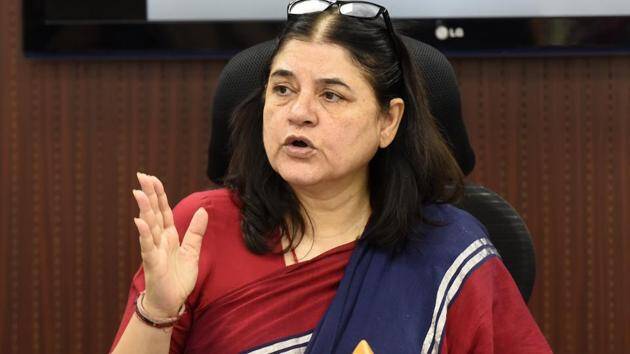
As the festive season approaches, the debate around firecrackers and their impact on the environment has once again gained momentum. BJP leader Maneka Gandhi has weighed in on the issue, calling for a nationwide ban on firecrackers and labeling those who burst them as “anti-national”. In a statement that has sparked a heated discussion, Gandhi emphasized the need to take drastic measures to combat air pollution, particularly in the national capital, New Delhi.
Gandhi’s statement comes at a time when the air quality in New Delhi has been deteriorating alarmingly. The city has been struggling to cope with severe air pollution, which has been linked to a range of health problems, including respiratory issues, cardiovascular disease, and even cancer. The situation is so dire that the city’s residents have been advised to stay indoors, avoid outdoor activities, and wear masks to protect themselves from the toxic air.
According to Gandhi, the prime reason behind the air pollution in New Delhi is the bursting of firecrackers. She argued that the sheer scale of firecracker bursting during festivals like Diwali is responsible for the alarming levels of air pollution in the city. “If you will burst firecrackers worth ₹800 crore in two nights, then what will happen to the air?” she asked, highlighting the devastating impact of firecrackers on the environment.
Gandhi’s remarks have sparked a heated debate, with many people taking to social media to express their opinions on the matter. While some have welcomed her call for a ban on firecrackers, others have criticized her for labeling those who burst firecrackers as “anti-national”. The term “anti-national” is a sensitive one, often used to describe individuals or groups who are perceived as being against the interests of the nation. By using this term, Gandhi has effectively equated the bursting of firecrackers with a form of treason, sparking a fierce backlash from those who feel that she has overstepped her bounds.
However, Gandhi’s concerns about air pollution are not unfounded. The impact of firecrackers on the environment is well-documented, and the evidence suggests that they are a significant contributor to air pollution. Firecrackers release a range of toxic chemicals into the air, including particulate matter, carbon monoxide, and volatile organic compounds. These pollutants can have serious health consequences, particularly for vulnerable populations like children, the elderly, and those with pre-existing medical conditions.
Moreover, the economic costs of air pollution are also significant. A study by the World Health Organization (WHO) estimated that air pollution costs India over $80 billion annually, with the majority of these costs being borne by the healthcare sector. By banning firecrackers, the government could potentially save billions of dollars in healthcare costs, while also reducing the economic burden on families affected by air pollution.
So, what can be done to address the issue of air pollution caused by firecrackers? One possible solution is to impose a nationwide ban on firecrackers, as suggested by Gandhi. This would require a coordinated effort from governments, civil society organizations, and individuals to raise awareness about the dangers of firecrackers and to promote alternative, eco-friendly celebrations.
Another approach is to encourage the development and use of eco-friendly firecrackers, which are designed to produce fewer emissions and less noise pollution. These firecrackers use cleaner fuels and are designed to minimize their environmental impact. By promoting the use of eco-friendly firecrackers, the government can help reduce the environmental harm caused by firecracker bursting, while also allowing people to continue celebrating their festivals with traditional fireworks.
Ultimately, the solution to the problem of air pollution caused by firecrackers requires a collective effort from all stakeholders. Governments, civil society organizations, and individuals must work together to raise awareness about the dangers of firecrackers and to promote alternative, eco-friendly celebrations. By doing so, we can help reduce the environmental harm caused by firecrackers and create a healthier, more sustainable future for ourselves and our children.
In conclusion, Maneka Gandhi’s call for a nationwide ban on firecrackers has sparked a heated debate, with many people weighing in on the issue. While some have criticized her for labeling those who burst firecrackers as “anti-national”, others have welcomed her call for action to address the problem of air pollution. As we move forward, it is essential that we consider the evidence and work together to find solutions that balance the need to celebrate our festivals with the need to protect the environment and public health.
News Source: https://repository.inshorts.com/articles/en/PTI/05dfed30-2874-4e50-8c78-37383df29516
About the Author