Those bursting crackers should be called ‘anti-national’: Maneka
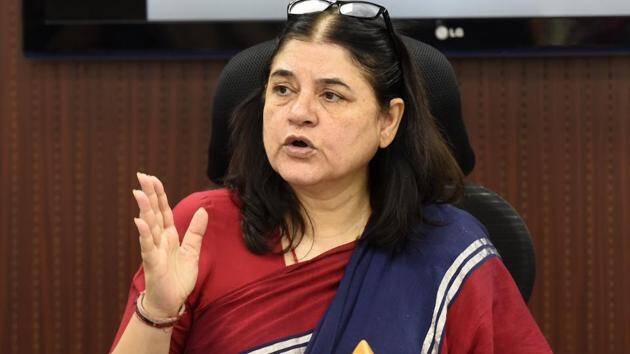
As the festive season approaches, the debate around firecrackers and their impact on the environment has once again gained momentum. BJP leader Maneka Gandhi has sparked a controversy by calling for a nationwide ban on firecrackers, citing the alarming levels of air pollution in New Delhi. According to Gandhi, the primary reason behind the deteriorating air quality in the national capital is the bursting of firecrackers, which not only harms the environment but also poses a significant threat to human health.
Gandhi’s statement came in response to the staggering amount of money spent on firecrackers during the festive season. “If you will burst firecrackers worth ₹800 crore in two nights, then what will happen to the air?” she asked, highlighting the reckless disregard for the environment that comes with the tradition of bursting firecrackers. The sheer scale of the problem is staggering, with the cumulative effect of firecrackers being burst across the country resulting in a significant spike in air pollution levels.
The impact of firecrackers on air quality is well-documented. The combustion of firecrackers releases a cocktail of toxic chemicals into the air, including particulate matter, carbon monoxide, and volatile organic compounds. These pollutants can cause a range of health problems, from respiratory issues like asthma and bronchitis to more severe conditions like cancer and neurological damage. The elderly, children, and people with pre-existing medical conditions are particularly vulnerable to the effects of air pollution, making it a pressing concern for public health.
Gandhi’s suggestion that those who burst firecrackers should be branded as “anti-national” may seem extreme, but it highlights the gravity of the situation. The reckless bursting of firecrackers is not just a matter of personal choice; it has far-reaching consequences for the environment and public health. By labeling those who engage in this practice as “anti-national,” Gandhi is emphasizing the need for a collective response to the problem. It is not just a matter of individual responsibility, but also a question of national duty.
The call for a nationwide ban on firecrackers is not new, but it has gained momentum in recent years. Several cities across the country have already imposed restrictions on the sale and use of firecrackers, citing concerns over air pollution and noise pollution. However, a uniform national policy is still lacking, and the implementation of existing regulations remains patchy.
One of the main challenges in enforcing a ban on firecrackers is the cultural and social significance attached to them. Firecrackers have been an integral part of Indian festivals, particularly Diwali, for centuries. They are seen as a symbol of joy, celebration, and community bonding. However, this cultural attachment must be balanced against the need to protect the environment and public health.
In recent years, there has been a growing awareness about the impact of firecrackers on the environment, and many people have begun to explore alternative ways of celebrating festivals. From eco-friendly fireworks to community-led initiatives, there are several innovative solutions being developed to reduce the environmental footprint of festivals.
Ultimately, the solution to the problem of firecrackers lies in a combination of policy interventions, community engagement, and individual responsibility. The government must take a proactive role in regulating the sale and use of firecrackers, while also promoting awareness about the risks associated with them. At the same time, individuals must take ownership of their actions and make conscious choices about how they celebrate festivals.
As Maneka Gandhi’s statement highlights, the issue of firecrackers is not just a local problem, but a national concern that requires a collective response. By working together, we can create a cleaner, healthier, and more sustainable environment for future generations.
Source: https://repository.inshorts.com/articles/en/PTI/05dfed30-2874-4e50-8c78-37383df29516
About the Author