Those bursting crackers should be called ‘anti-national’: Maneka
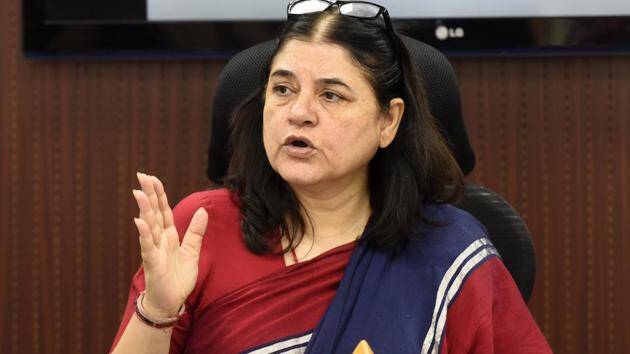
As the festival season approaches, the debate around firecrackers and their impact on the environment has once again gained momentum. BJP leader Maneka Gandhi has sparked a controversy by calling for a nationwide ban on firecrackers, citing the alarming levels of air pollution in New Delhi. According to her, the primary reason behind the hazardous air quality in the national capital is the bursting of firecrackers.
Gandhi’s statement has ignited a heated discussion, with many people taking to social media to express their opinions on the matter. The BJP leader’s comments came as a surprise to many, as firecrackers have been an integral part of Indian festivals, particularly Diwali, for centuries. However, the growing concerns about air pollution and its devastating impact on public health have led many to reconsider their stance on the issue.
The numbers are indeed alarming. Gandhi pointed out that firecrackers worth ₹800 crore are burst in just two nights, resulting in a significant deterioration of air quality. The question she posed, “If you will burst firecrackers worth ₹800 crore in two nights, then what will happen to the air?” is a stark reminder of the consequences of our actions. The air pollution caused by firecrackers is not just a local issue; it has far-reaching implications for the environment and public health.
The impact of air pollution on human health is well-documented. Exposure to poor air quality can lead to respiratory problems, cardiovascular diseases, and even cancer. The elderly, children, and people with pre-existing medical conditions are particularly vulnerable to the effects of air pollution. Moreover, the economic burden of air pollution is significant, with estimates suggesting that it costs the Indian economy billions of dollars each year.
Gandhi’s suggestion that those who burst firecrackers should be branded as “anti-national” may seem extreme, but it highlights the gravity of the issue. The term “anti-national” is often used to describe individuals who pose a threat to national security or interests. In this context, Gandhi’s statement implies that those who contribute to air pollution by bursting firecrackers are, in effect, harming the nation and its people.
The call for a nationwide ban on firecrackers is not new. Many cities and states have already implemented restrictions on the sale and use of firecrackers, citing concerns about air pollution and noise pollution. However, a nationwide ban would require a concerted effort from the government, civil society, and individuals.
So, what can be done to address the issue of air pollution caused by firecrackers? Firstly, there needs to be a greater awareness about the impact of firecrackers on the environment and public health. Educational campaigns can play a crucial role in sensitizing people, especially children, about the importance of protecting the environment.
Secondly, the government needs to take concrete steps to regulate the sale and use of firecrackers. This could include imposing stricter norms on the manufacture and sale of firecrackers, as well as enforcing laws that prohibit the bursting of firecrackers in public spaces.
Thirdly, individuals need to take responsibility for their actions. Instead of bursting firecrackers, people can explore alternative ways to celebrate festivals, such as decorating their homes, cooking traditional foods, or participating in community events.
In conclusion, Maneka Gandhi’s statement highlights the urgent need to address the issue of air pollution caused by firecrackers. While a nationwide ban on firecrackers may seem like a drastic measure, it is essential to consider the long-term consequences of our actions. As responsible citizens, we must prioritize the health and well-being of our nation and its people. By working together, we can create a cleaner, healthier, and more sustainable environment for future generations.
News Source: https://repository.inshorts.com/articles/en/PTI/05dfed30-2874-4e50-8c78-37383df29516
About the Author