Those bursting crackers should be called ‘anti-national’: Maneka
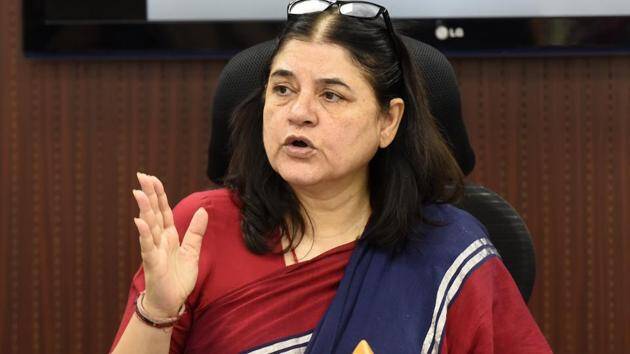
As the festive season approaches, the debate around firecrackers and their impact on the environment has once again gained momentum. BJP leader Maneka Gandhi has joined the chorus, calling for a nationwide ban on firecrackers, citing the devastating effect they have on the air quality in New Delhi. According to Gandhi, the prime reason behind the capital’s notorious air pollution is the bursting of firecrackers, particularly during festivals like Diwali.
Gandhi’s statement comes at a time when the national capital is struggling to cope with hazardous air quality levels. The city’s air quality index (AQI) often touches alarming levels, posing serious health risks to its residents. The BJP leader’s comments are a stark reminder of the need for collective action to mitigate the problem. “If you will burst firecrackers worth ₹800 crore in two nights, then what will happen to the air?” she asked, highlighting the sheer scale of the problem.
The economic argument against firecrackers is also a significant one. The amount spent on firecrackers, as mentioned by Gandhi, is a staggering ₹800 crore, which is spent over just two nights. This amount could be better utilized for more productive and sustainable purposes, such as education, healthcare, or environmental conservation. Furthermore, the economic benefits of a ban on firecrackers could be substantial, with potential savings on healthcare costs and increased productivity due to better air quality.
Gandhi’s most striking comment, however, was her suggestion that those who burst firecrackers should be branded as “anti-national.” This statement is likely to spark a heated debate, with some arguing that it is an overreaction, while others may see it as a necessary measure to drive home the point. The term “anti-national” is often associated with activities that are deemed to be against the interests of the nation. In this context, Gandhi’s statement implies that bursting firecrackers is a act that harms the nation, its people, and its environment.
While some may argue that firecrackers are an integral part of Indian festivals and culture, it is essential to consider the long-term consequences of this practice. The air pollution caused by firecrackers is not just a local problem; it has far-reaching implications for the environment, public health, and the economy. The World Health Organization (WHO) has consistently warned about the dangers of air pollution, which is responsible for an estimated seven million premature deaths worldwide each year.
In recent years, several cities and countries have implemented bans or restrictions on firecrackers, citing environmental and health concerns. For instance, the Supreme Court of India has imposed restrictions on the sale and use of firecrackers in the National Capital Region (NCR) during Diwali. Similar measures have been taken in other countries, such as China, which has banned firecrackers in several cities, including Beijing.
The call for a nationwide ban on firecrackers is not new, but it has gained momentum in recent years. With increasing awareness about the environmental and health impacts of firecrackers, many people are opting for more sustainable and eco-friendly ways to celebrate festivals. This shift in attitude is a positive sign, and it is essential to build on this momentum to create a broader movement for change.
In conclusion, Maneka Gandhi’s statement highlights the urgent need for action to address the problem of air pollution caused by firecrackers. While the suggestion to brand those who burst firecrackers as “anti-national” may be controversial, it underscores the severity of the issue. As a nation, we must come together to find sustainable and environmentally friendly ways to celebrate our festivals, without compromising the health and well-being of our citizens.
The time to act is now, and it requires a collective effort from governments, citizens, and civil society organizations. We must recognize the devastating impact of firecrackers on our environment and take concrete steps to mitigate it. By doing so, we can create a healthier, more sustainable, and more environmentally conscious future for ourselves and for generations to come.
News Source: https://repository.inshorts.com/articles/en/PTI/05dfed30-2874-4e50-8c78-37383df29516
About the Author