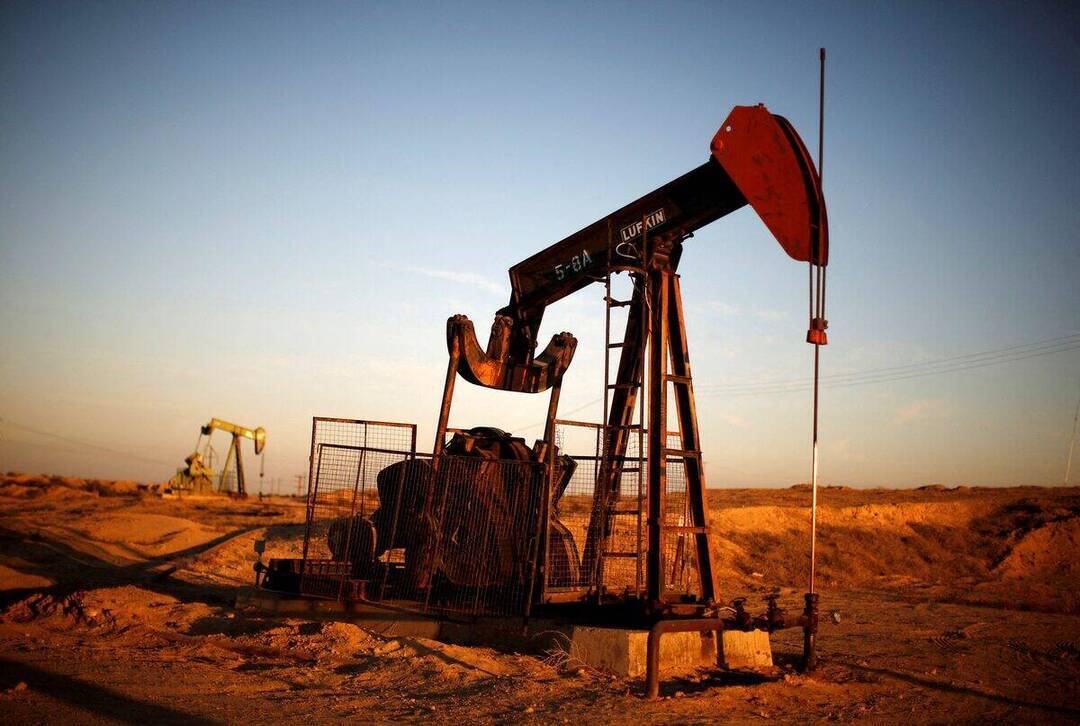
OPEC+ keeps oil output steady amid global turmoil
The Organization of the Petroleum Exporting Countries (OPEC) and its allies, collectively known as OPEC+, made a significant decision on Sunday to maintain their current oil output levels. This move comes at a time when the global energy landscape is experiencing significant turmoil, with various factors impacting the supply and demand of oil. The group, which is responsible for producing approximately half of the world’s oil, chose not to adjust their production levels, despite the ongoing challenges and uncertainties in the market.
The decision was made during a brief 10-minute meeting, which was notable for its brevity and lack of discussion on certain key topics. One notable absence from the agenda was Venezuela, a country with the world’s largest oil reserves, which has recently been the subject of significant attention and action from the United States. The US had recently launched an attack on Venezuela, with the stated intention of helping to repair the country’s “badly broken” oil infrastructure. This move has significant implications for the global oil market, and it was expected that OPEC+ would address the issue during their meeting. However, according to reports, Venezuela was not discussed during the 10-minute gathering.
The US attack on Venezuela has significant implications for the global oil market, and it is likely to have far-reaching consequences for the country’s oil production and exports. The US has stated that its oil companies will play a key role in fixing Venezuela’s oil infrastructure, which has been severely impacted by years of mismanagement and underinvestment. This move is likely to be seen as an attempt by the US to increase its influence in the global oil market, and to gain a strategic advantage over other major oil-producing countries.
The decision by OPEC+ to maintain their current oil output levels is likely to be seen as a cautious approach, given the current state of uncertainty in the global energy market. The group is likely to be mindful of the potential risks and challenges associated with adjusting their production levels, particularly in light of the ongoing turmoil in Venezuela and other oil-producing countries. By maintaining their current output levels, OPEC+ is able to maintain a sense of stability and predictability in the market, which is likely to be welcomed by oil consumers and investors around the world.
However, the decision by OPEC+ to maintain their current oil output levels is also likely to be seen as a missed opportunity to address some of the key challenges facing the global oil market. The ongoing turmoil in Venezuela, combined with other factors such as the COVID-19 pandemic and the Russian-Ukrainian conflict, has created a sense of uncertainty and volatility in the market. By failing to adjust their production levels, OPEC+ may be seen as failing to provide leadership and direction to the market, at a time when it is needed most.
The global oil market is currently experiencing a period of significant change and transformation, driven by a range of factors including the shift towards renewable energy sources, the impact of the COVID-19 pandemic, and the ongoing geopolitical tensions between major oil-producing countries. The decision by OPEC+ to maintain their current oil output levels is likely to be seen as a short-term solution, which may not address the longer-term challenges facing the market.
In the coming months and years, it is likely that the global oil market will continue to experience significant volatility and uncertainty, driven by a range of factors including geopolitical tensions, changes in global demand, and the ongoing shift towards renewable energy sources. The decision by OPEC+ to maintain their current oil output levels is likely to be seen as a cautious approach, which may not provide the sense of stability and predictability that the market needs.
In conclusion, the decision by OPEC+ to maintain their current oil output levels is a significant development, which is likely to have far-reaching implications for the global oil market. The group’s decision to maintain their current production levels, despite the ongoing turmoil in Venezuela and other oil-producing countries, is likely to be seen as a cautious approach, which may not address the longer-term challenges facing the market. As the global oil market continues to evolve and change, it is likely that OPEC+ will face significant challenges and opportunities, and it will be important for the group to provide leadership and direction to the market, in order to maintain stability and predictability.
The ongoing situation in Venezuela, combined with other factors such as the COVID-19 pandemic and the Russian-Ukrainian conflict, has created a sense of uncertainty and volatility in the global oil market. The decision by OPEC+ to maintain their current oil output levels is likely to be seen as a short-term solution, which may not address the longer-term challenges facing the market. As the global oil market continues to evolve and change, it is likely that OPEC+ will face significant challenges and opportunities, and it will be important for the group to provide leadership and direction to the market, in order to maintain stability and predictability.
About the Author