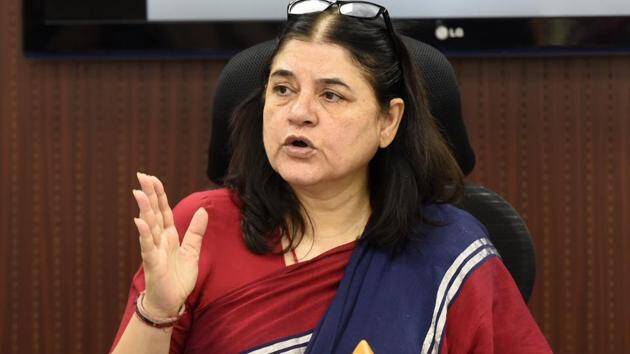
Those bursting crackers should be called ‘anti-national’: Maneka
As the festive season approaches, the debate around firecrackers and their impact on the environment has once again gained momentum. BJP leader Maneka Gandhi has joined the chorus, calling for a nationwide ban on firecrackers and labeling those who burst them as “anti-national”. In a statement that has sparked a heated discussion, Gandhi emphasized the need to take drastic measures to combat air pollution, which she believes is largely caused by the bursting of firecrackers.
According to Gandhi, the massive amount of money spent on firecrackers, approximately ₹800 crore in just two nights, is a significant contributor to the deteriorating air quality in New Delhi. “If you will burst firecrackers worth ₹800 crore in two nights, then what will happen to the air?” she asked, highlighting the devastating impact of firecrackers on the environment. The sheer scale of the problem is staggering, and Gandhi’s concerns are not unfounded. The air pollution in New Delhi has reached alarming levels, with the city consistently ranking among the most polluted cities in the world.
Gandhi’s suggestion to brand those who burst firecrackers as “anti-national” may seem extreme, but it underscores the gravity of the issue. The term “anti-national” is typically associated with activities that pose a threat to national security or interests. However, in the context of environmental degradation, the label takes on a different connotation. By using this term, Gandhi is emphasizing that the actions of individuals who prioritize their personal enjoyment over the well-being of the environment and the health of their fellow citizens are, in fact, anti-national.
The issue of firecrackers and air pollution is not limited to New Delhi; it is a nationwide problem that requires a comprehensive solution. The burning of firecrackers releases a cocktail of toxic chemicals, including particulate matter, carbon monoxide, and volatile organic compounds, into the atmosphere. These pollutants can cause a range of health problems, from respiratory issues to cardiovascular disease. Moreover, the impact of air pollution is not limited to human health; it also affects the environment, damaging crops, and ecosystems.
The economic costs of air pollution are also significant. A study by the World Health Organization (WHO) estimates that air pollution costs India approximately $55 billion annually. This includes the cost of healthcare, lost productivity, and other economic losses. In addition, the tourism industry, which is a significant contributor to India’s economy, is also affected by air pollution. The poor air quality in cities like New Delhi can deter tourists, resulting in lost revenue and economic opportunities.
So, what can be done to address this issue? A nationwide ban on firecrackers, as suggested by Gandhi, is a drastic measure that may not be feasible or effective. However, it is essential to take a multi-faceted approach to tackle the problem. This includes implementing and enforcing stricter regulations on the manufacture and sale of firecrackers, increasing public awareness about the risks associated with firecrackers, and promoting alternative, eco-friendly ways to celebrate festivals.
The government, civil society, and individuals all have a role to play in mitigating the impact of firecrackers on the environment. The government can establish and enforce stricter regulations, while civil society can raise awareness and promote alternative celebrations. Individuals, on the other hand, can make conscious choices about their actions and opt for eco-friendly alternatives.
In conclusion, Maneka Gandhi’s statement highlights the urgent need to address the issue of air pollution caused by firecrackers. While her suggestion to brand those who burst firecrackers as “anti-national” may be controversial, it emphasizes the gravity of the problem. It is essential to take a comprehensive approach to tackle the issue, involving government regulations, public awareness, and individual actions. By working together, we can reduce the impact of firecrackers on the environment and create a healthier, more sustainable future for ourselves and future generations.
News Source: https://repository.inshorts.com/articles/en/PTI/05dfed30-2874-4e50-8c78-37383df29516
About the Author