Rare ‘sandalwood leopard’ spotted for the first time in Karnataka
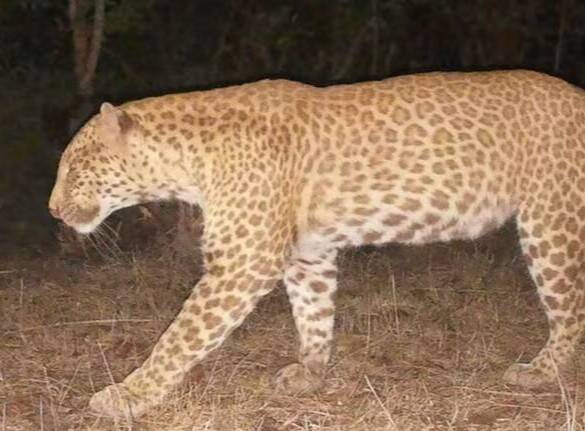
In a groundbreaking discovery, researchers in Karnataka have documented an ultra-rare leopard colour morph in Vijayanagara district, marking only the second confirmed sighting of such a big cat in India and the first in the state. The animal, named the ‘Sandalwood Leopard’ by conservationists, is distinguished by a pale reddish-pink coat with light-brown rosettes. This extraordinary finding has sent shockwaves of excitement throughout the wildlife community, and we are thrilled to delve into the details of this remarkable discovery.
The ‘Sandalwood Leopard’ was spotted by renowned wildlife scientist Sanjay Gubbi, who has been instrumental in documenting and conserving India’s diverse wildlife. Gubbi’s tireless efforts have led to numerous significant discoveries, and this latest finding is a testament to his dedication to the field. The leopard was captured on camera in the Vijayanagara district, which is known for its rich biodiversity and lush forests. The region’s unique ecosystem provides a perfect habitat for a wide range of wildlife, including the elusive and majestic leopards.
The ‘Sandalwood Leopard’ is an extremely rare colour morph, with only one previously confirmed sighting in India. This unusual coat colouration is the result of a genetic variation, which affects the production of melanin, the pigment responsible for skin and hair colour. The pale reddish-pink coat with light-brown rosettes is a striking departure from the typical yellow or golden coat of most leopards. This unique appearance has earned the animal its nickname, the ‘Sandalwood Leopard’, due to its resemblance to the prized sandalwood trees native to the region.
The discovery of the ‘Sandalwood Leopard’ has significant implications for conservation efforts in Karnataka. The state is home to a large population of leopards, and the presence of this rare colour morph highlights the importance of preserving and protecting the region’s wildlife habitats. The Vijayanagara district, in particular, is a crucial area for conservation, with its forests providing a vital corridor for wildlife movement and genetic exchange.
The documentation of the ‘Sandalwood Leopard’ is also a testament to the power of camera trap technology in wildlife research. Camera traps have revolutionized the field of wildlife conservation, allowing scientists to monitor and study animals in their natural habitats without disrupting their behavior. The use of camera traps has enabled researchers to gather valuable data on population sizes, habitat use, and behavior, which is essential for developing effective conservation strategies.
The ‘Sandalwood Leopard’ is not only an extraordinary animal but also a symbol of the incredible biodiversity that exists in India. The country is home to a vast array of wildlife, including many rare and endangered species. The discovery of this ultra-rare leopard colour morph is a reminder of the importance of preserving and protecting India’s natural heritage.
In conclusion, the spotting of the ‘Sandalwood Leopard’ in Karnataka is a groundbreaking discovery that highlights the importance of conservation efforts in the region. The rare colour morph is a testament to the incredible diversity of wildlife in India, and its documentation is a significant contribution to the field of wildlife research. As we continue to learn more about this extraordinary animal, we are reminded of the need to protect and preserve the natural world for future generations.
About the Author