Indian gig economy strikes back, exposing a broken model
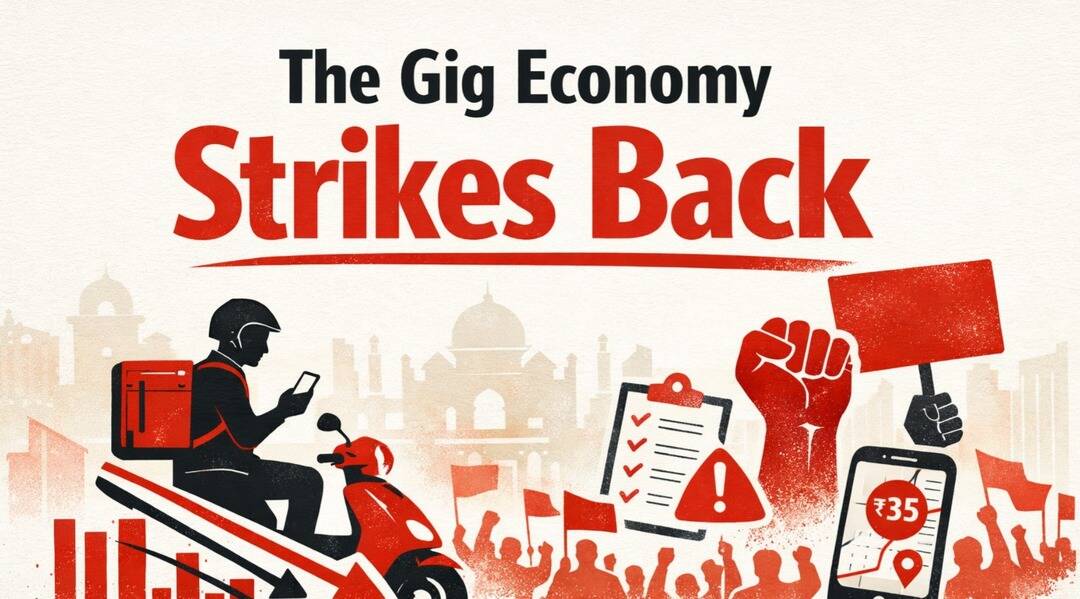
The Indian gig economy, which has been thriving in recent years, has hit a roadblock. In December, around 40,000 delivery workers joined nationwide strikes, disrupting 50–60% of orders in several cities. The workers, who are the backbone of the gig economy, cited low and unstable pay, strict app control, and weak protections as the reasons for their strike. This massive protest has brought to light the dark underbelly of the Indian gig economy, exposing a broken model that prioritizes growth and convenience over fairness and worker welfare.
The gig economy, which includes companies such as Zomato, Swiggy, and Uber, has been growing rapidly in India. These companies have made it possible for people to order food, hail taxis, and avail other services with just a few clicks on their smartphones. However, behind the convenience and ease of use, lies a complex web of exploitation and neglect. The workers, who are classified as independent contractors, are not entitled to basic rights such as minimum wage, social security, and workers’ compensation.
The strike, which was called by various worker unions, highlighted the struggles of the delivery workers. They complained of low pay, which can be as low as Rs 10 per delivery, and unstable working hours. The workers are also required to bear the costs of fuel, maintenance, and other expenses, which can eat into their already meager earnings. Moreover, the workers have no job security and can be fired at any time without any notice or compensation.
The strict app control is another major issue faced by the workers. The companies use algorithms to manage the workflow, which can lead to unfair treatment of workers. For example, workers who do not accept a certain number of orders can be penalized or even fired. The workers are also required to work long hours, often in excess of 12 hours a day, without any breaks or rest.
The weak protections for workers are also a major concern. The workers are not covered by any labor laws, which means they have no access to social security, health insurance, or workers’ compensation. In case of an accident or injury, the workers are left to fend for themselves, with no support from the companies.
The strike has forced the companies to defend their growth and business models. The companies have argued that they provide flexible working hours and opportunities for workers to earn extra income. However, the workers have countered that the flexibility is a myth and that they are required to work long hours to make ends meet.
The government has also intervened in the matter, with politicians from various parties weighing in on the issue. Some politicians have called for stricter regulations and laws to protect the workers, while others have argued that the gig economy is a necessary evil and that the workers should be grateful for the opportunities provided to them.
The strike has highlighted a widening gap between convenience and fairness in India’s digital jobs. While the gig economy has made it possible for people to access services with ease, it has also created a class of workers who are exploited and neglected. The companies have prioritized growth and profit over worker welfare, and the government has failed to regulate the industry effectively.
The protests have also raised questions about the future of work in India. As the gig economy continues to grow, it is likely that more and more workers will be classified as independent contractors, rather than employees. This could lead to a further erosion of worker rights and protections, and could exacerbate the existing social and economic inequalities in the country.
In conclusion, the Indian gig economy strike has exposed a broken model that prioritizes growth and convenience over fairness and worker welfare. The strike has highlighted the struggles of the delivery workers, who are the backbone of the gig economy. The companies and the government must take steps to address the concerns of the workers and ensure that they are treated fairly and with dignity. This could involve providing better pay and working conditions, as well as stronger protections and regulations. Only then can the gig economy be a force for good, rather than a source of exploitation and neglect.
As the debate around the gig economy continues, it is essential to remember that the workers are not just statistics or data points, but human beings who deserve to be treated with respect and dignity. The strike has shown that the workers will no longer be silent and will fight for their rights. It is now up to the companies and the government to respond to their demands and create a more fair and equitable gig economy.
News source: https://ascendants.in/industry_events/indian-gig-economy-strikes-platforms-policy/
About the Author