Rahul’s Vietnam visit will be as ‘guest of anti-India people’: BJP
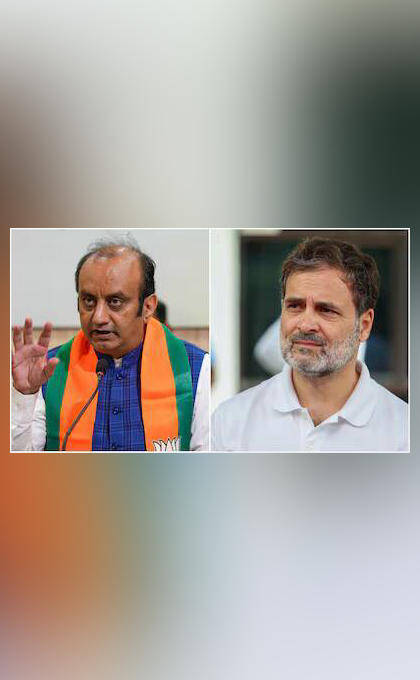
The Bharatiya Janata Party (BJP) has launched a scathing attack on Congress leader Rahul Gandhi, alleging that his recent foreign visits are aimed at spreading anti-India sentiments. BJP leader Sudhanshu Trivedi claimed that Gandhi’s visit to Vietnam will be as a “guest of some anti-India people” and that he will make statements against India during his trip.
Trivedi’s comments came after Gandhi returned from a visit to Germany, where he allegedly met with individuals who are “enemies of India”. The BJP leader accused Gandhi of traveling abroad to “spew venom” against India, suggesting that his primary objective is to undermine the country’s reputation on the global stage.
The BJP’s allegations against Gandhi are not new, as the party has consistently accused him of making anti-India statements during his foreign visits. However, the latest comments from Trivedi suggest that the BJP is determined to keep the pressure on Gandhi, who has been a vocal critic of the Narendra Modi government.
Gandhi’s visit to Germany was marked by controversy, with the BJP alleging that he met with individuals who have been critical of India’s human rights record and its handling of the Kashmir issue. The BJP claimed that Gandhi’s meetings with these individuals were an attempt to “collaborate” with forces that are inimical to India’s interests.
The BJP’s accusations against Gandhi are likely to escalate the war of words between the two parties, with the Congress likely to hit back at the BJP’s allegations. The Congress has consistently maintained that Gandhi’s foreign visits are aimed at promoting India’s interests and strengthening ties with other countries.
However, the BJP’s allegations against Gandhi have raised questions about the Congress leader’s strategy and his approach to foreign policy. While Gandhi has been critical of the Modi government’s handling of foreign policy, his own approach to international relations has been subject to scrutiny.
Gandhi’s visit to Vietnam is likely to be closely watched, with the BJP waiting to pounce on any statement or comment that can be perceived as anti-India. The visit is also significant because Vietnam is an important partner for India in Southeast Asia, and any statement that can be seen as undermining India’s relations with Vietnam could have significant implications.
The BJP’s allegations against Gandhi also reflect the increasingly polarized nature of Indian politics, where politicians are often accused of being “anti-national” or “anti-India” for holding views that are critical of the government. The accusations against Gandhi are likely to further polarize the debate, with the BJP and its supporters seeing him as a threat to India’s interests and the Congress and its supporters viewing him as a champion of democratic values and human rights.
In conclusion, the BJP’s allegations against Rahul Gandhi’s visit to Vietnam as a “guest of anti-India people” are likely to escalate the war of words between the two parties. While the accusations against Gandhi are not new, they reflect the increasingly polarized nature of Indian politics and the BJP’s determination to keep the pressure on the Congress leader. As the debate continues to unfold, it remains to be seen how Gandhi’s visit to Vietnam will play out and what implications it will have for India’s relations with Vietnam and the wider region.
Source: https://repository.inshorts.com/articles/en/PTI/2ea66af0-d391-4b15-b095-5b63f4789282
About the Author