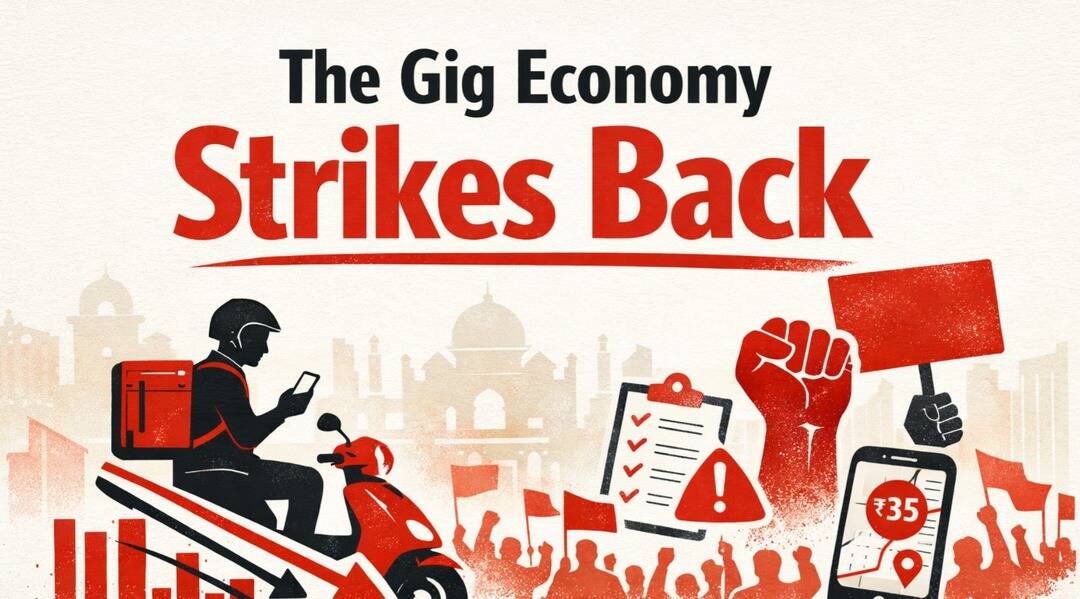
Indian gig economy strikes back, exposing a broken model
The Indian gig economy, which has been touted as a symbol of innovation and progress, is facing a major crisis. In December, around 40,000 delivery workers joined nationwide strikes, disrupting 50–60% of orders in several cities. The workers, who are the backbone of the gig economy, cited low and unstable pay, strict app control, and weak protections as the reasons for their protest. This strike is a significant milestone in the history of the Indian gig economy, and it highlights the widening gap between convenience and fairness in the country’s digital jobs.
The gig economy, which includes companies such as Zomato, Swiggy, and Uber, has experienced rapid growth in India in recent years. These companies have disrupted traditional industries such as food delivery and transportation, and have created new opportunities for millions of Indians. However, the growth of the gig economy has also raised concerns about the working conditions and rights of the workers who are employed by these companies.
The strike, which was called by several worker unions, was a response to the poor working conditions and low pay that delivery workers face. The workers complained that they are paid very low wages, and that their earnings are unstable and unpredictable. They also complained about the strict control that the companies exert over their work, including the use of algorithms to monitor their performance and the imposition of strict deadlines.
One of the main demands of the striking workers was an increase in their pay. The workers argued that their current pay is not sufficient to cover their expenses, and that they are not able to earn a decent living. They also demanded better working conditions, including access to social security benefits and protection from harassment and exploitation.
The strike had a significant impact on the operations of the companies involved. According to reports, 50-60% of orders were disrupted in several cities, including Delhi, Mumbai, and Bengaluru. The companies were forced to apologize to their customers and to offer them refunds and discounts.
The strike also attracted the attention of politicians, who intervened to try to resolve the dispute. The government assured the workers that it would look into their demands and work to improve their working conditions. However, the companies defended their business model, arguing that it provides flexibility and opportunities for millions of Indians.
The strike highlights the widening gap between convenience and fairness in India’s digital jobs. On the one hand, the gig economy has created new opportunities for millions of Indians and has made it possible for people to access goods and services at the click of a button. On the other hand, the workers who are employed by these companies face poor working conditions, low pay, and weak protections.
The strike also raises questions about the sustainability of the gig economy business model. The model, which is based on the use of cheap labor and the exploitation of workers, is not sustainable in the long term. The companies involved will have to rethink their business model and work to improve the working conditions and rights of their workers.
In conclusion, the Indian gig economy strike is a significant milestone in the history of the country’s digital jobs. It highlights the widening gap between convenience and fairness, and it raises questions about the sustainability of the gig economy business model. The companies involved will have to work to improve the working conditions and rights of their workers, and the government will have to intervene to regulate the industry and protect the rights of workers.
As the Indian gig economy continues to grow and evolve, it is essential that the companies involved and the government work together to ensure that the rights of workers are protected. This can be achieved by implementing policies and regulations that promote fair pay, safe working conditions, and social security benefits for workers. It is also essential that the companies involved are transparent about their business model and their treatment of workers.
Ultimately, the Indian gig economy strike is a wake-up call for the companies involved and the government. It highlights the need for a more sustainable and equitable business model, one that prioritizes the rights and well-being of workers. As the gig economy continues to grow and evolve, it is essential that we prioritize fairness and sustainability, and work to create a more just and equitable society for all.
News Source: https://ascendants.in/industry_events/indian-gig-economy-strikes-platforms-policy/
About the Author