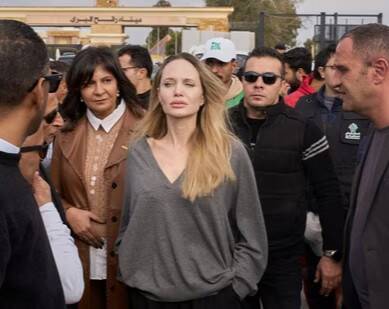
Angelina Jolie Visits Gaza’s Rafah Crossing Amid Israeli Suspension
The Gaza Strip has been a focal point of international attention in recent years, with the ongoing conflict between Israel and Palestine leading to a significant humanitarian crisis. The situation has been further exacerbated by the suspension of aid organizations working in the region, leaving many without access to essential supplies and services. It was against this backdrop that Hollywood actress and former UN Special Envoy, Angelina Jolie, visited the Rafah Crossing in Gaza on Friday.
Jolie’s visit came at a time when Israel announced the suspension of aid organizations without renewed registrations, working in the Gaza Strip. This move has been widely criticized, with many arguing that it will only serve to worsen the already dire humanitarian situation in the region. The Rafah Crossing, which is the primary entry point for goods and supplies into the Gaza Strip, has been a particular point of contention, with many aid shipments being denied entry or delayed.
During her visit, Jolie witnessed firsthand the impact of the suspension of aid organizations and the restrictions on the entry of goods into the Gaza Strip. She walked through a large warehouse that was full of items that were denied entry, most of which were medical supplies. This starkly illustrated the human cost of the conflict and the restrictions that are being imposed on the people of Gaza. “I walked through a large warehouse that was full of items that were denied entry, most of them medical”, said Angelina, highlighting the severity of the situation.
The visit by Jolie has drawn attention to the plight of the people of Gaza and the need for urgent action to address the humanitarian crisis in the region. The suspension of aid organizations and the restrictions on the entry of goods are having a devastating impact on the population, with many struggling to access basic necessities like food, water, and medical care. The situation is particularly dire for the most vulnerable members of society, including children, women, and the elderly.
The international community has been criticized for its response to the crisis in Gaza, with many arguing that more needs to be done to address the root causes of the conflict and to provide support to those affected. The visit by Jolie is a reminder that there are still many people who care deeply about the situation in Gaza and who are committed to doing something to help. However, it also highlights the need for a more coordinated and sustained response from the international community, one that addresses the humanitarian needs of the population and works towards a lasting resolution to the conflict.
The Israeli government has argued that the suspension of aid organizations is necessary for security reasons, citing concerns about the potential for aid to be diverted to support militant groups. However, this argument has been disputed by many, who point out that the vast majority of aid is provided by reputable organizations that are subject to strict monitoring and oversight. The suspension of aid organizations will only serve to worsen the humanitarian situation in Gaza, and will do little to address the underlying security concerns.
The visit by Jolie to the Rafah Crossing is a powerful reminder of the human cost of the conflict in Gaza and the need for urgent action to address the humanitarian crisis in the region. It is a call to action, not just for the international community, but for individuals around the world who are concerned about the situation in Gaza and want to do something to help. By drawing attention to the plight of the people of Gaza, Jolie’s visit has highlighted the need for a more sustained and coordinated response to the crisis, one that addresses the humanitarian needs of the population and works towards a lasting resolution to the conflict.
In conclusion, the visit by Angelina Jolie to the Rafah Crossing in Gaza is a significant event that has drawn attention to the humanitarian crisis in the region. The suspension of aid organizations and the restrictions on the entry of goods are having a devastating impact on the population, and it is imperative that the international community takes urgent action to address the situation. By supporting reputable aid organizations and working towards a lasting resolution to the conflict, we can help to alleviate the suffering of the people of Gaza and work towards a more peaceful and stable future for the region.
About the Author