Rare ‘Sandalwood Leopard’ Spotted for the First Time in Karnataka
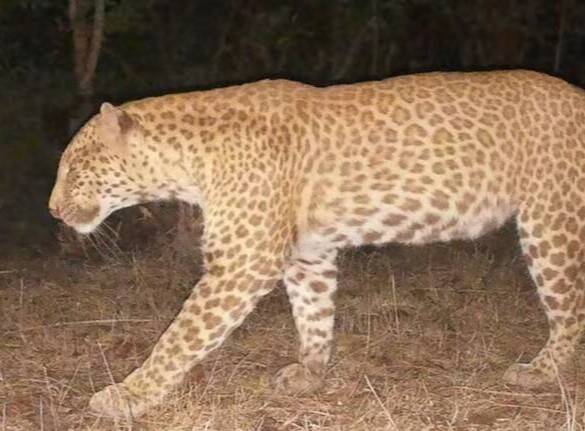
In a groundbreaking discovery, researchers in Karnataka have documented an ultra-rare leopard colour morph in Vijayanagara district, marking only the second confirmed sighting of such a big cat in India and the first in the state. The animal, named the ‘Sandalwood Leopard’ by conservationists, is distinguished by a pale reddish-pink coat with light-brown rosettes. This extraordinary finding has sent shockwaves of excitement throughout the scientific community and highlights the rich biodiversity of the region.
The Sandalwood Leopard, as it has been dubbed, is a striking example of the genetic diversity that exists within the leopard population. The big cat’s unique coat colouration is a result of a rare genetic variation that affects the production of melanin, the pigment responsible for skin and hair colour. This phenomenon is often referred to as leucism, a condition that reduces the amount of melanin in an animal’s skin and fur, resulting in a pale or washed-out appearance.
Wildlife scientist Sanjay Gubbi, who documented the leopard, has been studying the big cat population in Karnataka for several years. Gubbi’s team has been conducting extensive research in the region, using camera traps and other non-invasive methods to monitor the leopards and gather data on their behaviour, habitat, and population dynamics. The discovery of the Sandalwood Leopard is a significant milestone in their research and underscores the importance of continued conservation efforts in the area.
The Vijayanagara district, where the Sandalwood Leopard was spotted, is a biodiversity hotspot, with a rich array of flora and fauna. The region’s unique landscape, which includes forests, grasslands, and rocky outcrops, provides a habitat for a wide range of wildlife, including leopards, tigers, and other endangered species. The discovery of the Sandalwood Leopard highlights the need for continued conservation efforts in the region, including the protection of habitats and the prevention of human-wildlife conflict.
The Sandalwood Leopard is not the only rare colour morph to be found in India. In 2019, a similar leopard was spotted in the Satpura Tiger Reserve in Madhya Pradesh, marking the first confirmed sighting of such a big cat in the country. However, the Sandalwood Leopard is the first to be documented in Karnataka, and its discovery has significant implications for conservation efforts in the state.
The documentation of the Sandalwood Leopard is a testament to the power of citizen science and community-based conservation. Gubbi’s team has been working closely with local communities and conservation organizations to monitor the leopard population and gather data on their behaviour and habitat use. This collaborative approach has not only led to the discovery of the Sandalwood Leopard but has also helped to raise awareness about the importance of conservation and the need to protect these magnificent creatures.
The discovery of the Sandalwood Leopard has also sparked interest among wildlife enthusiasts and photographers, who are eager to catch a glimpse of this rare and elusive creature. However, it is essential to remember that the Sandalwood Leopard is a wild animal and should be treated with respect and caution. The leopard’s habitat should be protected, and any attempts to approach or photograph the animal should be done in a responsible and non-invasive manner.
In conclusion, the discovery of the Sandalwood Leopard in Karnataka is a significant milestone in the field of conservation and wildlife research. The documentation of this rare colour morph highlights the importance of continued conservation efforts in the region and underscores the need to protect the habitats and ecosystems that support these magnificent creatures. As we continue to learn more about the Sandalwood Leopard and its habits, we are reminded of the beauty and diversity of the natural world and the importance of preserving it for future generations.
About the Author