Indian gig economy strikes back, exposing a broken model
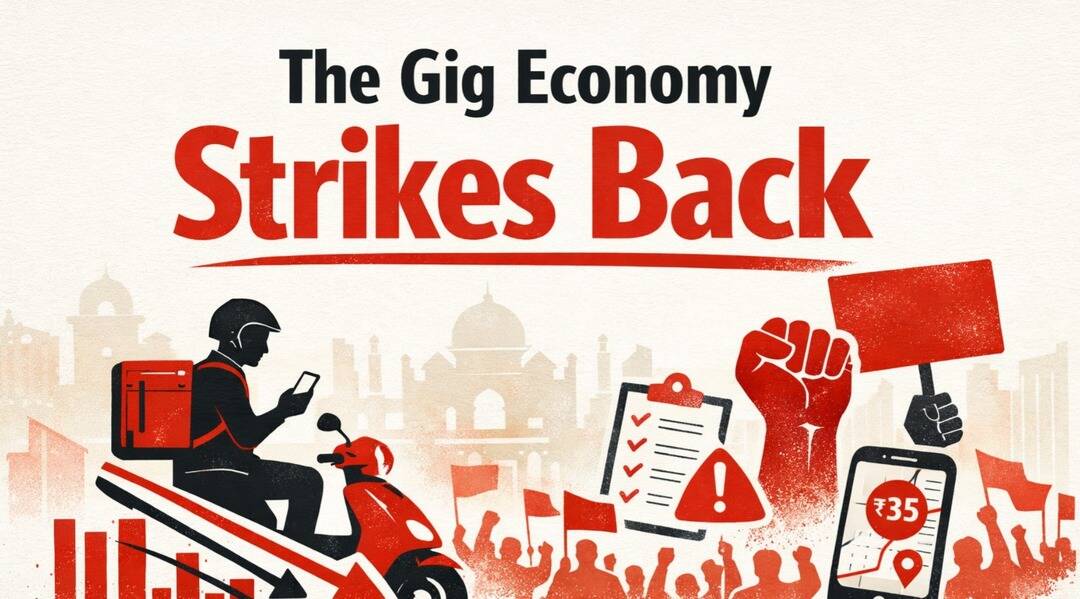
The Indian gig economy, once hailed as a revolutionary force in the job market, is facing a severe backlash from its very own workforce. In a shocking turn of events, around 40,000 delivery workers went on a nationwide strike in December, crippling 50-60% of orders in several cities. The strike, which was called to protest against low and unstable pay, strict app control, and weak protections, has exposed the dark underbelly of India’s digital jobs market.
The gig economy, which includes companies such as Zomato, Swiggy, and Ola, has been touted as a game-changer in the Indian job market. With the promise of flexible working hours and attractive pay, thousands of workers flocked to these platforms, seeking to supplement their income or start a new career. However, beneath the glossy facade, the reality is starkly different.
Workers in the gig economy are often classified as “independent contractors” or “partners,” rather than employees. This means that they are not entitled to the same benefits and protections as regular employees, such as minimum wage, paid leave, and social security. The platforms, on the other hand, wield significant control over the workers, dictating their schedules, pay, and performance metrics.
The recent strike has brought to light the deep-seated grievances of the workers. They claim that their pay is often meager and unpredictable, with some workers earning as little as ₹10-15 per delivery. The strict app control also means that workers are forced to work long hours, often without breaks, and are penalized for any mistakes or delays. The lack of protections also means that workers are vulnerable to accidents, harassment, and exploitation.
The strike has sparked a heated debate about the sustainability of the gig economy model. While companies have defended their growth and expansion, politicians have intervened, calling for greater regulation and protection for workers. The government has also announced plans to introduce new labor laws, which would provide greater protections for workers in the gig economy.
However, the question remains whether these measures will be enough to address the systemic issues plaguing the gig economy. The strike has highlighted a widening gap between convenience and fairness in India’s digital jobs market. On the one hand, consumers have grown accustomed to the convenience and affordability offered by gig economy platforms. On the other hand, workers are demanding fair pay, better working conditions, and greater protections.
The Indian gig economy is not an isolated phenomenon. Similar protests and strikes have been reported in other countries, including the United States, the United Kingdom, and Australia. The global nature of the problem highlights the need for a more nuanced and sustainable approach to the gig economy.
One possible solution is to reclassify workers as employees, rather than independent contractors. This would entitle them to the same benefits and protections as regular employees, including minimum wage, paid leave, and social security. Another solution is to introduce greater transparency and accountability in the gig economy, including clear pay structures, performance metrics, and grievance redressal mechanisms.
Ultimately, the Indian gig economy strike is a wake-up call for policymakers, companies, and consumers. It highlights the need for a more balanced and sustainable approach to the gig economy, one that prioritizes fairness and equity alongside convenience and growth. As the gig economy continues to evolve and expand, it is essential to address the systemic issues plaguing the sector and ensure that workers are treated with dignity and respect.
In conclusion, the Indian gig economy strike has exposed a broken model that prioritizes growth and convenience over fairness and equity. As companies defend their growth and politicians intervene, it is essential to remember that the gig economy is not just a business model, but a social and economic phenomenon that affects thousands of workers and their families. It is time to rethink the gig economy and create a more sustainable and equitable model that benefits all stakeholders.
News Source: https://ascendants.in/industry_events/indian-gig-economy-strikes-platforms-policy/
About the Author