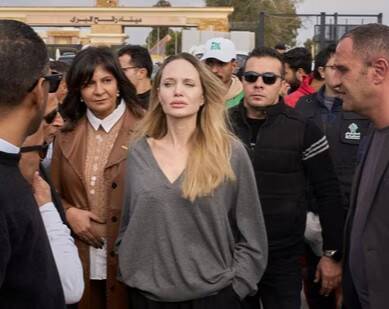
Angelina Jolie Visits Gaza’s Rafah Crossing Amid Israeli Suspension
The Gaza Strip has been a focal point of international attention in recent years, with the ongoing conflict between Israel and Palestine leading to a significant humanitarian crisis. The situation has been exacerbated by Israel’s recent announcement to suspend aid organizations working in the Gaza Strip, unless they renew their registrations. Amidst this turmoil, Hollywood actress and ex-UN special envoy Angelina Jolie visited the Rafah Crossing in Gaza on Friday, highlighting the plight of the people living in the region.
Angelina Jolie, known for her philanthropic work, has been a vocal advocate for refugees and displaced persons around the world. Her visit to the Rafah Crossing, a critical entry point for goods and aid into the Gaza Strip, was a significant gesture of solidarity with the people of Gaza. The crossing has been a major point of contention between Israel and Palestine, with Israel imposing strict restrictions on the movement of people and goods.
During her visit, Angelina Jolie witnessed firsthand the harsh realities of life in Gaza. She walked through a large warehouse that was full of items denied entry, most of which were medical supplies. This stark revelation highlights the severity of the humanitarian crisis in Gaza, where medical aid is desperately needed. The suspension of aid organizations by Israel has further exacerbated the situation, leaving many vulnerable individuals without access to essential services.
“I walked through a large warehouse that was full of items that were denied entry, most of them medical,” said Angelina Jolie, emphasizing the urgent need for humanitarian assistance in the region. Her words underscore the critical role that aid organizations play in providing essential services to the people of Gaza. The suspension of these organizations will only serve to worsen the humanitarian crisis, leaving many to suffer without access to basic necessities like healthcare and food.
The Israeli government’s decision to suspend aid organizations working in the Gaza Strip has been met with widespread criticism from the international community. The move is seen as a further restriction on the already limited access to humanitarian aid in the region. With the suspension, many organizations that provide critical services, including medical care, food, and shelter, will be forced to cease their operations. This will have a devastating impact on the people of Gaza, who are already struggling to survive in a region ravaged by conflict and poverty.
The visit by Angelina Jolie to the Rafah Crossing is a timely reminder of the need for international attention and action to address the humanitarian crisis in Gaza. Her presence helps to bring attention to the plight of the people living in the region and highlights the urgent need for a resolution to the conflict. The international community must come together to pressure Israel to lift its restrictions on aid organizations and allow for the free flow of humanitarian aid into the Gaza Strip.
The situation in Gaza is complex and multifaceted, with deep-rooted historical, political, and cultural factors at play. However, one thing is clear: the people of Gaza are in dire need of humanitarian assistance, and it is the responsibility of the international community to ensure that they receive it. The visit by Angelina Jolie is a powerful reminder of the need for compassion, empathy, and action in the face of human suffering.
As the international community grapples with the complexities of the Israeli-Palestinian conflict, it is essential to remember the human cost of the crisis. The people of Gaza are not just statistics or headlines; they are individuals with families, hopes, and dreams. They deserve to live with dignity, to have access to basic necessities like healthcare and education, and to be treated with respect and compassion.
In conclusion, the visit by Angelina Jolie to the Rafah Crossing in Gaza is a significant gesture of solidarity with the people of Gaza. Her presence highlights the urgent need for humanitarian assistance in the region and underscores the critical role that aid organizations play in providing essential services. The international community must come together to pressure Israel to lift its restrictions on aid organizations and allow for the free flow of humanitarian aid into the Gaza Strip. Only through collective action and compassion can we hope to alleviate the suffering of the people of Gaza and work towards a more just and peaceful resolution to the conflict.
About the Author