Indian gig economy strikes back, exposing a broken model
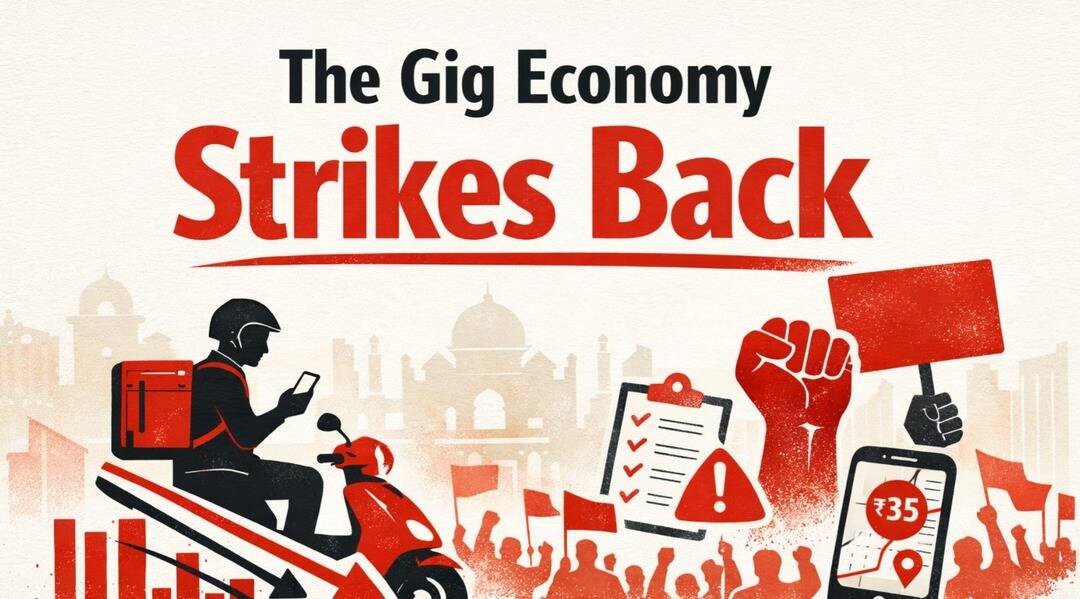
The Indian gig economy, once hailed as a revolutionary force in the country’s job market, has hit a roadblock. In December, around 40,000 delivery workers from various food delivery and e-commerce platforms joined nationwide strikes, disrupting 50-60% of orders in several cities. The strike, which was one of the largest of its kind, brought attention to the plight of gig workers who have been struggling with low and unstable pay, strict app control, and weak protections.
The gig economy, which includes platforms such as Zomato, Swiggy, UberEats, and Amazon, has grown exponentially in India over the past few years. These platforms have created millions of jobs for delivery workers, drivers, and other freelancers, providing them with an opportunity to earn a living on their own terms. However, the reality on the ground is far from rosy. Gig workers have been complaining about the poor working conditions, long hours, and meager pay for months, but their voices were largely ignored until the strike.
The strike, which was called by various worker unions and associations, was a culmination of months of frustration and anger among gig workers. The workers cited several grievances, including low and unstable pay, strict app control, and weak protections. Many workers complained that they were not paid minimum wages, and their earnings were often deducted arbitrarily by the platforms. They also complained about the lack of social security benefits, such as health insurance and pension, which are provided to regular employees.
The strike highlighted the widening gap between convenience and fairness in India’s digital jobs. While platforms like Zomato and Swiggy have made it convenient for consumers to order food and other essentials from the comfort of their homes, the workers who make this convenience possible are struggling to make ends meet. The platforms have created a system where workers are treated as independent contractors, rather than employees, which means they are not entitled to the same benefits and protections as regular employees.
The strike has sparked a debate about the future of the gig economy in India. Companies have defended their growth and business models, arguing that they provide workers with flexibility and autonomy. However, workers argue that this flexibility comes at a cost, and they are not treated fairly. Politicians have also intervened, with some calling for greater regulation of the gig economy to protect workers’ rights.
The Indian government has been slow to respond to the grievances of gig workers. While there have been some efforts to regulate the gig economy, such as the introduction of the Code on Social Security, 2020, which provides for social security benefits for gig workers, much more needs to be done. The government needs to take a more proactive approach to addressing the concerns of gig workers and ensuring that they are treated fairly.
The strike has also highlighted the need for greater transparency and accountability in the gig economy. Platforms need to be more transparent about their payment structures and working conditions, and workers need to be given more control over their work. This can be achieved through the introduction of regulations that require platforms to provide workers with minimum wages, social security benefits, and safe working conditions.
In conclusion, the Indian gig economy strike has exposed a broken model that prioritizes convenience over fairness. While the strike has disrupted the operations of food delivery and e-commerce platforms, it has also brought attention to the plight of gig workers who are struggling to make a living. The government, companies, and workers need to come together to find a solution that balances the needs of all stakeholders. This can be achieved through a combination of regulation, transparency, and accountability.
The gig economy has the potential to create millions of jobs and stimulate economic growth in India, but it needs to be done in a way that is fair and sustainable. The strike has shown that workers will no longer tolerate poor working conditions and low pay, and it is up to the government and companies to respond to their concerns. As the gig economy continues to grow and evolve, it is essential that we prioritize fairness and transparency to ensure that workers are treated with dignity and respect.
News Source: https://ascendants.in/industry_events/indian-gig-economy-strikes-platforms-policy/
About the Author