B’desh not same as Pakistan: Ex-BCCI official on Mustafizur issue
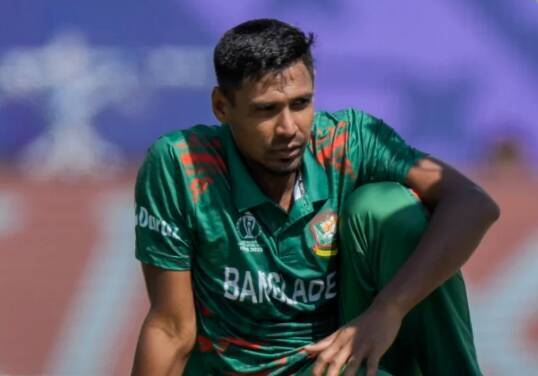
The cricketing world was left stunned recently when the Board of Control for Cricket in India (BCCI) directed the Kolkata Knight Riders (KKR) to release Bangladesh’s star pacer Mustafizur Rahman from their IPL 2026 squad. The decision was met with widespread criticism, with many questioning the fairness and logic behind it. One such critic is a former BCCI official, who has come out strongly against the directive, stating that Bangladesh is not the same as Pakistan and should not be treated as an enemy nation.
The controversy surrounding Mustafizur’s release began after a series of violent protests broke out in Bangladesh, targeting Indian interests and citizens. The protests were sparked by a perceived slight against the Bangladeshi nation, and things quickly escalated, with many Indian citizens and businesses being targeted. In the aftermath of the violence, the BCCI took the decision to ask KKR to release Mustafizur from their squad, citing concerns over the safety and security of Indian players and teams.
However, the former BCCI official has questioned the fairness of this decision, pointing out that Bangladesh is not an enemy nation and should not be treated as such. “What happened in Bangladesh was wrong, but those were mobs…such elements exist everywhere,” the official said. “You can’t punish an entire nation for the actions of a few misguided individuals. Bangladesh is not Pakistan, and we should not treat them as if they are.”
The official’s comments are particularly relevant, given that India is set to host Bangladesh in the upcoming T20 World Cup. The tournament is scheduled to take place in India, and Bangladesh is one of the participating teams. The official questioned the logic of asking KKR to release Mustafizur from their squad, while still planning to host Bangladesh in the T20 World Cup. “If we are going to host Bangladesh in the T20 World Cup, then why are we asking KKR to release Mustafizur from their squad?” the official asked. “It doesn’t make sense to me. Either we should be consistent in our approach, or we should not be making decisions based on emotions and knee-jerk reactions.”
The official’s comments have sparked a wider debate about the relationship between India and Bangladesh, and how it impacts the world of cricket. Many have pointed out that the two nations have a long and complex history, with many cultural and economic ties. While there have been tensions and disagreements between the two nations in the past, many believe that these should not be allowed to spill over into the world of sports.
In fact, many have argued that sports can be a powerful tool for building bridges between nations and fostering greater understanding and cooperation. By targeting Bangladeshi players and teams, the BCCI’s decision may have inadvertently created more tensions and divisions between the two nations. As the former BCCI official pointed out, “Cricket is a game that is loved by millions of people in both India and Bangladesh. We should be using it to bring our nations closer together, not driving them further apart.”
The controversy surrounding Mustafizur’s release has also raised questions about the role of the BCCI in regulating the Indian Premier League (IPL). The IPL is one of the most popular and lucrative T20 leagues in the world, with many international players participating in the tournament. However, the BCCI’s decision to ask KKR to release Mustafizur from their squad has raised concerns about the board’s ability to regulate the league fairly and impartially.
As the debate over Mustafizur’s release continues to rage on, one thing is clear: the relationship between India and Bangladesh is complex and multifaceted. While there may be tensions and disagreements between the two nations, these should not be allowed to spill over into the world of sports. By treating Bangladesh as an enemy nation, the BCCI may have inadvertently created more problems than it has solved. As the former BCCI official pointed out, “Bangladesh is not the same as Pakistan. We should be treating them with respect and dignity, not punishing them for the actions of a few misguided individuals.”
In conclusion, the controversy surrounding Mustafizur’s release is a complex and multifaceted issue, with many different perspectives and opinions. While the BCCI’s decision may have been motivated by a desire to protect Indian interests and citizens, it has raised concerns about the fairness and impartiality of the board’s decision-making process. As the world of cricket continues to evolve and grow, it is essential that we prioritize fairness, respect, and cooperation between nations. By doing so, we can create a more positive and inclusive environment for players, teams, and fans from all over the world.
About the Author