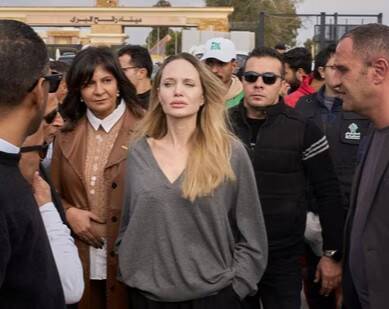
Angelina Jolie Visits Gaza’s Rafah Crossing Amid Israeli Suspension
The Gaza Strip, a region that has been plagued by conflict and humanitarian crises for decades, has once again found itself at the center of international attention. This time, it is not just the usual reports of violence and displacement that are making headlines, but also the visit of a high-profile celebrity who has been a long-time advocate for humanitarian causes. Hollywood actress and ex-UN special envoy Angelina Jolie visited Rafah Crossing in Gaza on Friday, a move that has sparked widespread interest and discussion.
The timing of Jolie’s visit is particularly significant, as it comes at a time when Israel has announced the suspension of aid organizations working in the Gaza Strip without renewed registrations. This move has been met with widespread criticism from humanitarian groups and international organizations, who argue that it will only exacerbate the already dire humanitarian situation in the region. According to a report by CNN, the suspension is expected to affect a wide range of aid groups, including those providing essential services such as food, shelter, and medical care to the population.
Jolie’s visit to Rafah Crossing, a key entry point for goods and aid into the Gaza Strip, was a poignant reminder of the challenges faced by the people of Gaza. Speaking to reporters, Jolie described the scene she witnessed at the crossing, saying “I walked through a large warehouse that was full of items that were denied entry, most of them medical.” This statement highlights the harsh reality of the situation on the ground, where even basic medical supplies are being denied entry, leaving the population vulnerable to a range of health risks.
The visit of Angelina Jolie to Gaza is not just a publicity stunt, but a serious attempt to bring attention to the humanitarian crisis unfolding in the region. As a former UN special envoy, Jolie has a deep understanding of the complexities of the conflict and the needs of the affected population. Her presence in Gaza is a powerful statement of solidarity with the people of the region, and a call to action for the international community to take notice of their plight.
The Israeli suspension of aid organizations working in Gaza has been widely condemned by human rights groups and international organizations. The move is seen as a blatant attempt to restrict the flow of aid into the region, and to further isolate the population. The consequences of this move will be devastating, with the most vulnerable members of society, including women, children, and the elderly, likely to bear the brunt of the impact.
The international community has a moral obligation to act in response to the crisis in Gaza. The suspension of aid organizations is a clear violation of international humanitarian law, and a breach of the fundamental human rights of the population. It is imperative that governments and international organizations take immediate action to pressure Israel to lift the suspension and allow aid to flow into the region.
Angelina Jolie’s visit to Gaza is a timely reminder of the importance of humanitarian action in the face of conflict and crisis. Her presence in the region is a powerful statement of solidarity with the people of Gaza, and a call to action for the international community to take notice of their plight. As the world watches the unfolding crisis in Gaza, it is clear that the situation requires a concerted and sustained effort to address the humanitarian needs of the population.
In conclusion, the visit of Angelina Jolie to Gaza’s Rafah Crossing is a significant event that highlights the ongoing humanitarian crisis in the region. The Israeli suspension of aid organizations working in Gaza is a clear violation of international humanitarian law, and a breach of the fundamental human rights of the population. It is imperative that the international community takes immediate action to pressure Israel to lift the suspension and allow aid to flow into the region. The people of Gaza deserve our solidarity and support, and it is our moral obligation to act in response to their plight.
About the Author